Great experience working with this team. They completed the development work quickly and efficiently without wasting time. Communication was clear and consistent, they understood the requirements well, gave smart suggestions, and delivered exactly as discussed. I'd highly recommend them to anyone looking for a reliable, fast, and skilled app development team.
Banoun: A Native Shopping App for Kids Fashion
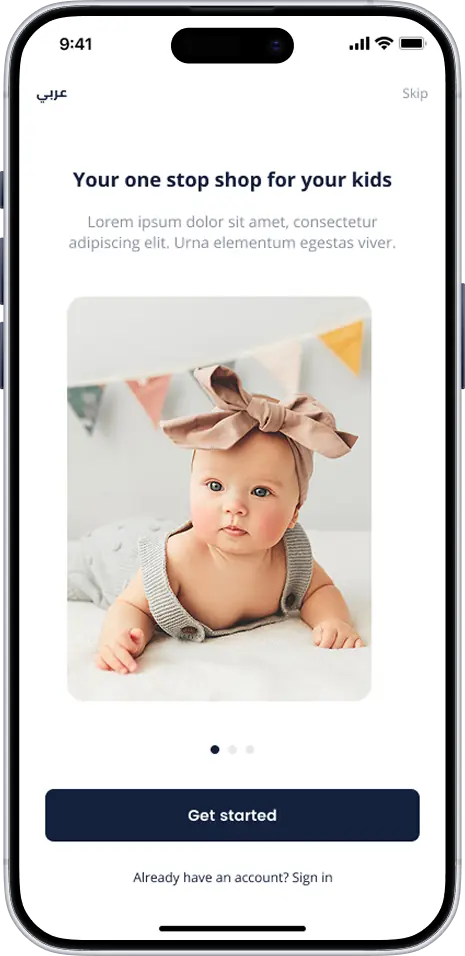
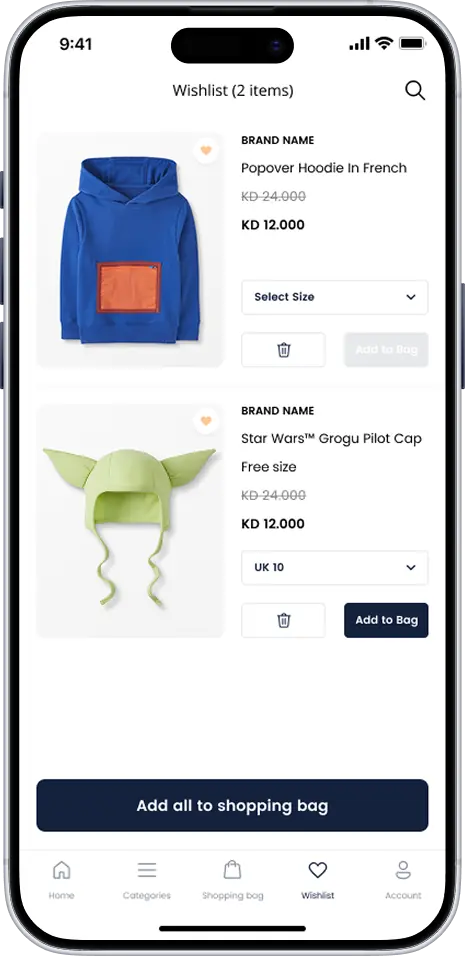
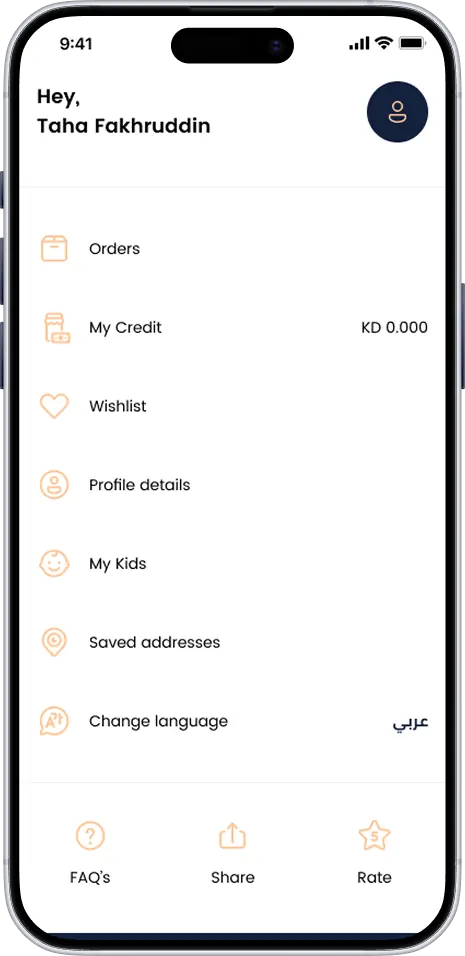
Banoun is a native iOS and Android shopping app for kids fashion and essentials that helps parents find what their children need in seconds. Mobilions designed and built both apps, the UX and UI, and a Laravel backend on AWS that keeps stock in sync in real time, with child privacy built in from the first decision.

Project Overview
What Banoun is and what Mobilions built end to end.
Banoun is a native shopping app for kids fashion and essentials that runs on both iOS and Android, helping parents find what their children need in seconds. Mobilions designed and built the apps, the UX and UI, and the backend that ties them together.
The iOS app is built in Swift and the Android app in Kotlin, with no shared codebase, so each platform feels native. A Laravel backend on AWS holds the MySQL database and keeps stock counts in sync across the customer apps, the admin panel and the storefront in real time. The store team can push a new collection live without waiting on engineers, and the apps stay fast on the phone while doing so.
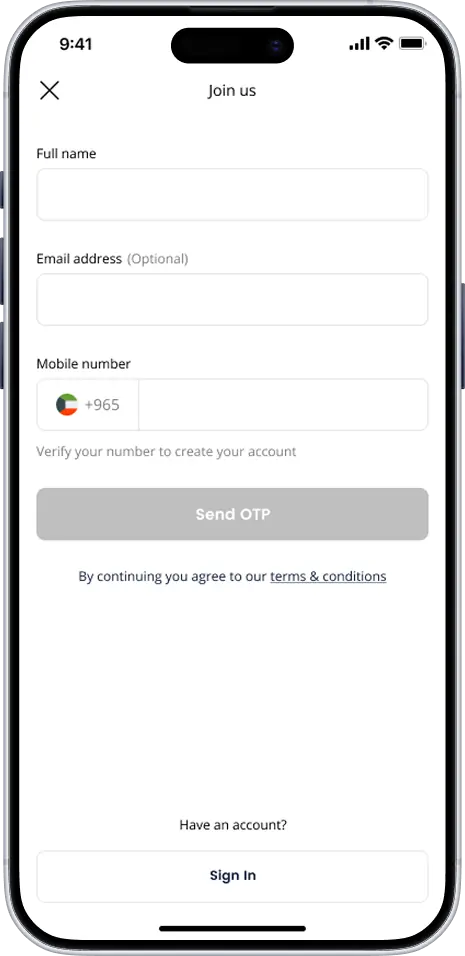
Because the app serves children, privacy was designed in from the first decision rather than retrofitted: a parent must approve every new account, the app stores only the data personalization genuinely needs, and old data is deleted promptly.
Client Snapshot
The essential facts about the product and its audience.
Retail, kids fashion and essentials
iOS (Swift), Android (Kotlin)
Information not available in source documents.
Services Delivered
The scope of work Mobilions delivered on the project.
- Mobile app development (native iOS and Android)
- UX and UI design
- Backend development
- Deployment
Technology Stack
The core technologies behind the apps, backend and infrastructure.
- Swift (iOS)
- Kotlin (Android)
- Laravel (backend)
- MySQL (database)
- AWS (cloud and hosting)
The Challenge
The business and technical problems the build had to solve.
Business Challenge
Banoun serves two very different users in a single app. Children pick by picture and lose interest quickly, while parents want to check brand, price and size before they buy. The app had to work for both at once without making either feel like an afterthought. In retail, the way an app feels in the first three seconds shapes whether anyone trusts it with their card.
Technical Challenge
Stock had to update the instant it changed during weekend drops, when a popular item can sell out in under an hour, and stock counts had to stay live across the customer apps, the admin panel and the storefront at the same time. The apps also had to stay fast even while constantly checking for updates. On top of this, both platforms had to feel genuinely native — notifications, Apple Pay and Google Pay payments, and platform-specific gestures all had to behave as users expect — and child data privacy had to be built in from day one.
Our Approach
How Mobilions moved from research to a native, real-time build.
Discovery
Mobilions watched real families shop before designing a single screen, following parents and children on actual shopping trips. What the team observed reshaped how the app moves people from browsing to the cart and how the categories sit on the home screen.
Architecture
The build splits responsibilities deliberately: the phones handle the polish and the server handles the speed. Swift runs the iOS app and Kotlin runs the Android app, while a Laravel backend on AWS holds the MySQL database and handles every sync to the customer apps, admin panel and storefront.
Execution
Both apps were built in parallel so Android was never an afterthought. The team ran two rounds of beta testing with 40 families, which surfaced issues in-house testing missed: tap targets too small for younger children, a confusing return flow, and a notification that went off at bedtime. All were fixed before launch.
Engineering Decisions
The key decisions that shaped the product and why they were made.
Native on both platforms, no shared codebase
The iOS app was written in Swift and the Android app in Kotlin with no shared codebase, so swipes, animations, haptics and checkout all feel the way each platform expects. People stay with retail apps that feel polished, and the team treated that polish as worth paying for.
Server-side stock sync for weekend drops
The Laravel backend keeps stock counts in sync everywhere at once, so what a parent sees on the phone matches the storefront and the admin panel in real time. The syncing was built so the apps stay fast while they check for updates, preventing oversold items and disappointed buyers during weekend drops.
Child privacy designed in from the first decision
Privacy protections were built in from the start rather than retrofitted. A parent must approve every new account, the app saves only the data personalization really requires, and old data is deleted promptly, with the rules treated as the floor rather than the finish line.
Technology Considerations
Why the stack was chosen and the tradeoffs it carries.
Why These Technologies
Swift and Kotlin native builds keep each phone fast and polished, while a Laravel backend with MySQL on AWS holds the data and handles every sync. The division lets the apps feel instant while stock stays correct everywhere at once.
Tradeoffs
Building two native apps with no shared codebase requires building for both platforms in parallel rather than reusing a single codebase. The team accepted this so neither platform felt like an afterthought and each gesture, notification and payment flow felt native.
Scalability Considerations
The syncing was built so the apps stay fast while constantly checking for updates, which is what keeps a weekend drop — when a popular item can sell out in under an hour — from turning into a wave of oversold items.
Implementation Highlights
The features that define the day-to-day experience.
One-scroll home screen
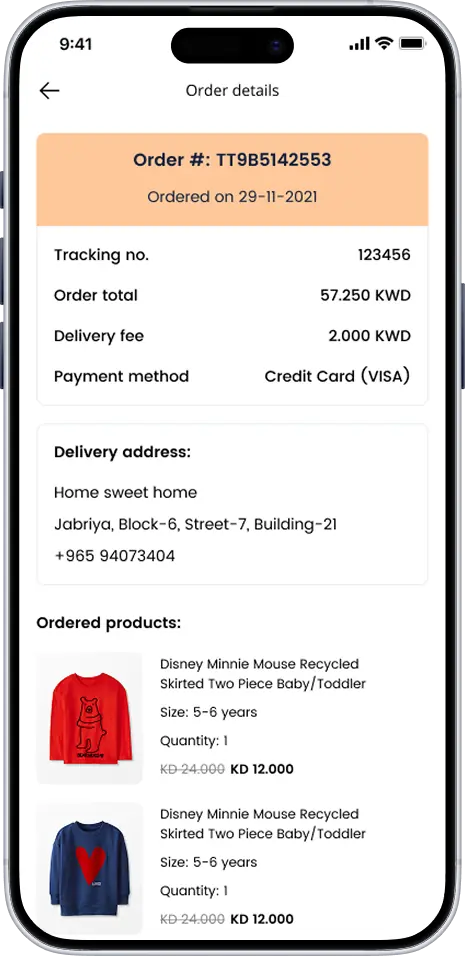
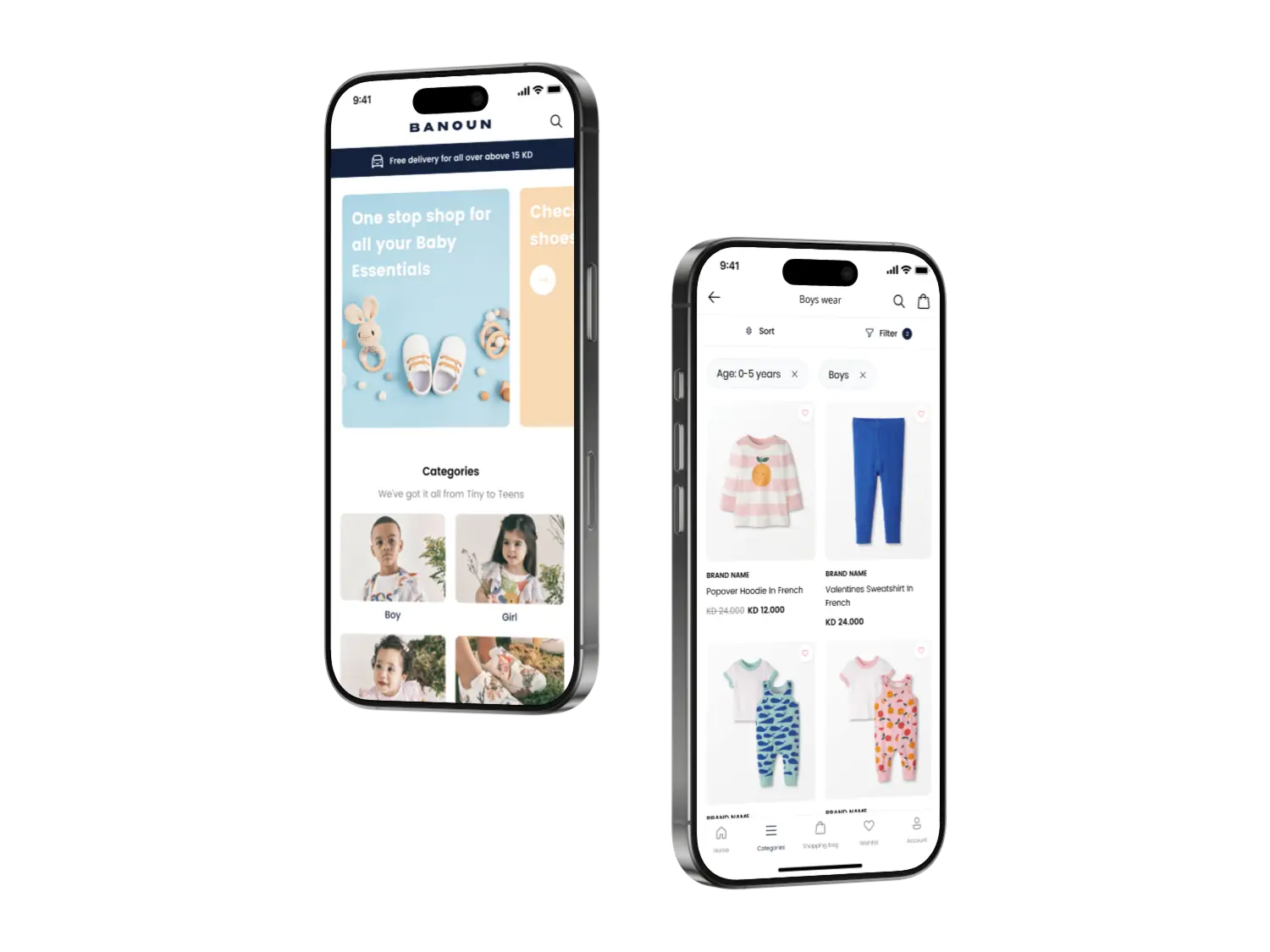
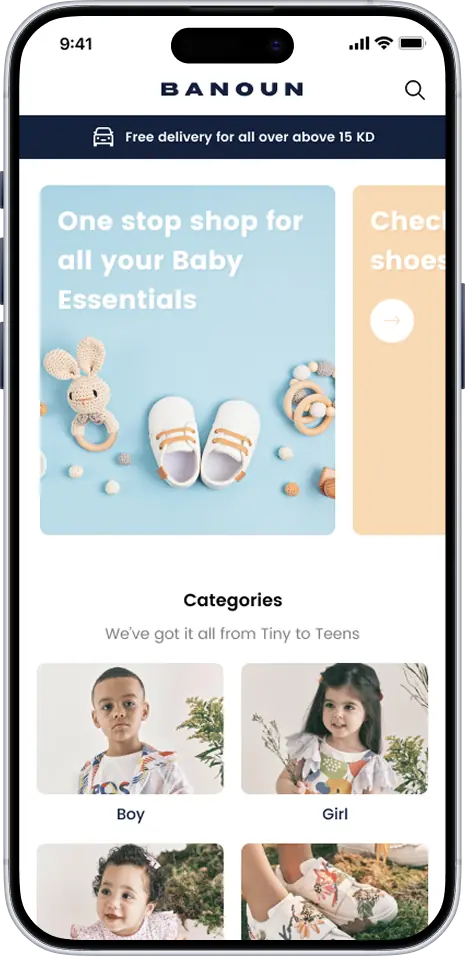
Promotions, categories and trending all live in a single scroll. The home screen moves parents from the weekend promotion into the right category and then on to what is trending, with no detour, shortening the path from opening the app to adding something to the cart.
Personalization feed that learns
The feed starts learning in the first two weeks, reading what parents choose (budget, brand and size) and what kids do (looking longer, tapping twice, or skipping). The store team reads the same data to plan the next drop, so personalization and merchandising feed each other.
Native payments and notifications per platform
Payments work through Apple Pay and Google Pay, and notifications behave the way iPhone and Android users expect, with gestures and taps tuned to feel right on each phone.
Key Engineering Highlights
A technical summary across architecture, data, performance and security.
Architecture
Native iOS (Swift) and Android (Kotlin) apps for polish, paired with a Laravel backend on AWS for speed, with live stock sync flowing to the customer apps, admin panel and storefront.
Data Layer
A MySQL database held by the Laravel backend on AWS, keeping stock counts synchronized in real time across all surfaces.
Performance
The sync was engineered so the apps stay fast while continuously checking for updates, keeping the experience instant on the phone during high-demand weekend drops.
Security
Child data privacy by design: parent approval required for every new account, data minimization (storing only what personalization needs), and prompt deletion of old data, with regulatory rules treated as the starting floor.
Information not available in source documents.
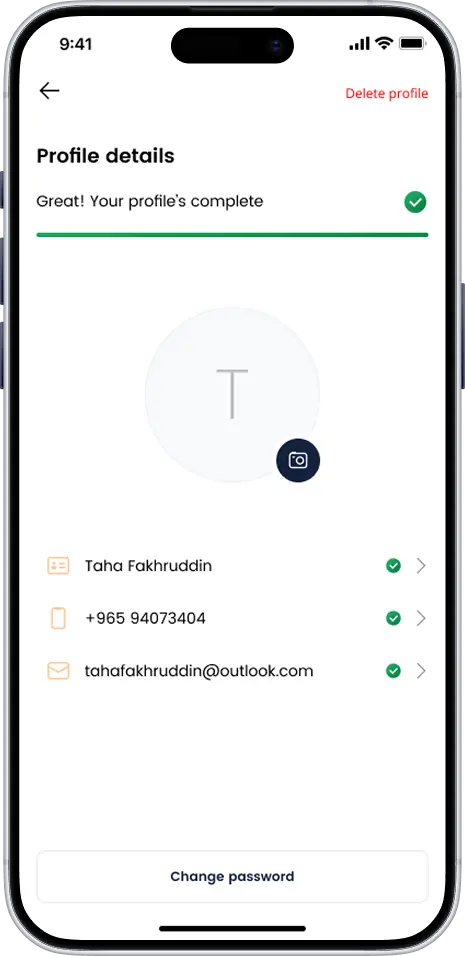
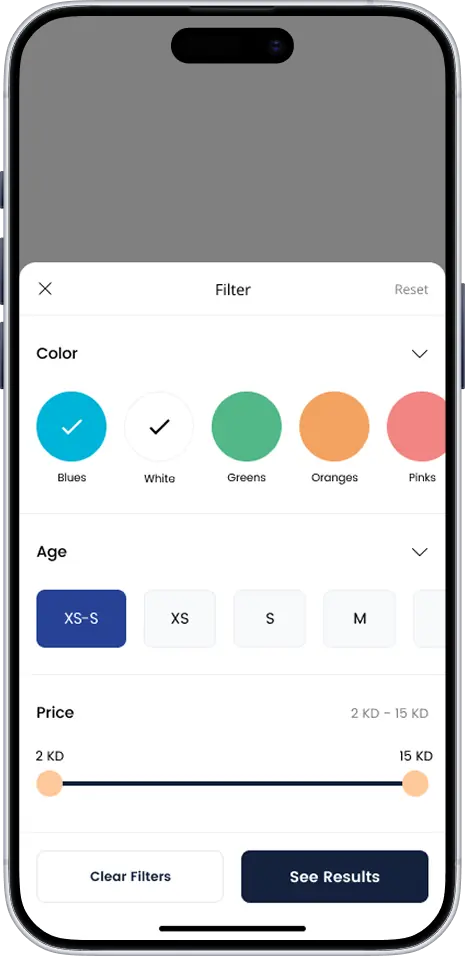
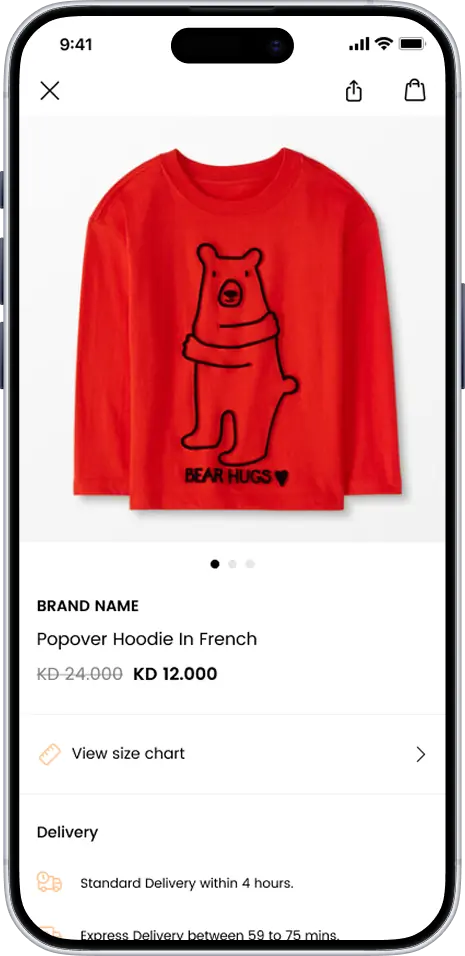
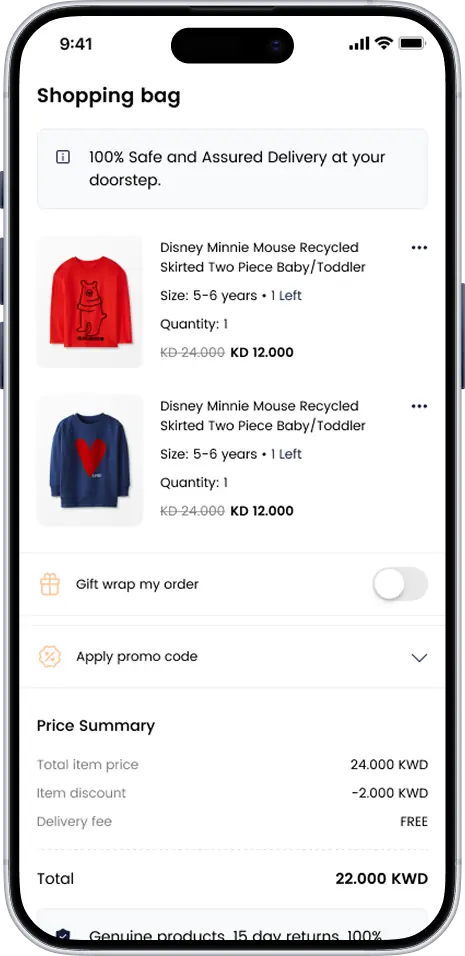
Gallery
A look at the product across screens.
Ready to build something like Banoun?
If you need a native, real-time retail or kids shopping app with live stock sync and privacy built in, let us show you how we would build it.
What Clients Say
Mobilions' clients describe fast delivery, clear communication, and senior, trustworthy engineering—in their own words.
We worked with Ankit, Mayur, and Tushar to build the first version of Baba Hebrew for iOS and Android, and they delivered super fast. The team was responsive, reliable, and efficient, taking the idea from zero to a working app in record time. I'd recommend them to anyone who wants to get an MVP live quickly.
Tushar and Ankit did an outstanding job developing our native iOS (Swift) and Android (Kotlin) apps. They were efficient, responsive, and technically strong throughout. Thanks to their work, we launched successfully and gained over 1,000 users in the first 30 days. Highly recommend this team for quality mobile app development.
It was a wonderful experience working with Tushar, Ankit, and their team. They built a great mobile app for me and truly brought my vision to life. What stood out was not just their technical skill but their attitude: always positive, solution-oriented, and incredibly patient. They went above and beyond at every step, finding creative workarounds and staying committed even when things got challenging. Extremely professional and trustworthy. I would absolutely hire them again.
Great experience working with this team. They completed the development work quickly and efficiently without wasting time. Communication was clear and consistent, they understood the requirements well, gave smart suggestions, and delivered exactly as discussed. I'd highly recommend them to anyone looking for a reliable, fast, and skilled app development team.
We worked with Ankit, Mayur, and Tushar to build the first version of Baba Hebrew for iOS and Android, and they delivered super fast. The team was responsive, reliable, and efficient, taking the idea from zero to a working app in record time. I'd recommend them to anyone who wants to get an MVP live quickly.
Tushar and Ankit did an outstanding job developing our native iOS (Swift) and Android (Kotlin) apps. They were efficient, responsive, and technically strong throughout. Thanks to their work, we launched successfully and gained over 1,000 users in the first 30 days. Highly recommend this team for quality mobile app development.
It was a wonderful experience working with Tushar, Ankit, and their team. They built a great mobile app for me and truly brought my vision to life. What stood out was not just their technical skill but their attitude: always positive, solution-oriented, and incredibly patient. They went above and beyond at every step, finding creative workarounds and staying committed even when things got challenging. Extremely professional and trustworthy. I would absolutely hire them again.
Frequently Asked Questions
Answers to the questions buyers ask before commissioning a build like this.
It depends on scope. The cost of a build like this is driven by scope, features, integrations, compliance requirements, team composition, and infrastructure complexity. We provide a fixed estimate after a short discovery call once those are defined.
There is no single answer, but a strong combination is Swift for iOS and Kotlin for Android, built natively for a polished feel, with a backend such as Laravel and a database like MySQL on cloud hosting like AWS handling stock, orders and sync. We chose exactly this for Banoun because it keeps the phones fast and the data correct everywhere.
A native retail app on both platforms typically takes around four to six months from concept to launch, including design, build and beta testing. We work in two-week sprints with working software throughout, and we build for both platforms in parallel so Android is never an afterthought, with progress visible the whole way.
Through the backend. We connect the app's backend to your existing ERP, POS or inventory systems so stock, prices and orders stay in sync rather than living in a separate silo. We map these integrations carefully up front, because they are where retail app projects most often hit surprises.
Yes. We build apps with full multi-language support, including right-to-left languages such as Arabic alongside English, designed in from the start rather than bolted on. The layout, text and flows are built to work properly in both directions so the experience feels native in each language.
The ones that connect browsing to buying: conversion rate, add-to-cart and checkout completion, retention and repeat purchases, and what drives them. In Banoun the feed learns from what parents pick and what kids do, and the store team reads the same data to plan the next drop, so analytics inform both the app and the merchandising.
We stay involved. A retail app needs regular updates as collections, promotions and seasons change, and as the app stores release new requirements. The same senior team that built it supports and evolves it, so it keeps performing rather than drifting out of date after handover.
In Banoun, privacy was built in from the first decision rather than retrofitted: a parent must approve every new account, the app stores only the data personalization genuinely needs, and old data is deleted promptly. Designing for child privacy up front is what makes a kids retail app safe to trust.
It varies by brand, but a well-built app pays back through higher conversion, stronger retention and repeat purchases, and the ability to push promotions and drops directly to customers. A native, polished app that loads fast and keeps stock accurate tends to convert better than a slow or generic one, which is where the return comes from.
Let's build your next big thing
Let's build your next big thing. Share your idea and get a free consultation—we respond within one business day.