






























RAG Development Services That Ground AI in Your Data

Mobilions provides RAG development services that ground AI answers in your own content, not the model's memory—hybrid search and re-ranking that surface the right passage with a citation and decline when unsure. The same senior engineers who scope your RAG system build it, launch it, and support it, and the code, embeddings pipeline, vector store, and data stay yours throughout.

Part of our broader AI development services →
famooshedidc-ujoinbeetkoralionstudio-ailokalapptosmartbababanounbasafrdocscannerludusiomaamarmcokieme-by-mindmudeermukaabmy-meeting-cardpaaetpixiprezenceraceboardrecuriciclarioschutzwinkelshishrspendulgetrainaerotrendzfanszatarafamooshedidc-ujoinbeetkoralionstudio-ailokalapptosmartbababanounbasafrdocscannerludusiomaamarmcokieme-by-mindmudeermukaabmy-meeting-cardpaaetpixiprezenceraceboardrecuriciclarioschutzwinkelshishrspendulgetrainaerotrendzfanszatara
Since 2016
0+Projects Delivered
0+Clients Served
0+Countries Reached

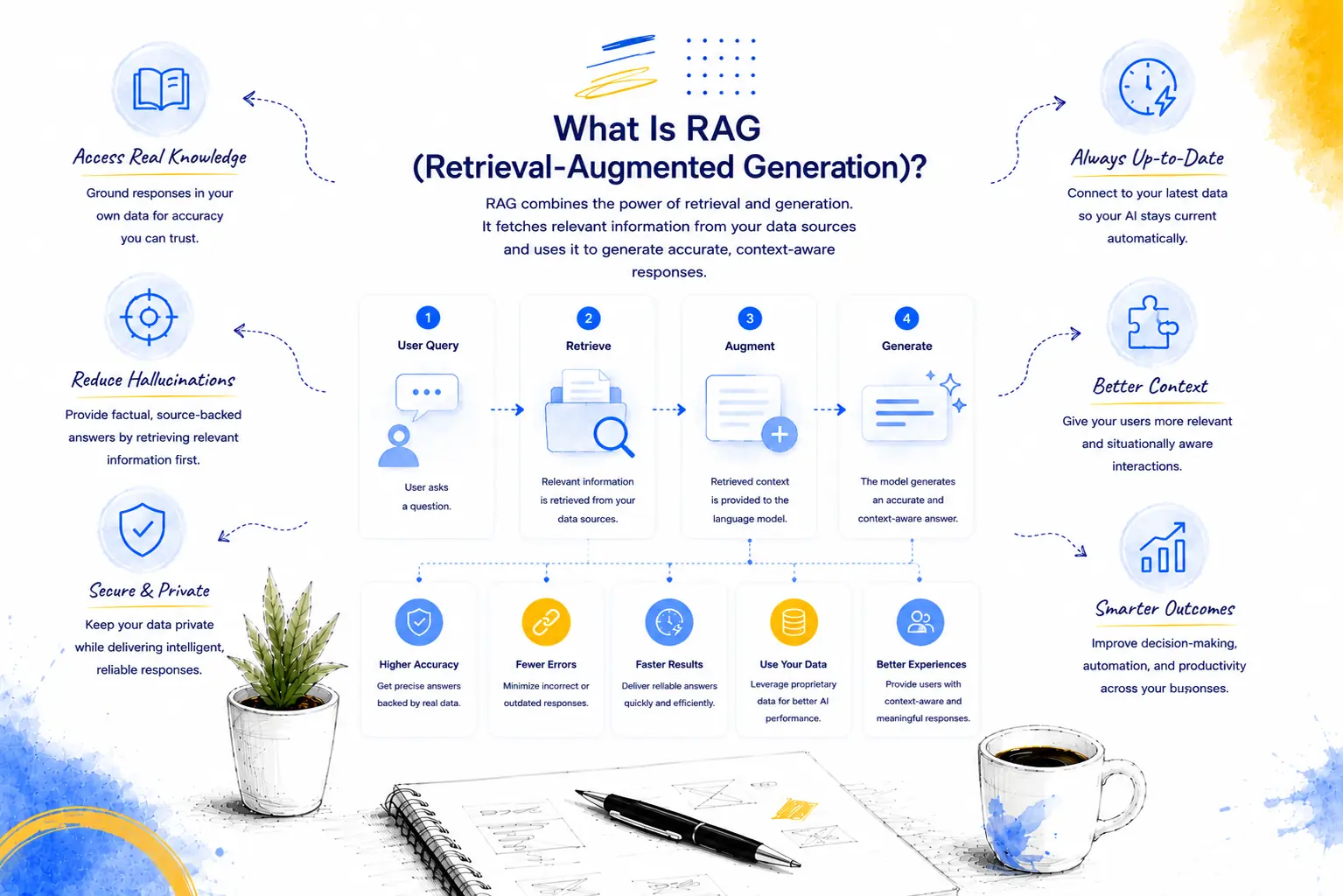
What Is RAG (Retrieval-Augmented Generation)?

RAG, or retrieval-augmented generation, is an architecture in which a language model answers from your own data instead of its training memory. Before the model responds, a retrieval layer searches your indexed documents, policies, and records, pulls the most relevant passages, and feeds them to the model as grounding context. The model then composes an answer from that retrieved evidence and cites where it came from—so responses stay tied to your real, current sources. Because the answer is grounded, a well-built RAG system can refuse to guess when the supporting passage is not there, which is exactly the behavior that makes AI safe to use on accuracy-critical work.

RAG development

At Mobilions, RAG development is done by senior engineers who treat retrieval quality as the product. We build the embeddings pipeline, the vector store, and a hybrid search and re-ranking layer that surfaces the right passage, then wrap it in evaluation and guardrails so the system stays accurate as your content changes. The hard part is not attaching context to a model; it is making retrieval find the correct passage on messy real queries, keeping answers cited and refusable, and proving accuracy with measurement. That gap between a RAG demo and an enterprise RAG system is where we focus, because it decides whether grounded AI search delivers durable value or quietly misleads your users.

What We Build

Mobilions delivers six RAG development capabilities, each available on its own or as part of a larger build. Explore each below.

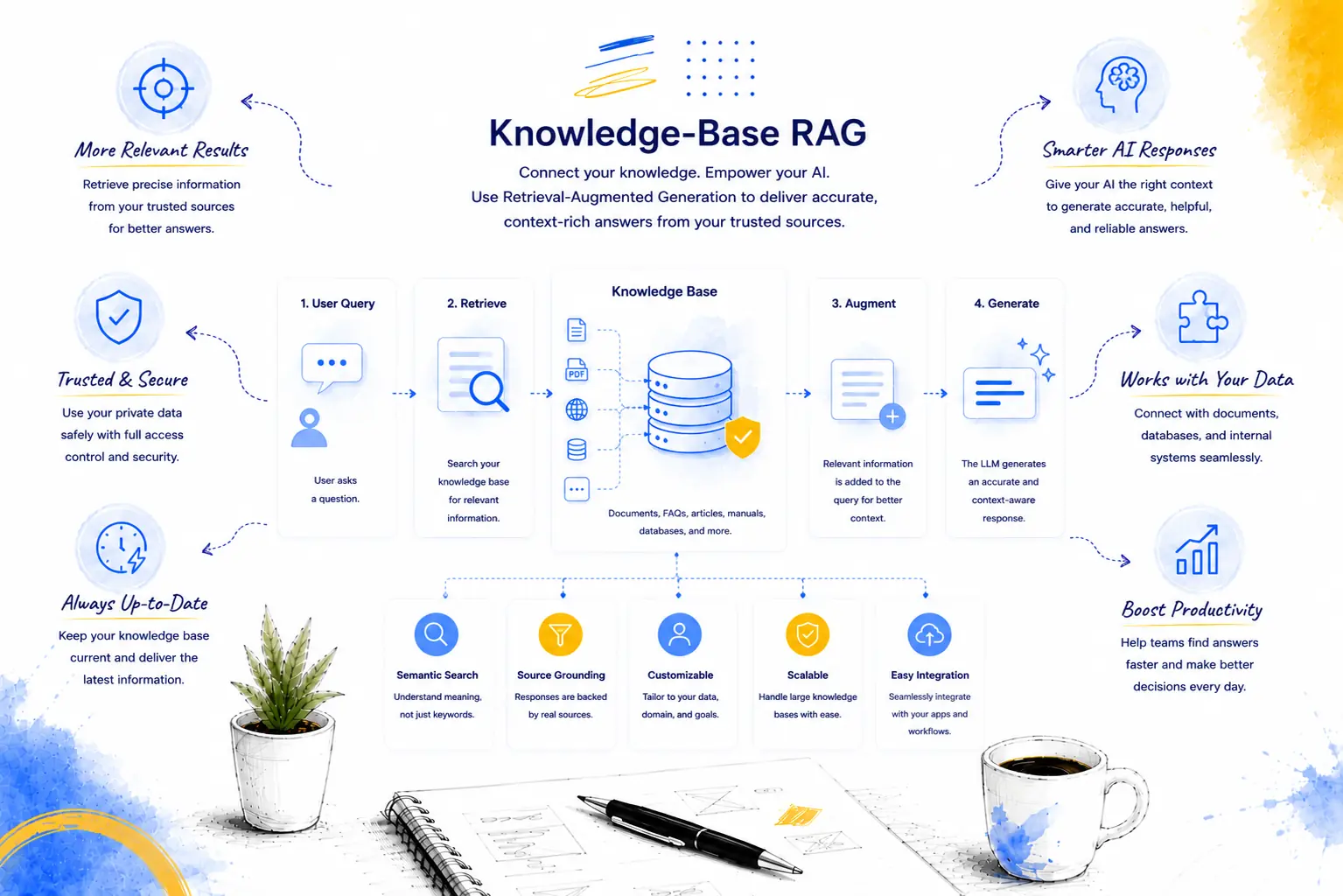
Knowledge-Base RAG

We turn your internal knowledge—handbooks, wikis, SOPs, support articles, and policies—into a grounded assistant that answers from your sources with citations. We chunk and embed the content, tune retrieval to how your team actually asks questions, and keep answers traceable to the source document, so people can trust and verify what the AI tells them.

Knowledge-Base RAG

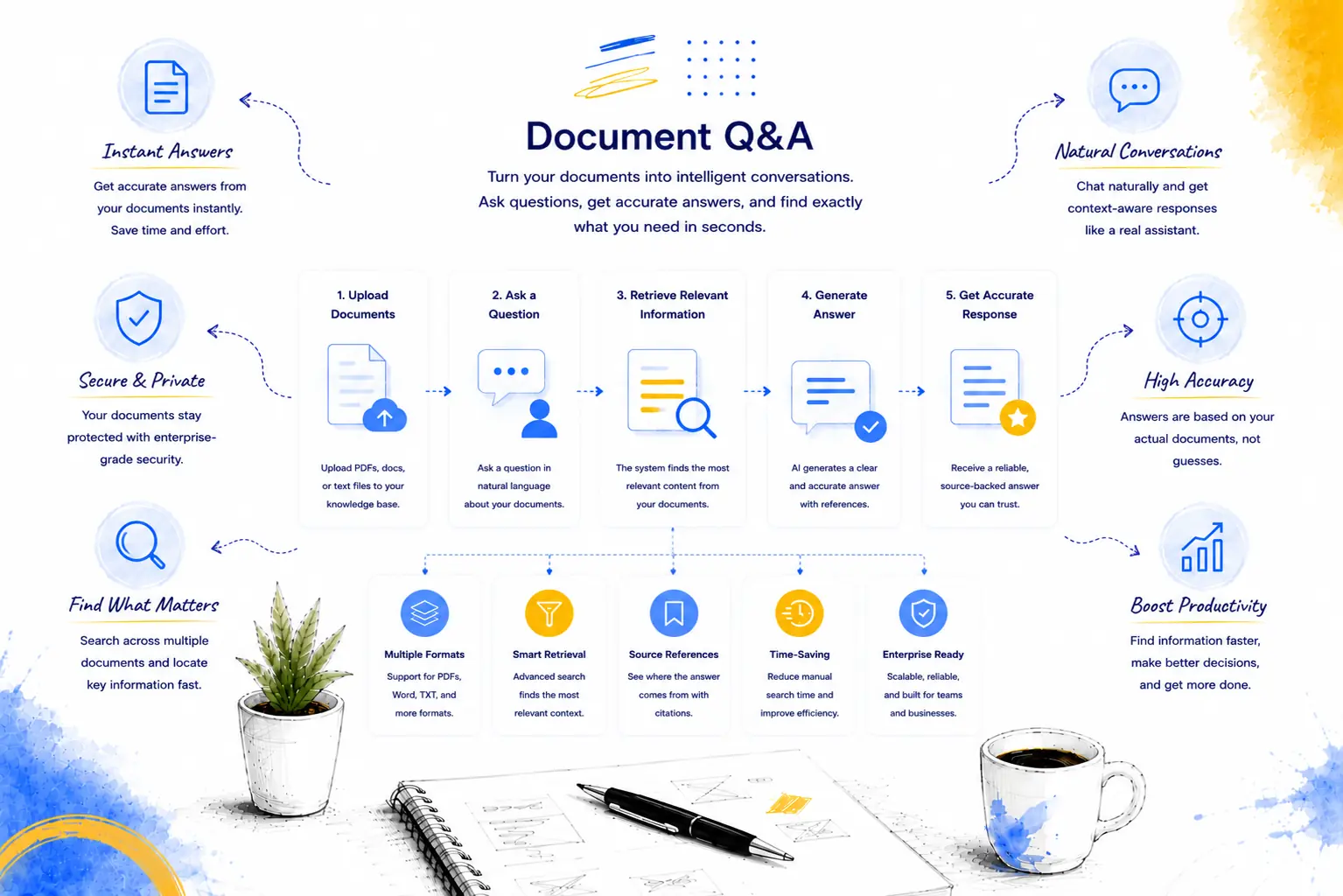
Document Q&A

We build document Q&A over contracts, reports, manuals, and filings, so users can ask a question in plain language and get a sourced answer with the passage it came from. We handle long documents, tables, and mixed formats, and return the citation alongside the answer—turning a pile of PDFs into something your team can actually query.

Document Q&A

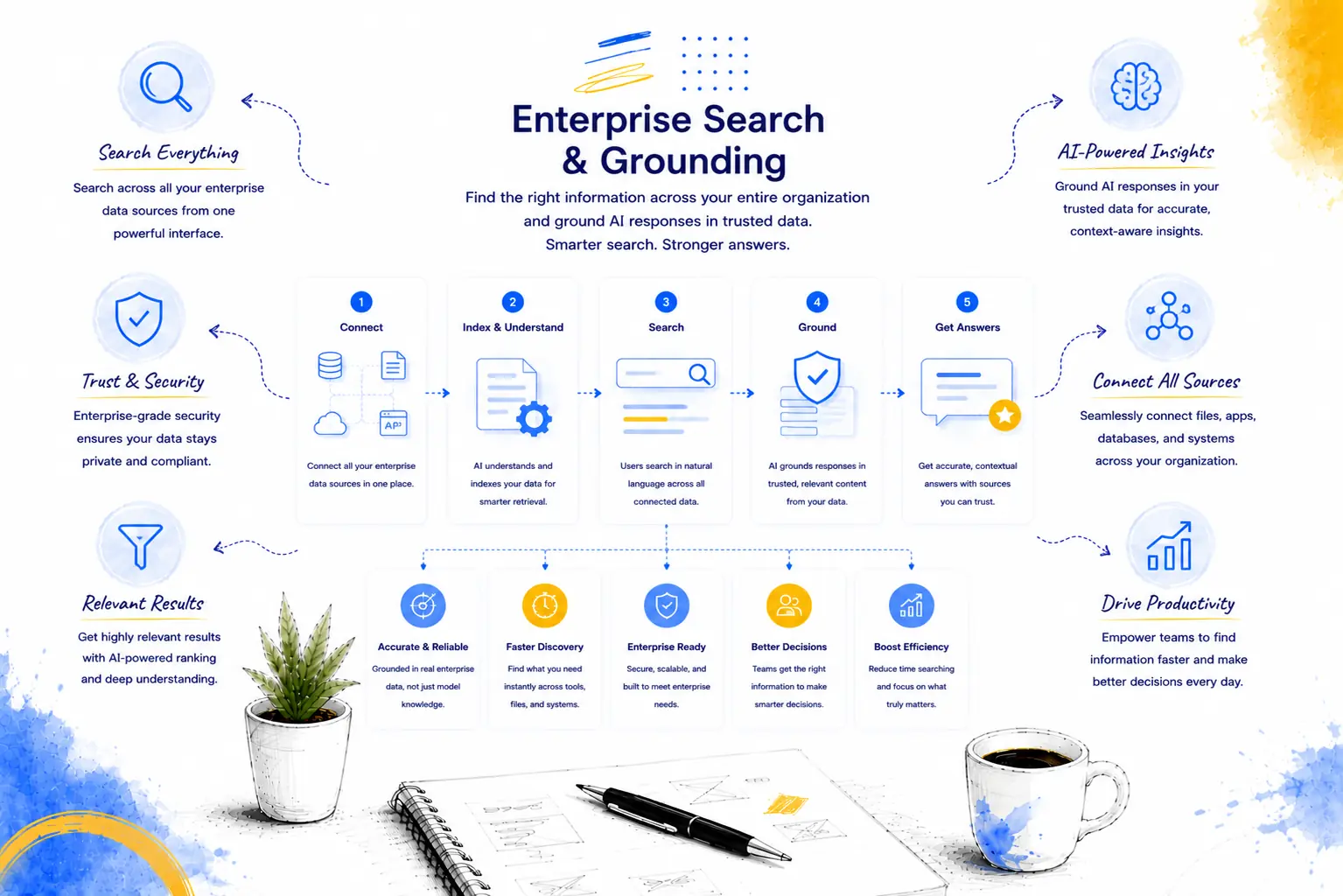
Enterprise Search & Grounding

We build grounded AI search across your enterprise content and systems—replacing keyword-only search with retrieval that understands meaning and returns answers, not just blue links. We connect to your existing repositories with scoped permissions, respect access controls so users only see what they should, and ground every answer in the retrieved source.

Enterprise Search & Grounding

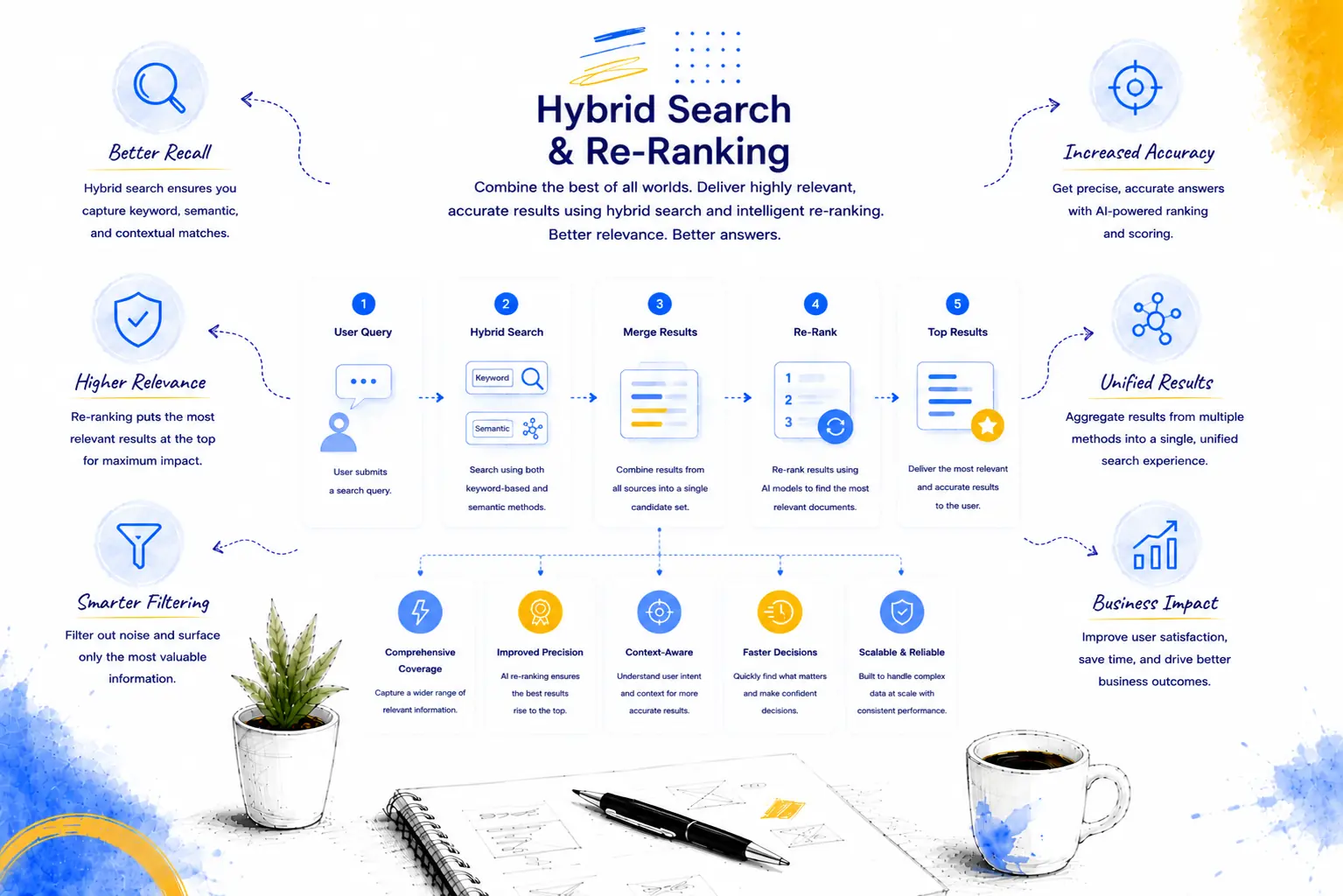
Hybrid Search & Re-Ranking

We combine semantic (vector) search with keyword and metadata filtering, then add a re-ranking stage that promotes the most relevant passages to the top. Hybrid search and re-ranking are where retrieval quality is won or lost, so we tune them against your real queries—because the right answer is useless if it never reaches the model's context window.

Hybrid Search & Re-Ranking

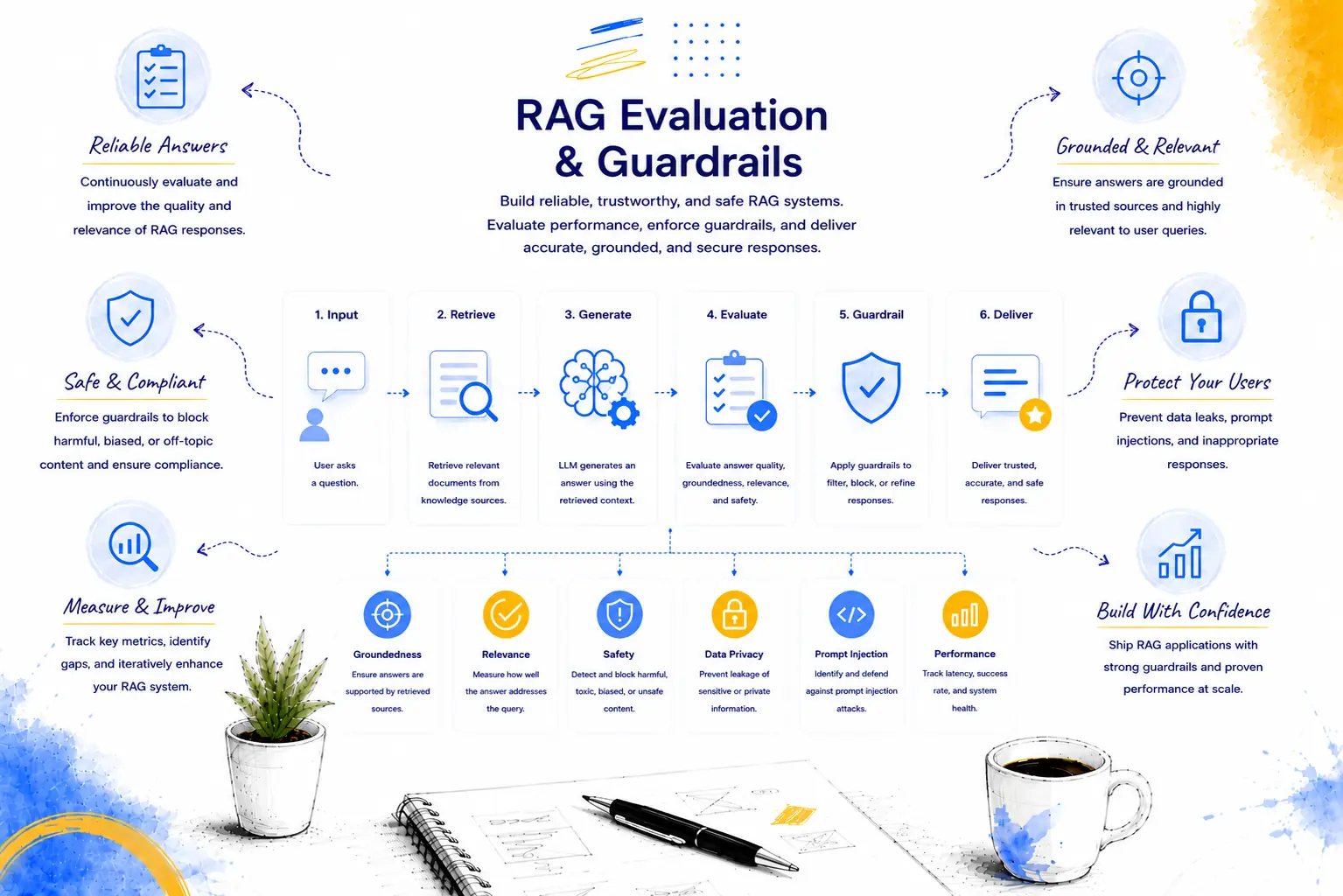
RAG Evaluation & Guardrails

We build the evaluation harness and guardrails that prove and protect accuracy: retrieval and answer quality measured against real test sets, citation checks, confidence thresholds, refusal behavior when evidence is thin, and PII handling. This is the unglamorous engineering that separates an enterprise RAG system from a hopeful demo.

RAG Evaluation & Guardrails

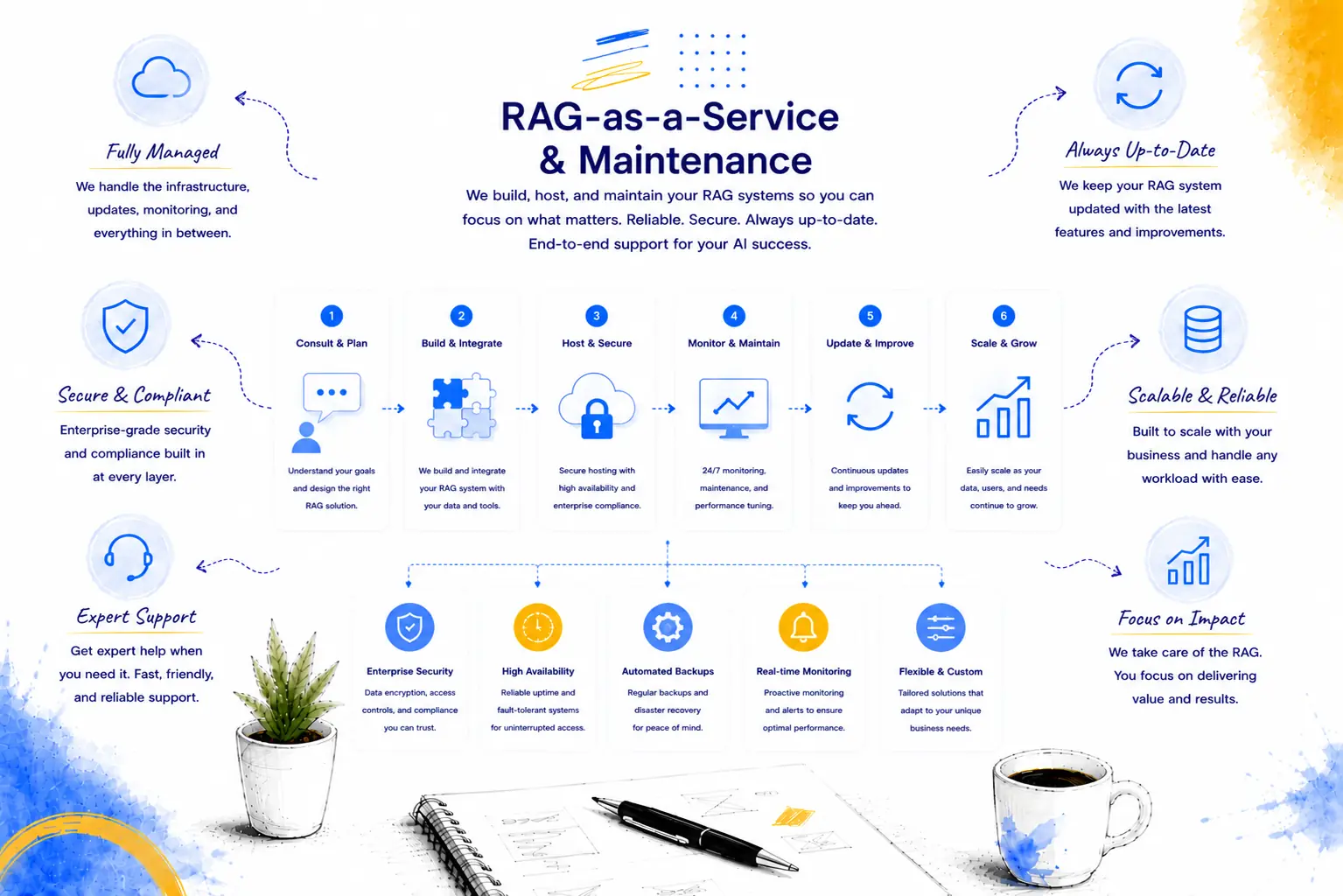
RAG-as-a-Service & Maintenance

We offer RAG as a service—running, monitoring, and improving your retrieval system after launch—so embeddings stay fresh as content changes, retrieval keeps pace with new documents, and quality is watched on real traffic. RAG systems improve with operation, and the engineers who built yours are best placed to keep them accurate.

RAG-as-a-Service & Maintenance
Knowledge-Base RAGDocument Q&AEnterprise Search & GroundingHybrid Search & Re-RankingRAG Evaluation & GuardrailsRAG-as-a-Service & Maintenance
Part of our broader AI development services →

Have a RAG project in mind?

A senior engineer will tell you whether RAG fits your content and accuracy needs—and what it takes to ship grounded, cited answers you can trust.

Where RAG Helps

RAG pays off wherever answers must be accurate, current, and traceable to a source—and we will tell you where it does not.

.01

Grounded Support and Internal Knowledge

Support agents and employees waste hours hunting through documents for answers that already exist. RAG turns that knowledge into a grounded assistant that returns the right answer with its source, so people get accurate help fast and can verify it.

.02

Accuracy-Critical and Regulated Content

When a wrong answer carries real cost—medical, legal, financial, or compliance content—grounding and citations are not optional. RAG ties every answer to a verifiable passage and refuses when the evidence is not there, so the system stays honest on exactly the questions where guessing is dangerous.

.03

Querying Large or Changing Document Sets

When the knowledge lives in thousands of documents that update constantly, retraining a model is impractical. RAG lets you add, update, and remove content by changing the index—not the model—so the system reflects your latest sources without an expensive retraining cycle.

.04

Where RAG Is Not the Answer

If you have no reliable source data to ground against, RAG has nothing to retrieve and will not save you—better data comes first. And when the goal is to teach a model a new style, format, or narrow skill rather than to answer from documents, fine-tuning often fits better than retrieval. We will say so honestly, because building the wrong architecture well still wastes your budget.

How We Build Production RAG

Mobilions builds RAG in four disciplined stages, so retrieval is accurate, grounded, and reliable in production.

Step 1.

Index & Embed

We connect to your sources, clean and chunk the content sensibly, and generate embeddings into a vector store—so your documents and records are searchable by meaning, not just keywords. Chunking and embedding decisions quietly determine retrieval quality, so we treat them as real engineering.

Step 2.

Retrieve & Re-Rank

We build hybrid retrieval—vector search combined with keyword and metadata filters—then add a re-ranking stage that surfaces the most relevant passages to the top. We tune retrieval against your actual queries, because the model can only ground its answer in passages that retrieval actually finds and ranks highly.

Step 3.

Ground & Guard

We compose answers strictly from retrieved evidence, attach citations, and set refusal behavior so the system declines when the supporting passage is not there. Confidence thresholds, PII handling, and access controls keep responses safe, sourced, and on-brand—so a thin-evidence question becomes an honest “I do not have that,” not a confident hallucination.

Step 4.

Evaluate & Operate

We measure retrieval and answer quality against real test sets before launch, then instrument the live system—logging queries, tracking accuracy, latency, and cost, and watching for drift. As your content changes, we refresh embeddings and re-tune retrieval, feeding real usage back into the system. Support terms are agreed explicitly in the engagement.

Why Mobilions for RAG

Clients choose Mobilions because the same senior engineering team that scopes the RAG system also builds, launches, and supports it—with answers you can verify.

01

Grounded and Cited by Default

Every answer is tied to a retrieved passage and returned with its source—so the AI is auditable and trustworthy, not a confident guess. Refusal behavior is built in for when the evidence is not there.

02

Accuracy Engineered, Not Assumed

We treat retrieval quality as the product and prove it with evaluation against real test sets—hybrid search, re-ranking, and guardrails tuned to your data rather than left to chance.

03

One Team: Build → Launch → Support

The same team carries your RAG system across the whole journey, so there is no handoff and no loss of context as your content and queries change.

04

You Own Everything

You keep the source code, the embeddings pipeline, the vector store, and the data. We build for your team to operate and extend, with no lock-in.

What Clients Say

Mobilions' clients describe fast delivery, clear communication, and senior, trustworthy engineering—in their own words.

5.0RATING

Great experience working with this team. They completed the development work quickly and efficiently without wasting time. Communication was clear and consistent, they understood the requirements well, gave smart suggestions, and delivered exactly as discussed. I'd highly recommend them to anyone looking for a reliable, fast, and skilled app development team.


5.0RATING

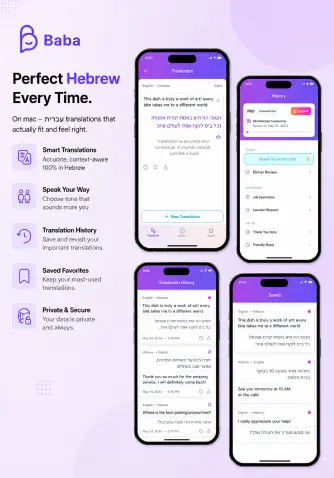
We worked with Ankit, Mayur, and Tushar to build the first version of Baba Hebrew for iOS and Android, and they delivered super fast. The team was responsive, reliable, and efficient, taking the idea from zero to a working app in record time. I'd recommend them to anyone who wants to get an MVP live quickly.

5.0RATING

Tushar and Ankit did an outstanding job developing our native iOS (Swift) and Android (Kotlin) apps. They were efficient, responsive, and technically strong throughout. Thanks to their work, we launched successfully and gained over 1,000 users in the first 30 days. Highly recommend this team for quality mobile app development.

5.0RATING

It was a wonderful experience working with Tushar, Ankit, and their team. They built a great mobile app for me and truly brought my vision to life. What stood out was not just their technical skill but their attitude: always positive, solution-oriented, and incredibly patient. They went above and beyond at every step, finding creative workarounds and staying committed even when things got challenging. Extremely professional and trustworthy. I would absolutely hire them again.

5.0RATING

Great experience working with this team. They completed the development work quickly and efficiently without wasting time. Communication was clear and consistent, they understood the requirements well, gave smart suggestions, and delivered exactly as discussed. I'd highly recommend them to anyone looking for a reliable, fast, and skilled app development team.

5.0RATING

We worked with Ankit, Mayur, and Tushar to build the first version of Baba Hebrew for iOS and Android, and they delivered super fast. The team was responsive, reliable, and efficient, taking the idea from zero to a working app in record time. I'd recommend them to anyone who wants to get an MVP live quickly.

5.0RATING

Tushar and Ankit did an outstanding job developing our native iOS (Swift) and Android (Kotlin) apps. They were efficient, responsive, and technically strong throughout. Thanks to their work, we launched successfully and gained over 1,000 users in the first 30 days. Highly recommend this team for quality mobile app development.

5.0RATING

It was a wonderful experience working with Tushar, Ankit, and their team. They built a great mobile app for me and truly brought my vision to life. What stood out was not just their technical skill but their attitude: always positive, solution-oriented, and incredibly patient. They went above and beyond at every step, finding creative workarounds and staying committed even when things got challenging. Extremely professional and trustworthy. I would absolutely hire them again.

Frequently Asked Questions

The most common questions buyers ask about RAG development—answered directly.

RAG is an architecture in which a language model answers from your own data instead of its training memory. A retrieval layer searches your indexed documents, pulls the most relevant passages, and feeds them to the model as grounding context; the model then composes a cited answer from that evidence and can refuse when the supporting passage is not there. It is the most reliable way to make AI answer accurately from your sources.

You need RAG whenever answers must be accurate, current, and traceable to a source—support, internal knowledge, document Q&A, and regulated content. It is also the right choice when your knowledge lives in large or constantly changing document sets, because you update the index instead of retraining a model. If a simple search box or a fixed rule solves the problem, we will tell you that instead.

RAG grounds answers in retrieved documents at query time, so the system stays current and cites its sources; fine-tuning bakes new behavior, style, or knowledge into the model's weights through training. RAG fits when you need answers from changing documents with citations; fine-tuning fits when you need to teach a model a new format or narrow skill. Often grounding with RAG beats fine-tuning—and many systems use both. We recommend the approach that actually fits.

RAG reduces hallucinations by forcing the model to answer from retrieved evidence rather than its memory, attaching citations so answers are verifiable, and setting refusal behavior so the system declines when the supporting passage is not there. Combined with hybrid search, re-ranking, and evaluation against real test sets, this keeps answers tied to your sources—dramatically reducing hallucination compared with an ungrounded model.

We ground RAG in your documents and records—handbooks, wikis, SOPs, support articles, contracts, reports, manuals, filings, product data, and structured databases—across mixed formats including PDFs, tables, and long documents. We connect to your existing repositories and systems with scoped permissions and ingest content into an embeddings pipeline you own.

We handle data with least-privilege access, respect your existing access controls so users only retrieve what they are permitted to see, and offer private or on-premise deployment for sensitive workloads. We sign an NDA on request, and for regulated work like fintech and healthcare, security and compliance are designed into the architecture. You own the source code, embeddings pipeline, vector store, and data.

A well-built RAG system returns answers grounded in retrieved passages and cites the source those passages came from, so every answer is verifiable. Accuracy depends on retrieval quality, which is why we tune hybrid search and re-ranking and measure both retrieval and answer quality against real test sets. We engineer accuracy in and prove it with measurement—rather than quoting a number we cannot stand behind for your specific data.

We build an evaluation harness that measures the system on real test sets—retrieval quality (did we find the right passage), answer faithfulness (is the answer grounded in what was retrieved), citation correctness, and refusal behavior on questions the sources do not cover. We measure before launch and keep monitoring on live traffic, so quality is proven and tracked rather than assumed.

Cost and timeline depend on scope: the size and messiness of your content, the number of sources, model choice, and compliance needs. A focused document Q&A or knowledge-base assistant can reach a working version in weeks; a larger enterprise RAG system with deep integrations takes longer. The fastest way to a real number is a short scoping call—Get a Project Estimate.

When you have no reliable source data to ground against, RAG has nothing to retrieve and will not help—better data comes first. When the goal is to teach a model a new style or narrow skill rather than answer from documents, fine-tuning often fits better. And when a simple search box or fixed rule solves the problem, RAG adds cost without enough benefit. We will tell you honestly when not to build RAG.

Let's build your next big thing

Let's build your next big thing. Share your idea and get a free consultation—we respond within one business day.

0+
Products shipped
0+
Clients served
0+
Countries reached
Call Us (USA)
+1-856-524-5593

Get a Free Quote

A senior engineer replies within one business day · NDA on request · no obligation · you own the code and IP.