

































Database Integration Services That Scale

Database integration services connect your application to a reliable, well-structured data layer—and tie together the databases, systems, and data sources it depends on. Senior engineers design, integrate, optimize, and safeguard your data across SQL and NoSQL—schema design, query and index tuning, safe migrations, syncing, and backups—then support it as it grows, and you own the schema, the database, and all of your data outright.

Part of our web development services →
famooshedidc-ujoinbeetkoralionstudio-ailokalapptosmartbababanounbasafrdocscannerludusiomaamarmcokieme-by-mindmudeermukaabmy-meeting-cardpaaetpixiprezenceraceboardrecuriciclarioschutzwinkelshishrspendulgetrainaerotrendzfanszatarafamooshedidc-ujoinbeetkoralionstudio-ailokalapptosmartbababanounbasafrdocscannerludusiomaamarmcokieme-by-mindmudeermukaabmy-meeting-cardpaaetpixiprezenceraceboardrecuriciclarioschutzwinkelshishrspendulgetrainaerotrendzfanszatara
Since 2016
0+Projects Delivered
0+Clients Served
0+Countries Reached

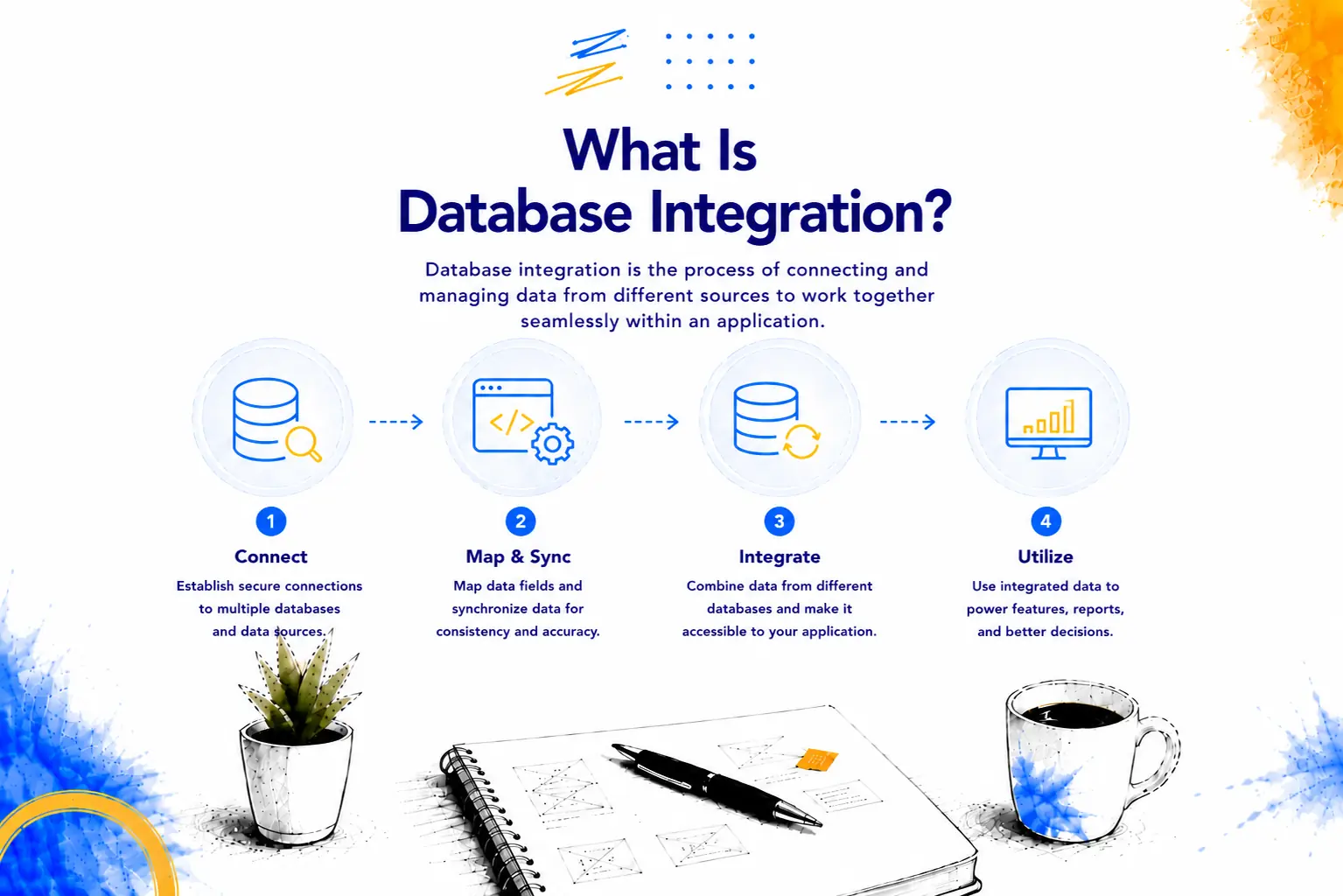
What Is Database Integration?

Database integration is the engineering that connects your application to its data—designing the data layer, integrating the databases, stores, and systems it relies on, and keeping it correct, fast, and consistent as it grows. It is not just “saving data.” It is deciding how data is structured, how systems share it, how it is queried, how it stays correct, and how it survives failure.

Database integration

“Just storing data” means dropping values into tables or documents and hoping the rest works out. A well-engineered database is different. The schema reflects how the business actually behaves. Relationships and constraints prevent bad data from ever being written. Indexes match the queries the application really runs. Backups and recovery are tested, not assumed. Migrations move the data forward without breaking what is already live.

The difference shows up under load. A poorly modeled database looks fine in a demo and falls apart at scale: queries slow down, reports time out, and small bugs corrupt records in ways that are expensive to unwind. A well-built one stays predictable—fast reads, safe writes, and a structure that new features can extend instead of fight. Database integration is the discipline that gets you the second outcome on purpose.

What We Build

We build and tune the full data layer—from the first schema diagram to a live database that stays fast as it grows.

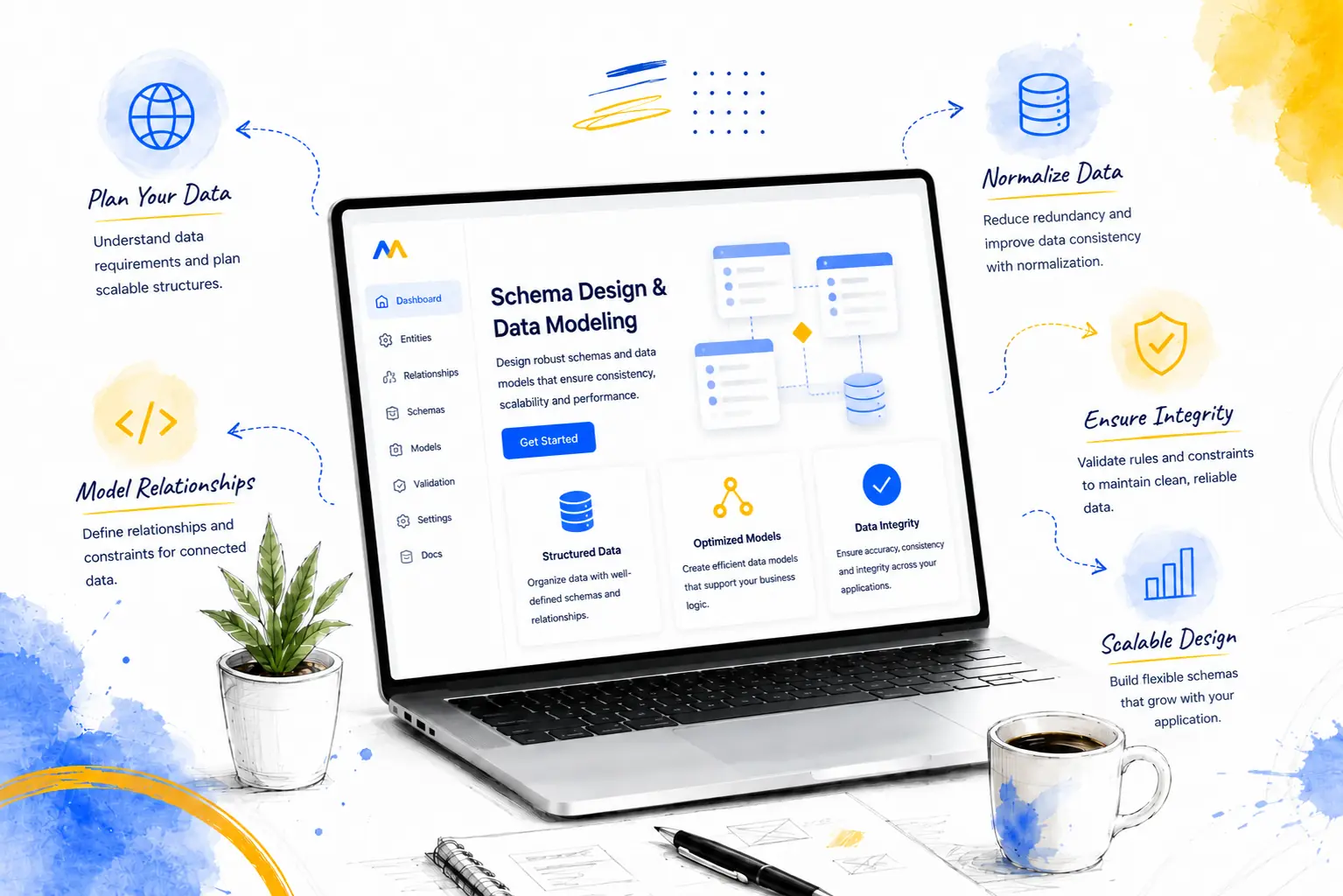
Schema Design & Data Modeling

We model your data around how the product actually works—entities, relationships, and constraints that keep records correct by design. Good modeling up front prevents the structural problems that are painful and risky to fix once a database is full of live data.

Schema Design & Data Modeling

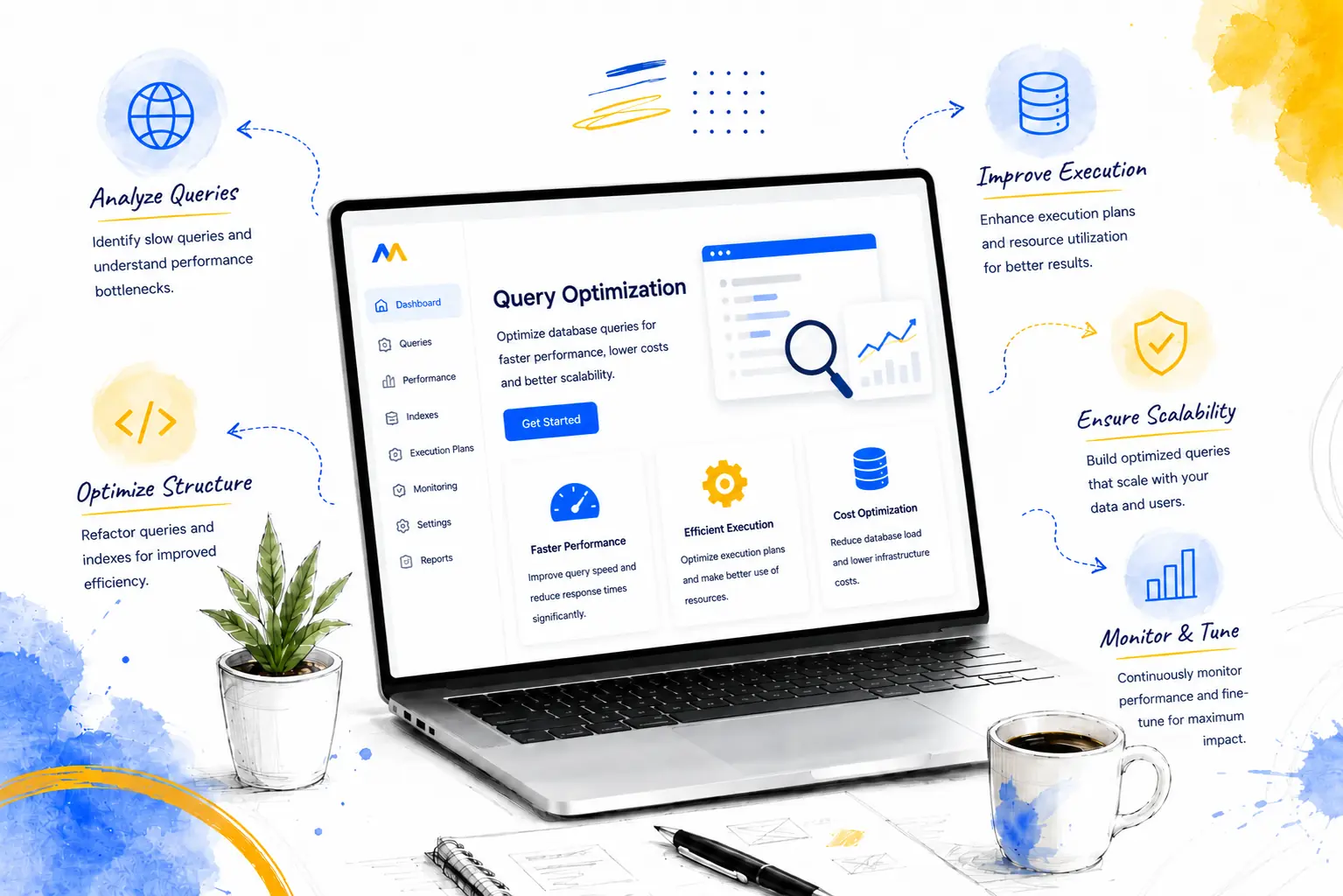
Query Optimization

Slow screens usually trace back to slow queries. We profile the queries that matter, rewrite the expensive ones, and remove the patterns that quietly degrade as data grows—so the application stays responsive instead of crawling at scale.

Query Optimization

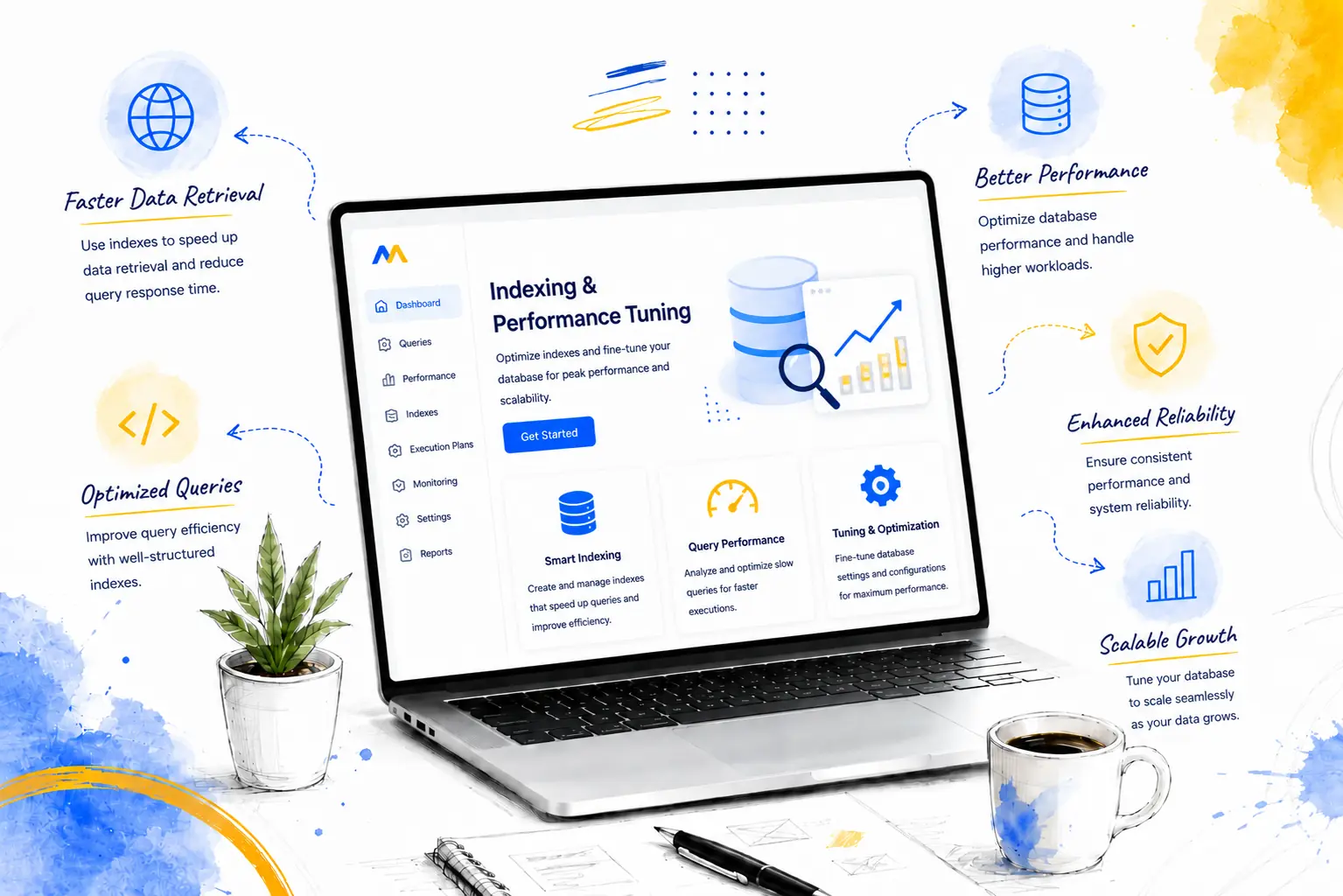
Indexing & Performance Tuning

Indexes are the difference between a query that scans the whole table and one that finds its rows instantly. We design indexes around real access patterns, tune the database configuration, and balance read speed against write cost so performance holds up under real traffic.

Indexing & Performance Tuning

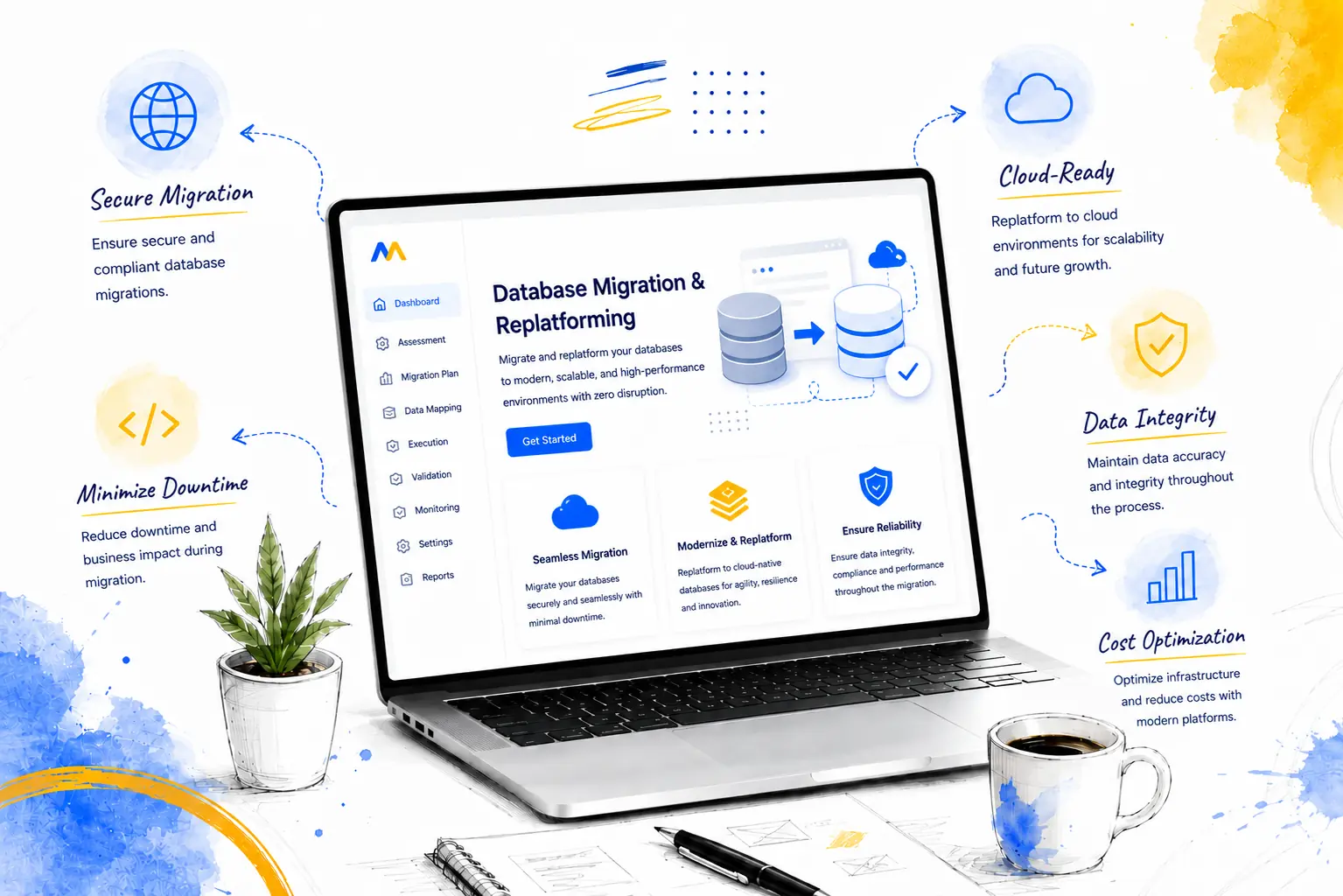
Database Migration & Replatforming

We move databases—between versions, between engines, or from a legacy structure to a cleaner one—with a plan that protects the data. That includes mapping the old model to the new one, validating the migrated data, and sequencing the cutover to minimize disruption.

Database Migration & Replatforming

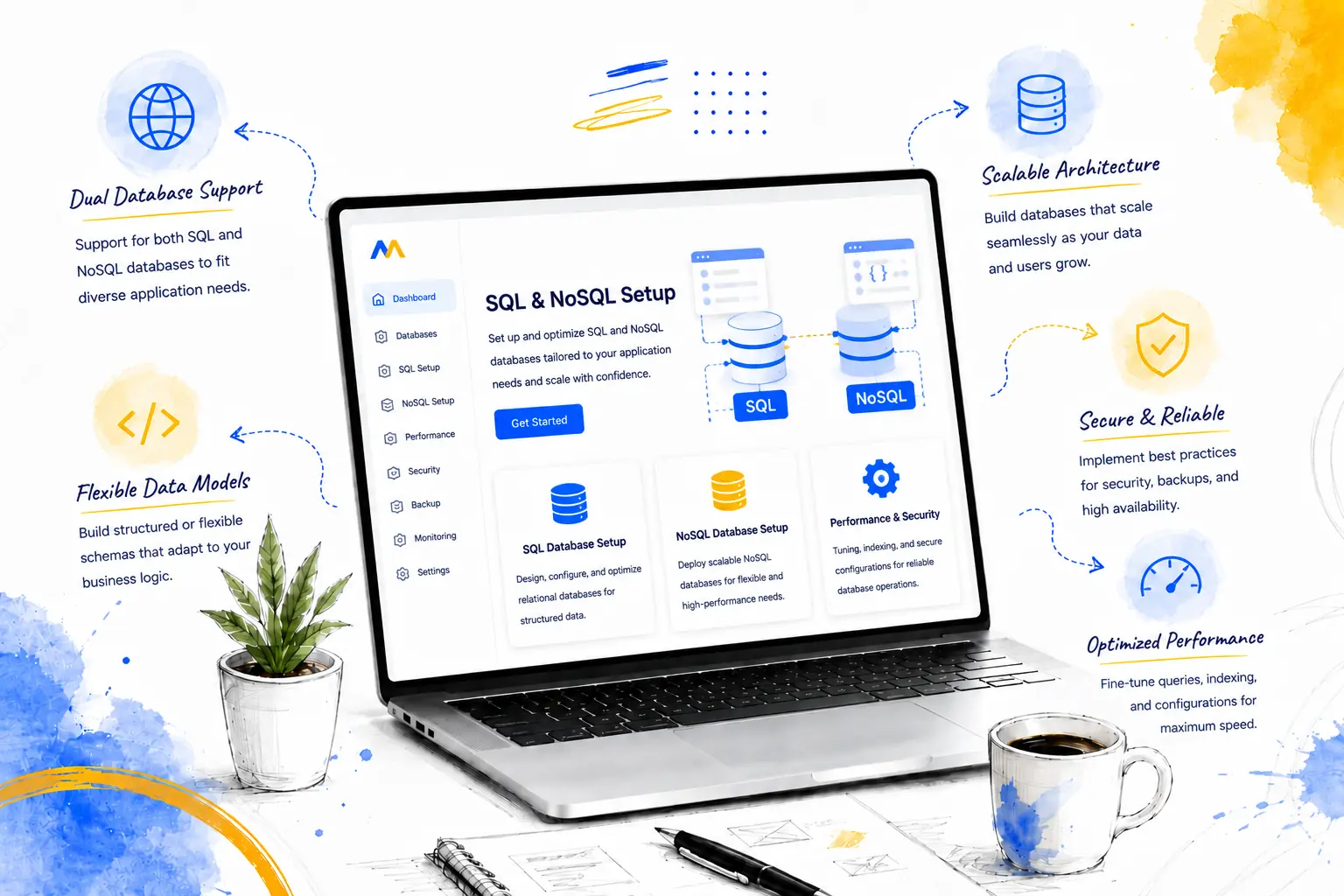
SQL & NoSQL Setup

We set up and structure the right store for the job: relational databases like PostgreSQL and MySQL where structure and integrity matter, NoSQL where flexibility and scale matter, and combinations where each handles what it is best at.

SQL & NoSQL Setup

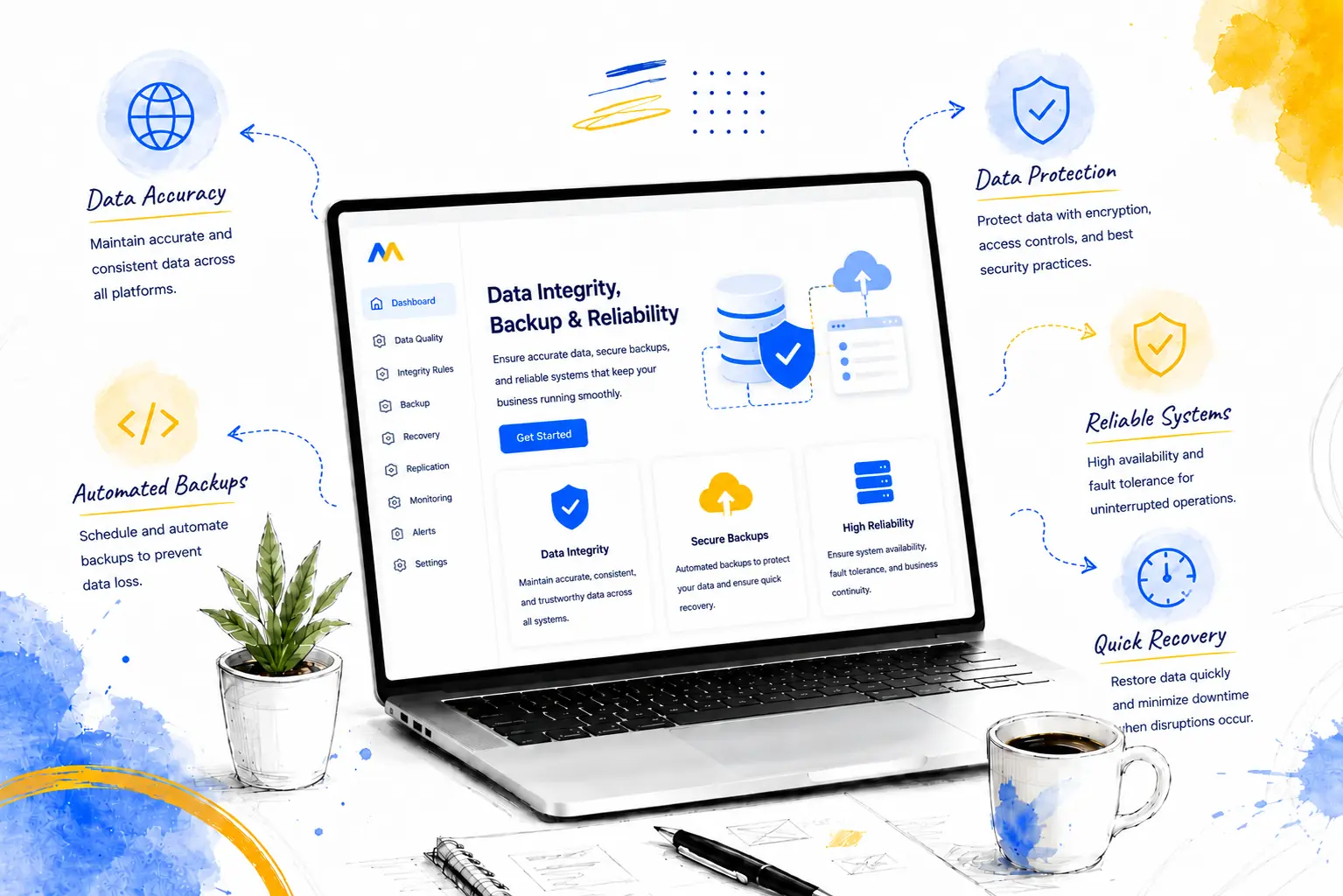
Data Integrity, Backup & Reliability

We build in the safeguards that keep data trustworthy: constraints and validation to prevent bad writes, backup and recovery practices you can actually rely on, and reliability measures so the data layer holds steady when things go wrong.

Data Integrity, Backup & Reliability
Schema Design & Data ModelingQuery OptimizationIndexing & Performance TuningDatabase Migration & ReplatformingSQL & NoSQL SetupData Integrity, Backup & Reliability

Need a faster, safer data layer?

A senior engineer will tell you whether custom database work or a managed service fits your scale—and what it takes to keep data fast, correct, and consistent.

Where Database Integration Fits Best

Database integration is not one-size-fits-all. Here is where focused database work pays off—and where it honestly does not.

.01

Products Where Data Accuracy Is the Product

When the data is the value—inventory, transactions, structured records—correctness is non-negotiable. These products need real modeling, constraints, and integrity work, not a loose schema that lets bad data slip in.

.02

Applications Hitting Performance Walls

When screens slow down, reports time out, or the database struggles as users grow, the fix is usually in the data layer. Query optimization, indexing, and tuning bring responsiveness back without rewriting the whole application.

.03

Migrations & Replatforming

When you are moving off a legacy database, switching engines, or restructuring a model that has outgrown its design, the migration itself is the risky part. Careful planning, validation, and a controlled cutover protect the data through the move.

.04

Where a Managed or Simple Database Is Enough

Not every product needs custom database engineering. If your data is small, your queries are simple, and a managed database service handles your scale comfortably, that is the right call—and we will tell you so. Custom database work earns its keep when complexity, scale, or reliability demands exceed what a simple setup can deliver.

How We Build Production Databases

A clear, four-step path from data model to a live database we keep an eye on.

Step 1.

Model & Design

We map how your data behaves—entities, relationships, and the rules that keep it correct. The output is a schema designed around real product needs, not a guess that has to be reworked later.

Step 2.

Build & Optimize

We implement the schema, write and tune the queries, and design indexes around real access patterns. Performance is built in here, not bolted on after something gets slow.

Step 3.

Migrate & Launch

For existing data, we plan the migration, validate what moves, and sequence the cutover to minimize disruption. For new builds, we launch the data layer alongside the application with integrity checks in place.

Step 4.

Monitor & Scale

After launch, we watch how the database behaves under real load, address bottlenecks as they appear, and adjust indexes and structure so performance holds as the data grows.

Why Mobilions for Database Integration

Four reasons teams pick us—the database treated as engineering, advised honestly, and proven on data-centric products.

01

We Treat the Database as Engineering

We model, optimize, and safeguard the data layer deliberately—because the database is where performance and reliability are won or lost, not an afterthought.

02

Honest About What You Need

If a managed or simple database fits your scale, we say so. We recommend custom database work when complexity, scale, or reliability genuinely call for it—not by default.

03

SQL and NoSQL, Chosen on Merit

We work across PostgreSQL, MySQL, and NoSQL stores, and we pick based on the problem in front of us rather than a house preference.

04

Proven on Data-Centric Products

We have built products where the data is the value—inventory, structured matching, and adaptive engines—so we know what it takes to keep a data layer fast and correct.

What Clients Say

Mobilions' clients describe fast delivery, clear communication, and senior, trustworthy engineering—in their own words.

5.0RATING

Great experience working with this team. They completed the development work quickly and efficiently without wasting time. Communication was clear and consistent, they understood the requirements well, gave smart suggestions, and delivered exactly as discussed. I'd highly recommend them to anyone looking for a reliable, fast, and skilled app development team.


5.0RATING

We worked with Ankit, Mayur, and Tushar to build the first version of Baba Hebrew for iOS and Android, and they delivered super fast. The team was responsive, reliable, and efficient, taking the idea from zero to a working app in record time. I'd recommend them to anyone who wants to get an MVP live quickly.

5.0RATING

Tushar and Ankit did an outstanding job developing our native iOS (Swift) and Android (Kotlin) apps. They were efficient, responsive, and technically strong throughout. Thanks to their work, we launched successfully and gained over 1,000 users in the first 30 days. Highly recommend this team for quality mobile app development.

5.0RATING

It was a wonderful experience working with Tushar, Ankit, and their team. They built a great mobile app for me and truly brought my vision to life. What stood out was not just their technical skill but their attitude: always positive, solution-oriented, and incredibly patient. They went above and beyond at every step, finding creative workarounds and staying committed even when things got challenging. Extremely professional and trustworthy. I would absolutely hire them again.

5.0RATING

Great experience working with this team. They completed the development work quickly and efficiently without wasting time. Communication was clear and consistent, they understood the requirements well, gave smart suggestions, and delivered exactly as discussed. I'd highly recommend them to anyone looking for a reliable, fast, and skilled app development team.

5.0RATING

We worked with Ankit, Mayur, and Tushar to build the first version of Baba Hebrew for iOS and Android, and they delivered super fast. The team was responsive, reliable, and efficient, taking the idea from zero to a working app in record time. I'd recommend them to anyone who wants to get an MVP live quickly.

5.0RATING

Tushar and Ankit did an outstanding job developing our native iOS (Swift) and Android (Kotlin) apps. They were efficient, responsive, and technically strong throughout. Thanks to their work, we launched successfully and gained over 1,000 users in the first 30 days. Highly recommend this team for quality mobile app development.

5.0RATING

It was a wonderful experience working with Tushar, Ankit, and their team. They built a great mobile app for me and truly brought my vision to life. What stood out was not just their technical skill but their attitude: always positive, solution-oriented, and incredibly patient. They went above and beyond at every step, finding creative workarounds and staying committed even when things got challenging. Extremely professional and trustworthy. I would absolutely hire them again.

Frequently Asked Questions

Direct answers to the questions buyers ask most about database integration.

Database integration is the engineering of your application's data layer: designing the schema, writing and optimizing queries, building indexes, and putting integrity, backup, and reliability practices in place. It is the work that turns raw storage into a fast, consistent, trustworthy source of truth—not just storing data and hoping it scales.

It depends on your data and how you query it. SQL databases like PostgreSQL and MySQL are the better fit when your data is structured, relationships matter, and integrity is critical—most business applications fall here. NoSQL fits when data is flexible or document-shaped, when you need to scale a specific access pattern very wide, or when a rigid schema would slow you down. Many products use both, letting each handle what it does best. We recommend based on your actual data and access patterns, not a preference.

It depends on scope: a focused query-optimization pass is very different from designing a data layer for a new product or running a full migration. We scope the work to your situation and explain the cost clearly before we start. Book a call and we will give you an honest estimate.

It depends on what is involved. Tuning queries and indexes on an existing database is often quick. Designing a schema for a new product, or migrating and validating a large dataset, takes longer because the data has to be moved and verified carefully. We give you a realistic timeline once we understand the scope.

Yes. Slow databases usually come down to inefficient queries, missing or wrong indexes, or a schema that does not match how the data is used. We profile the queries that matter, tune indexes and configuration, and rework the patterns that degrade at scale—so the application gets responsive again without a full rewrite.

We plan migrations to minimize disruption. That means mapping the old model to the new one, validating the migrated data, and sequencing the cutover carefully. Whether a migration can be truly zero-downtime depends on the system, but our goal is always to protect the data and keep disruption as low as possible.

We build integrity in with constraints and validation that stop bad data from being written in the first place, and we set up backup and recovery practices you can actually rely on—not just assume are working. Reliability is part of the build, not something added after a problem appears.

We apply sound practices at the data layer: controlled access, sensible permissions, validation to prevent bad or malicious writes, and safeguards around backups. Database security works alongside application and infrastructure security, and we design the data layer to support that overall posture.

Yes. We design schemas from scratch around how your product actually works—entities, relationships, and constraints that keep data correct as the application grows. We can design the data layer on its own or as part of a broader backend development or full stack development build.

You do. The schema, the database, and all of your data are yours. We build the data layer to be maintainable and well-documented so you—or any team you choose—can run and extend it without being locked to us.

Let's build a data layer that holds up.

Your database should be something you trust, not something you worry about. Whether you are designing a new data layer, fixing one that has slowed down, or migrating off a system that has outgrown its design, we can help you build a database that stays fast, correct, and ready to scale.

Let's build your next big thing

Let's build your next big thing. Share your idea and get a free consultation—we respond within one business day.

0+
Products shipped
0+
Clients served
0+
Countries reached
Call Us (USA)
+1-856-524-5593

Get a Free Quote

A senior engineer replies within one business day · NDA on request · no obligation · you own the code and IP.