Riciclario: Recycle Right, Every Time

Riciclario is a native iOS and Android app that helps citizens recycle correctly. A citizen scans or searches for a product, sees exactly which bin it belongs in, and gets reminded the evening before collection day — all tuned to their municipality's rules. Mobilions built it with Swift, Kotlin and a custom PHP backend.

Riciclario recycling app scan screen on iOS and Android
Since 2016
0+Projects Delivered
0+Clients Served
0+Countries Reached

Project Overview

What Riciclario is and what Mobilions built.

Riciclario is a native iOS and Android app that helps citizens recycle correctly. A citizen scans a product or searches for it, sees exactly which bin it belongs in, and gets reminded the evening before collection day — all tuned to their own municipality's rules.

Mobilions closed the gap between confusing, town-by-town recycling rules and daily life. Municipalities manage their own rules through an admin panel, so guidance is always local and always current. The stated aim is less contamination, fewer missed pickups and a measurable step toward sustainability.

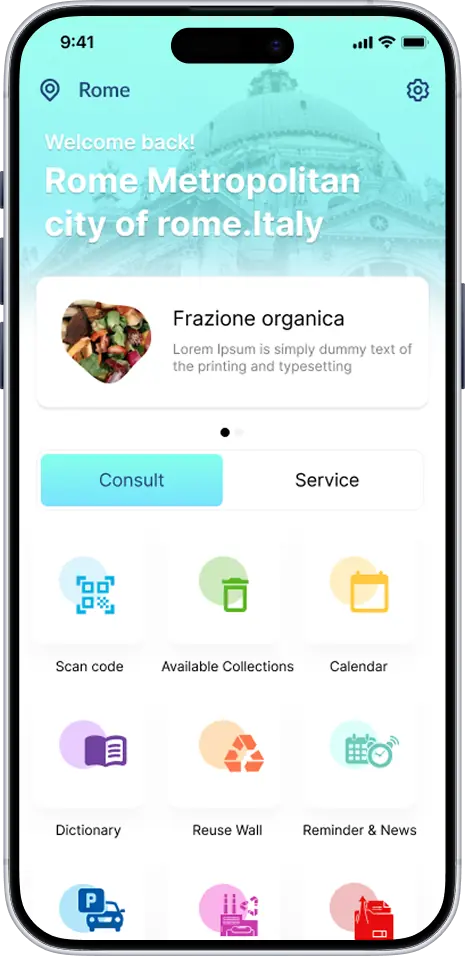
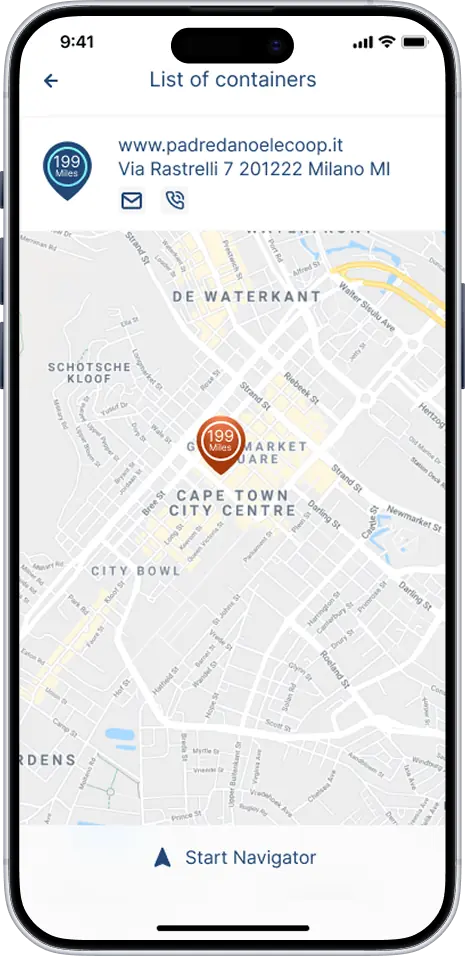
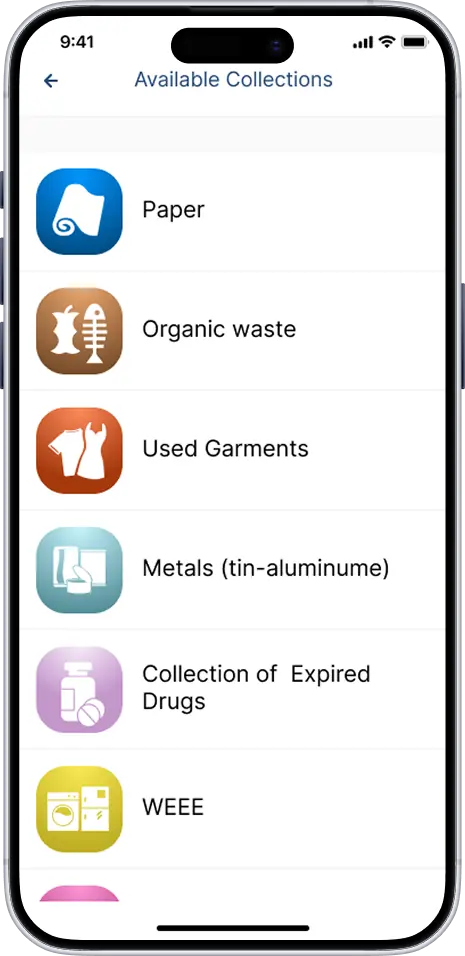
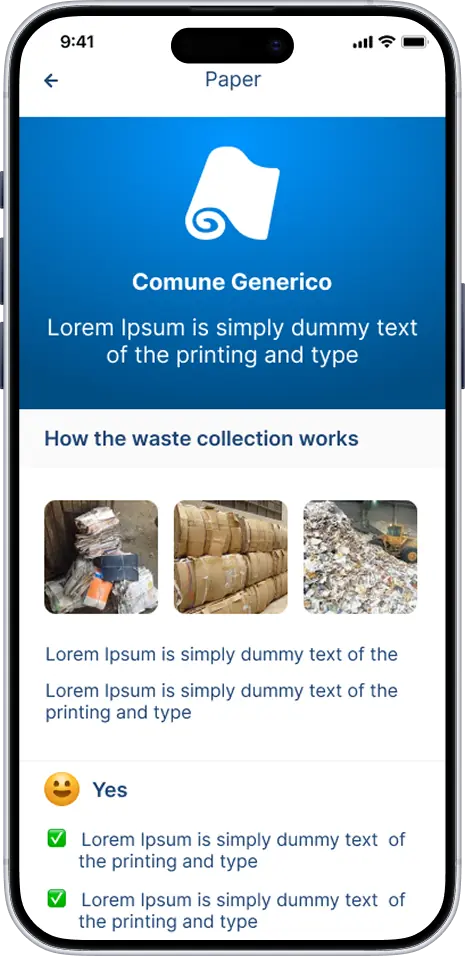
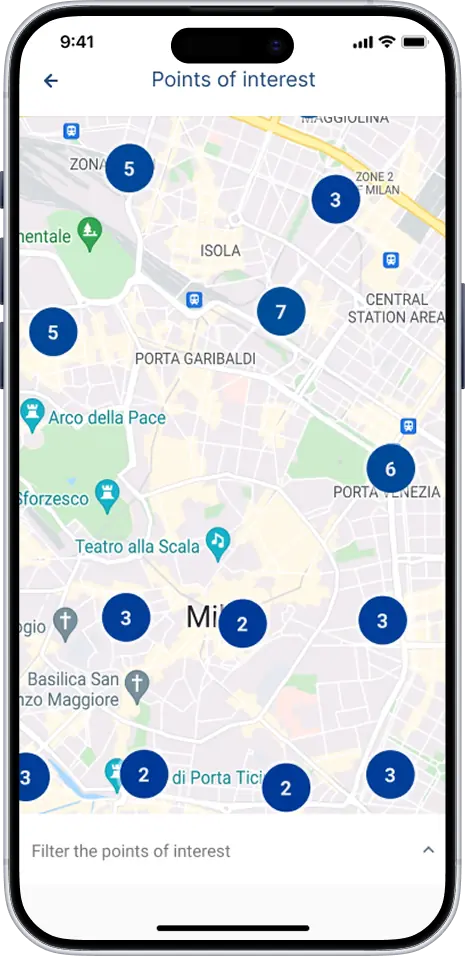
The app covers the whole recycling journey across six screens — Dashboard, Collections, Schedule, Scan, Map and Welcome — and supports six languages for multilingual communities.
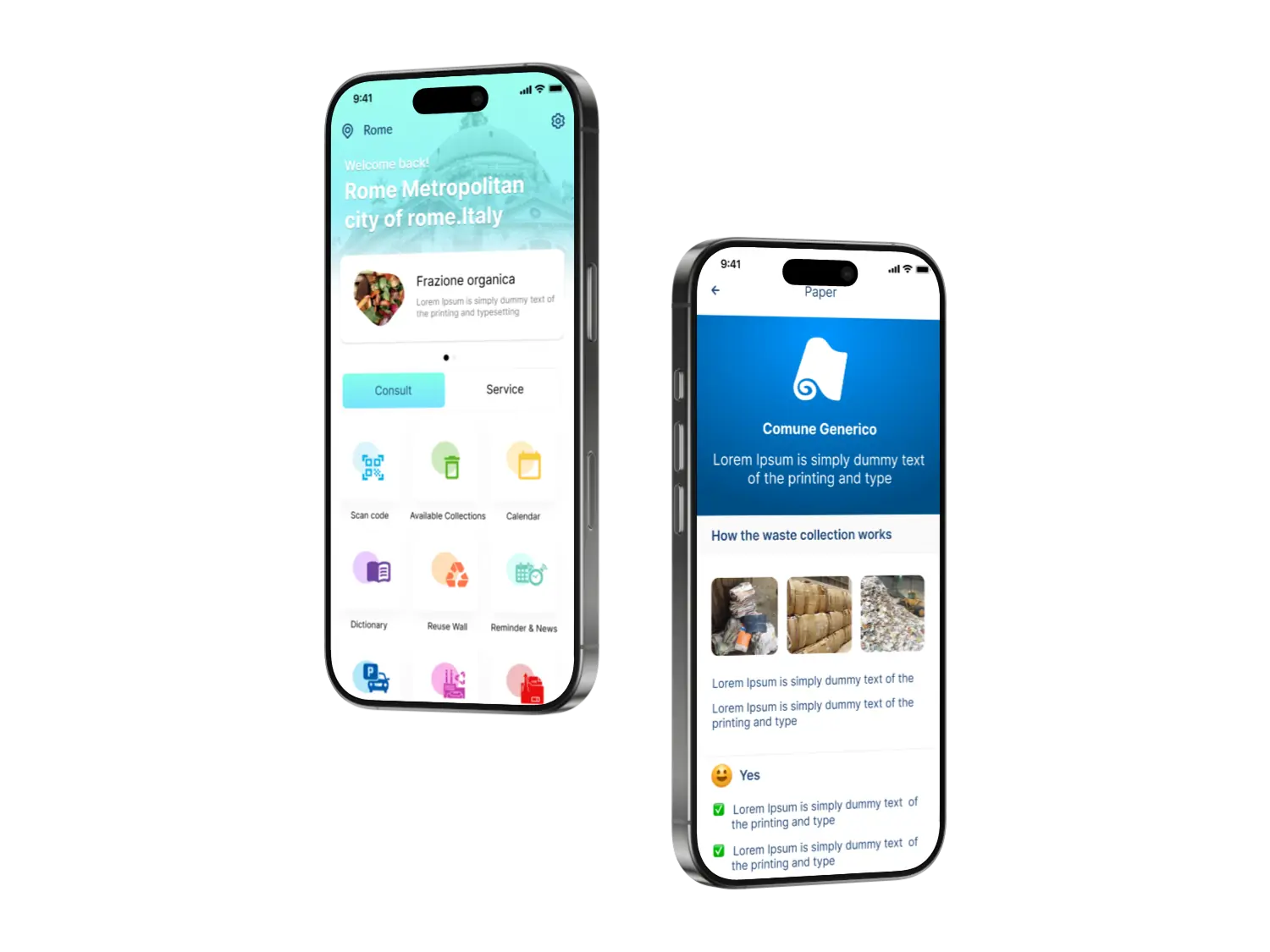
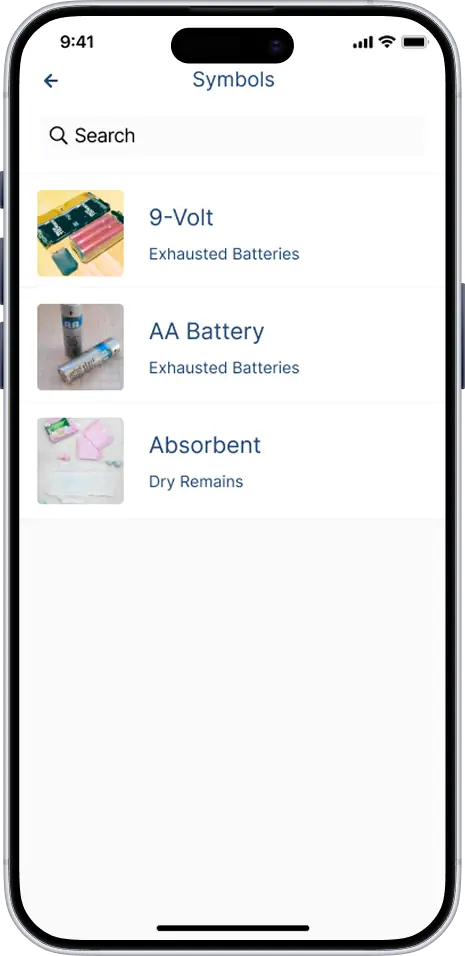
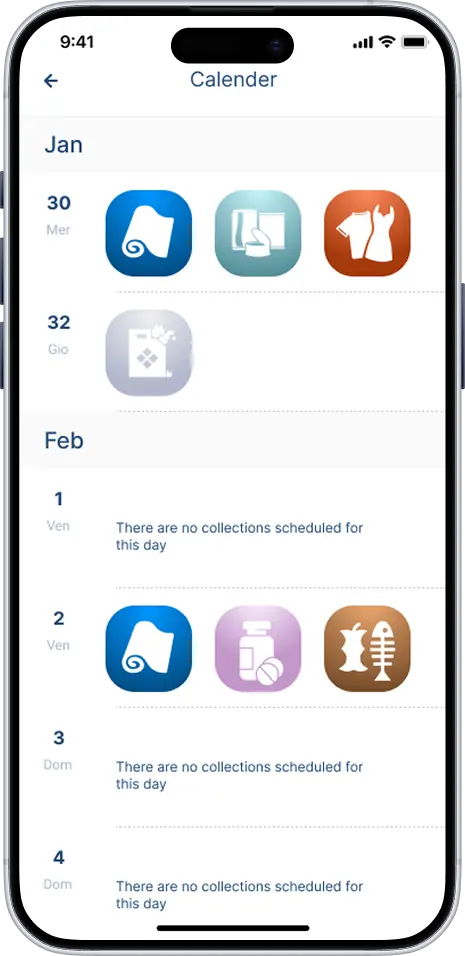
Riciclario dashboard, schedule and scan screens

Client Snapshot

The essentials at a glance.

Industry

Environmental services.

Platform

iOS (Swift), Android (Kotlin).

Year

Information not available in source documents.

Market

Information not available in source documents.

Services Delivered

The scope Mobilions owned end to end.

  • Mobile App Development
  • UX and UI Design
  • Backend Development
  • API Integration
  • Deployment and Maintenance

Technology Stack

The tools and frameworks behind Riciclario.

  • Mobile: Swift (iOS), Kotlin (Android)
  • Backend: custom PHP
  • Database: MySQL
  • Design: UX and UI design delivered in-house

The Challenge

The core problems this build had to solve.

Business Challenge

Most people want to recycle correctly, but the rules are confusing and change from one town to the next. Which bin does a yogurt pot go in? Is it collected on Tuesday or Thursday? The uncertainty leads to contaminated bins, missed pickups and waste that ends up in the wrong place.

Technical Challenge

Three core technical problems had to be solved: every municipality has its own separation rules, collection days and accepted materials, and the app had to adapt to each without a separate build; waste tariff data is region-specific and frequently changing, and had to be integrated in real time while keeping the experience simple; and citizens needed instant, accurate waste identification in under a second, even for products with ambiguous packaging.

Our Approach

How Mobilions moved from problem to working product.

01

Discovery

Information not available in source documents.

02

Architecture

A municipality configuration layer on the backend holds each city's rules, collection days and accepted materials as structured data. When a citizen selects their town, the app loads the correct guidelines automatically, so adding a new municipality is an admin task rather than a code change. A data pipeline ingests tariff information from municipal sources, normalizes it and stores it in MySQL, where the app queries it through a clean API.

03

Execution

A barcode-scanning engine maps product codes to waste categories, and a searchable dictionary covers thousands of products for items without a barcode. Both return results in real time with clear visual cues showing the correct bin color and collection day. Tariff updates reach all users within minutes of a municipality publishing them.

Engineering Decisions

The choices that shaped the platform.

01

Municipality Configuration Layer

Each town's rules, collection days and accepted materials live as structured data on the backend. Selecting a town loads the correct guidelines automatically, so onboarding a new municipality is an admin task rather than a code change.

02

Tariff Data Pipeline

A data pipeline ingests tariff information from municipal sources, normalizes it and stores it in MySQL. The app reads it through a clean API and presents tariffs by user type and zone, with updates reaching users within minutes of publication.

03

Barcode Scanning Plus Searchable Dictionary

A barcode-scanning engine maps product codes to waste categories, and for items without a recognized barcode a searchable dictionary covering thousands of products fills the gap. Both return real-time results with clear visual cues for bin color and collection day.

Technology Considerations

Why the stack fits the problem.

Why These Technologies

Native Swift and Kotlin deliver the iOS and Android apps. A custom PHP backend with MySQL holds the municipality configuration, tariff pipeline and waste dictionary, exposed to the app through a clean API so guidance stays local and current.

Tradeoffs

Information not available in source documents.

Scalability Considerations

The municipality configuration layer means adding a new town is an admin task rather than a code change, so the app scales beyond one municipality without a new release. The tariff pipeline normalizes feeds from many municipal sources into a single queryable store.

Implementation Highlights

The features that define the experience.

Scan or Search

A citizen points the camera at a product barcode or types its name, and Riciclario shows exactly which bin it belongs in and when that waste type is collected in their area.

Collection Schedule

The full municipal collection calendar shows what is being picked up today, tomorrow and across the rest of the week, drawn from each municipality's own rules.

Collection Reminders

A push notification arrives the evening before each collection, tied to the user's municipality and selected waste types, so people only get relevant alerts and avoid missed pickups and wrong bins.

Key Engineering Highlights

A closer look under the hood.

Architecture

A backend municipality configuration layer stores each city's rules as structured data, loaded dynamically when a citizen selects their town; a data pipeline ingests and normalizes tariff feeds; the app reads everything through a clean API.

Data Layer

MySQL stores municipal rules, normalized tariff data and the waste dictionary covering thousands of products.

Performance

Barcode scans and dictionary searches return sorting guidance in real time (under a second), and tariff updates propagate to users within minutes of publication.

Security

Information not available in source documents.

Outcome

Information not available in source documents.

Ready to build something like Riciclario?

If you need a municipal, recycling or civic app with barcode lookup, per-area rules and collection reminders, let us show you how we would build it.

What Clients Say

Mobilions' clients describe fast delivery, clear communication, and senior, trustworthy engineering—in their own words.

5.0RATING

Great experience working with this team. They completed the development work quickly and efficiently without wasting time. Communication was clear and consistent, they understood the requirements well, gave smart suggestions, and delivered exactly as discussed. I'd highly recommend them to anyone looking for a reliable, fast, and skilled app development team.

5.0RATING

We worked with Ankit, Mayur, and Tushar to build the first version of Baba Hebrew for iOS and Android, and they delivered super fast. The team was responsive, reliable, and efficient, taking the idea from zero to a working app in record time. I'd recommend them to anyone who wants to get an MVP live quickly.

5.0RATING

Tushar and Ankit did an outstanding job developing our native iOS (Swift) and Android (Kotlin) apps. They were efficient, responsive, and technically strong throughout. Thanks to their work, we launched successfully and gained over 1,000 users in the first 30 days. Highly recommend this team for quality mobile app development.

5.0RATING

It was a wonderful experience working with Tushar, Ankit, and their team. They built a great mobile app for me and truly brought my vision to life. What stood out was not just their technical skill but their attitude: always positive, solution-oriented, and incredibly patient. They went above and beyond at every step, finding creative workarounds and staying committed even when things got challenging. Extremely professional and trustworthy. I would absolutely hire them again.

5.0RATING

Great experience working with this team. They completed the development work quickly and efficiently without wasting time. Communication was clear and consistent, they understood the requirements well, gave smart suggestions, and delivered exactly as discussed. I'd highly recommend them to anyone looking for a reliable, fast, and skilled app development team.

5.0RATING

We worked with Ankit, Mayur, and Tushar to build the first version of Baba Hebrew for iOS and Android, and they delivered super fast. The team was responsive, reliable, and efficient, taking the idea from zero to a working app in record time. I'd recommend them to anyone who wants to get an MVP live quickly.

5.0RATING

Tushar and Ankit did an outstanding job developing our native iOS (Swift) and Android (Kotlin) apps. They were efficient, responsive, and technically strong throughout. Thanks to their work, we launched successfully and gained over 1,000 users in the first 30 days. Highly recommend this team for quality mobile app development.

5.0RATING

It was a wonderful experience working with Tushar, Ankit, and their team. They built a great mobile app for me and truly brought my vision to life. What stood out was not just their technical skill but their attitude: always positive, solution-oriented, and incredibly patient. They went above and beyond at every step, finding creative workarounds and staying committed even when things got challenging. Extremely professional and trustworthy. I would absolutely hire them again.

Frequently Asked Questions

Answers to the questions teams ask before starting a build like this.

It depends on scope. The cost of a build like this is driven by scope, features, integrations, compliance requirements, team composition, and infrastructure complexity. We provide a fixed estimate after a short discovery call once those are defined.

The app reads a product's barcode with the camera and looks it up against a database that maps each product to a waste category. For products without a recognized barcode, a searchable dictionary fills the gap. The app then shows the correct bin and the next collection day for that waste type.

Yes, and that is exactly how Riciclario works. Each municipality's rules live as structured data on the backend. The citizen selects their town once, and the app loads the right guidelines, collection days and accepted materials automatically. New municipalities are added through an admin panel without a new release.

Mobilions builds a data pipeline that ingests tariff feeds from municipal sources, normalizes the formats and stores them in a database. The app reads this through a clean API and presents tariffs by user type and zone, with updates propagating to users shortly after a municipality publishes them.

Reminders work best the evening before collection, when there is still time to act. Notifications are tied to each user's municipality and selected waste types, so people only get alerts that are relevant to their street and their schedule rather than a generic broadcast.

A focused recycling app for a single municipality can ship in three to four months. A multi-municipality platform with barcode scanning, tariff integration and an admin panel typically takes four to seven months, depending on how many data sources need integrating.

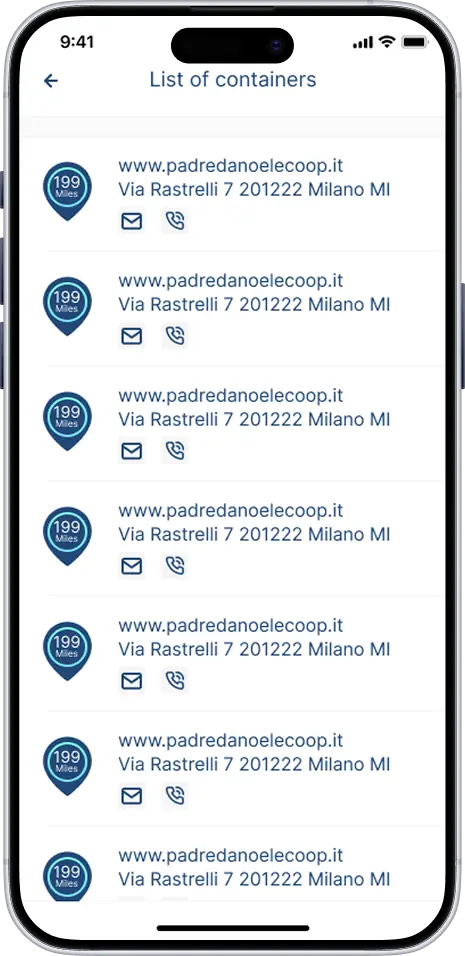
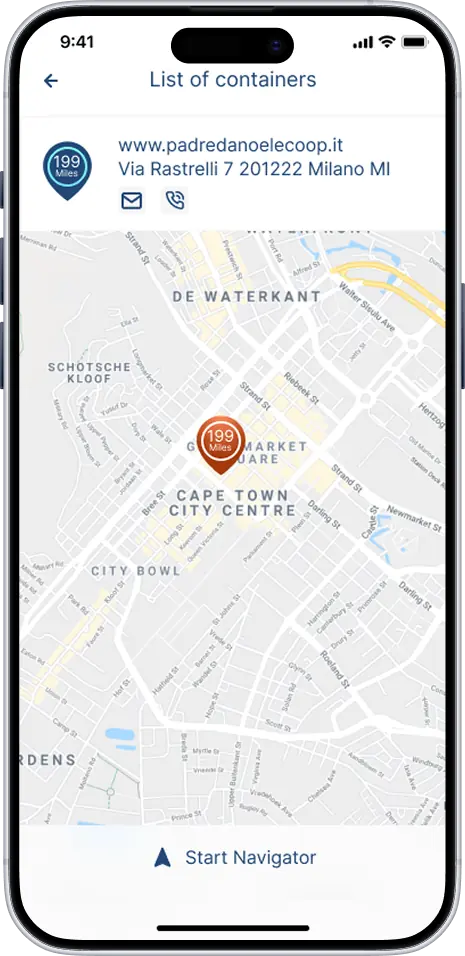
At minimum: a waste lookup (barcode or search), a collection schedule, and reminders. Most successful apps add a drop-off map for special waste and multi-language support for diverse communities. An admin panel for municipalities to manage their own rules is what makes the app scalable beyond one town.

The app is built with a localization layer from the start, so all text, waste categories and notifications can be translated without code changes. Riciclario launched with six languages to serve multilingual communities, and adding another language is a content task rather than a development one.

Let's build your next big thing

Let's build your next big thing. Share your idea and get a free consultation—we respond within one business day.

0+
Products shipped
0+
Clients served
0+
Countries reached
Call Us (USA)
+1-856-524-5593

Get a Free Quote

A senior engineer replies within one business day · NDA on request · no obligation · you own the code and IP.