




























Machine Learning (AI/ML) Development Services That Ship

Mobilions provides machine learning (AI/ML) development services that ship to production, not notebooks—framing the problem, engineering your data, training and evaluating models against honest test sets, then deploying and monitoring for drift so accuracy holds. The same senior engineers who scope your ML build it, deploy it, and monitor it, and the source code, models, and data pipelines stay yours throughout.

Part of our broader AI development services →
famooshedidc-ujoinbeetkoralionstudio-ailokalapptosmartbababanounbasafrdocscannerludusiomaamarmcokieme-by-mindmudeermukaabmy-meeting-cardpaaetpixiprezenceraceboardrecuriciclarioschutzwinkelshishrspendulgetrainaerotrendzfanszatarafamooshedidc-ujoinbeetkoralionstudio-ailokalapptosmartbababanounbasafrdocscannerludusiomaamarmcokieme-by-mindmudeermukaabmy-meeting-cardpaaetpixiprezenceraceboardrecuriciclarioschutzwinkelshishrspendulgetrainaerotrendzfanszatara
Since 2016
0+Projects Delivered
0+Clients Served
0+Countries Reached

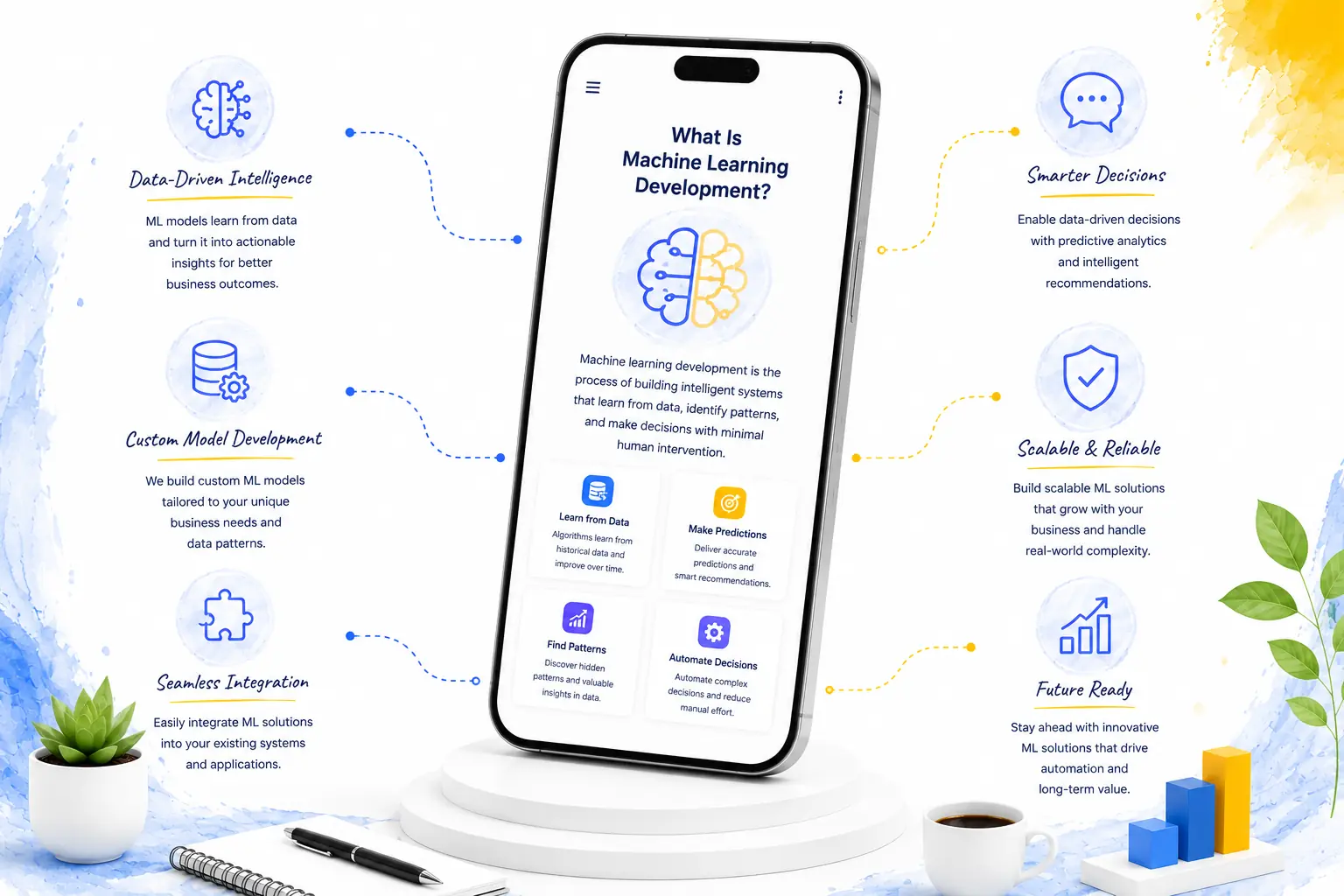
What Is Machine Learning Development?

Machine learning development—also called AI/ML development—is the engineering of software that learns patterns from data and uses them to make decisions—predicting an outcome, scoring a record, classifying an input, recommending an item, or recognizing what is in an image—as a dependable part of a production system. It spans framing the problem, preparing and engineering features from your data, training and evaluating candidate models, deploying the chosen model behind an API, and operating it with monitoring and retraining once real inputs arrive. The hard part is not fitting a model on clean training data; it is making the prediction accurate, stable, and trustworthy when messy real-world data, latency budgets, and changing conditions show up.

Machine learning development

At Mobilions, machine learning development is done by senior engineers who train models on your verified data, measure them against honest test sets, and wrap them in the monitoring and retraining that keep them accurate over time. A practical truth shapes how we build: classical ML—gradient-boosted trees, logistic regression, well-engineered features—often beats a large model on cost and accuracy for the prediction and scoring problems most businesses actually have. We choose the model that fits your data and your budget, not the one that sounds impressive, and we tell you when a simpler approach is the honest answer.

What We Build

Mobilions builds machine learning systems across the problems businesses most often need solved—each available on its own or as part of a larger AI build.

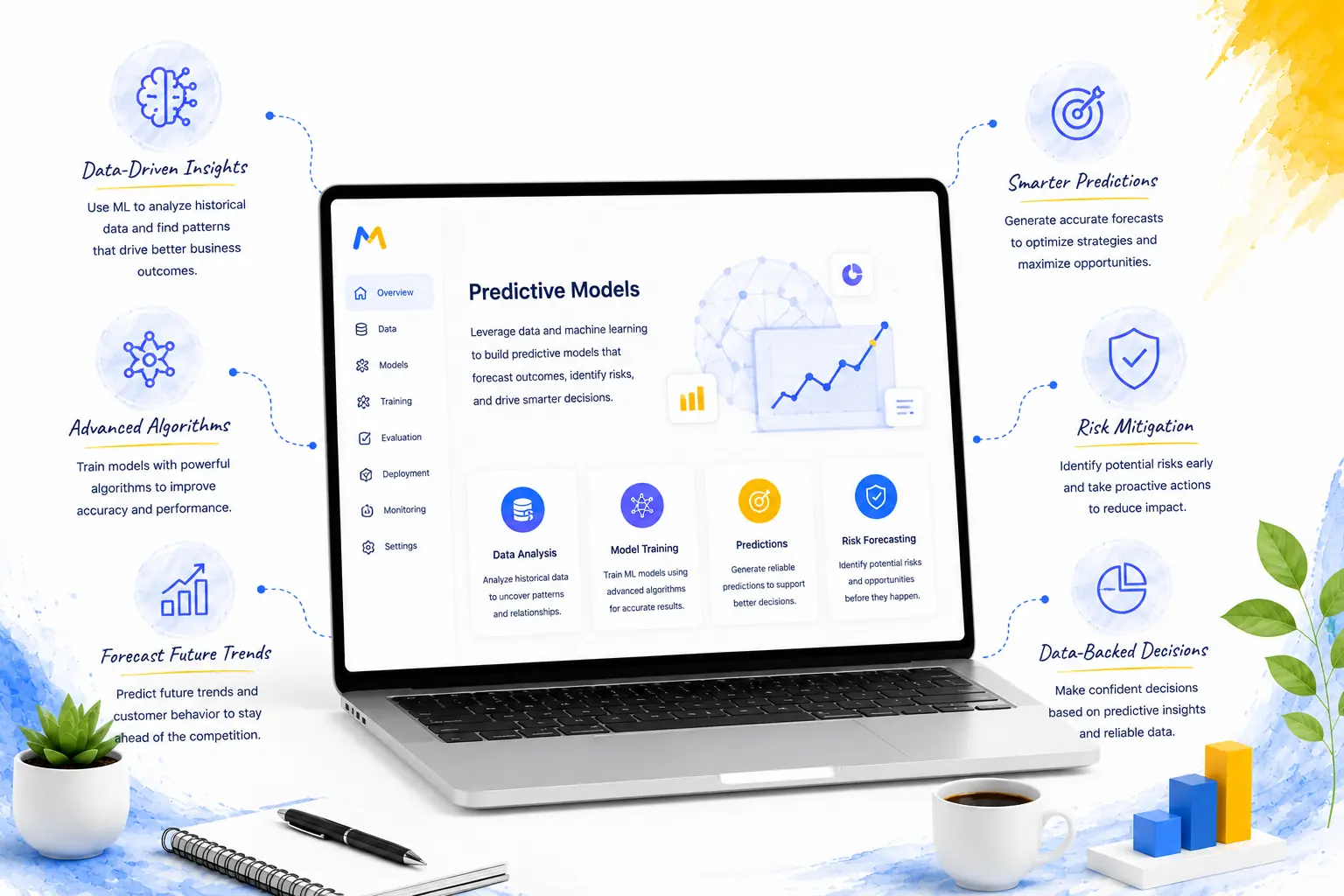
Predictive Models

Models that forecast an outcome from your historical data—churn, conversion, default risk, demand, equipment failure—so your product or operations can act before the event instead of reacting after it. We engineer the features that carry signal, train and compare candidate models, and calibrate the output so the probabilities you act on are honest.

Predictive Models

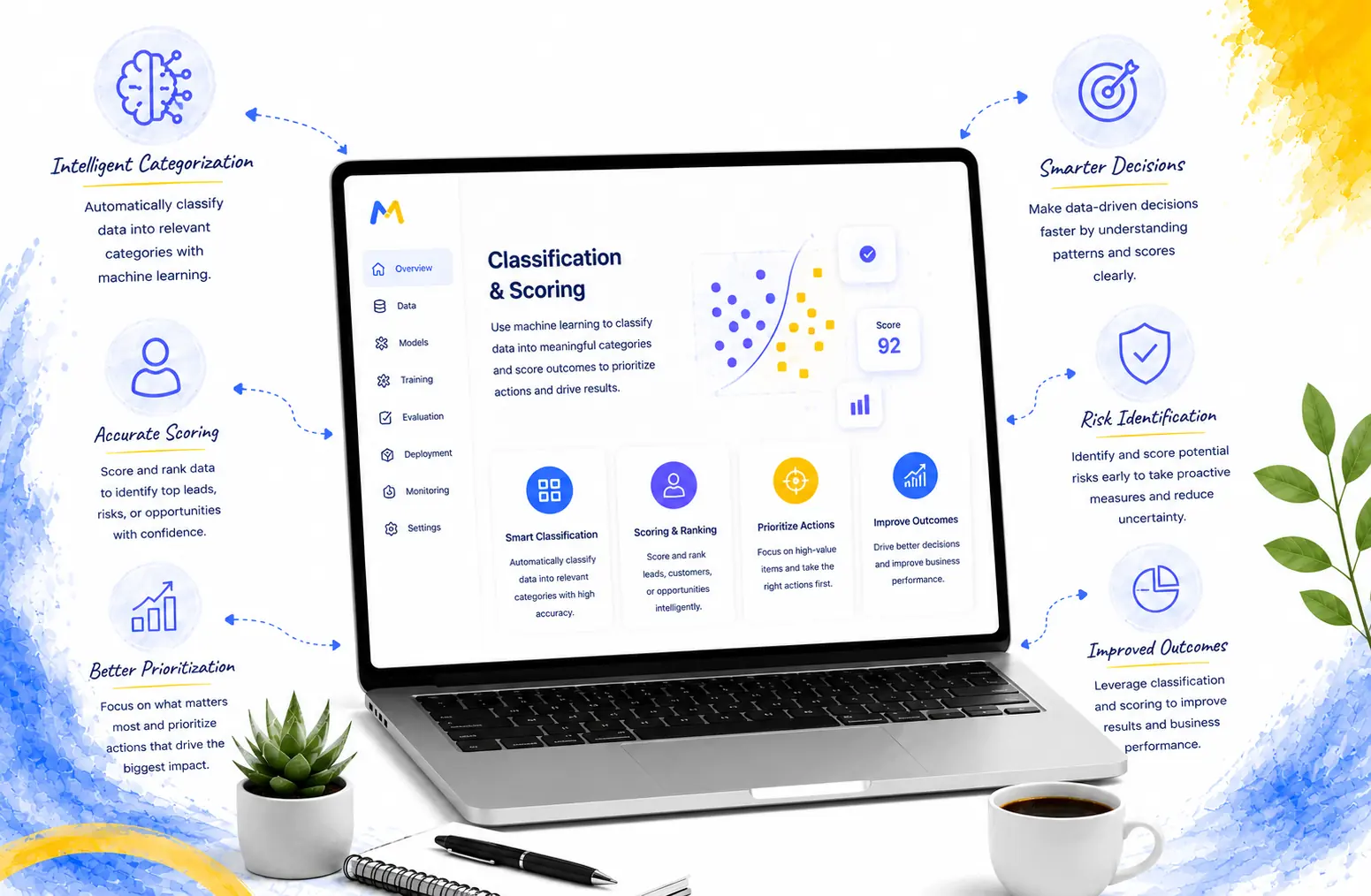
Classification & Scoring

Classifiers and scoring models that label, rank, or route records at scale—fraud signals, lead quality, content categories, support priority—with thresholds tuned to your real cost of a false positive versus a false negative. We optimize for the metric that matters to your business, not for headline accuracy on a balanced toy dataset.

Classification & Scoring

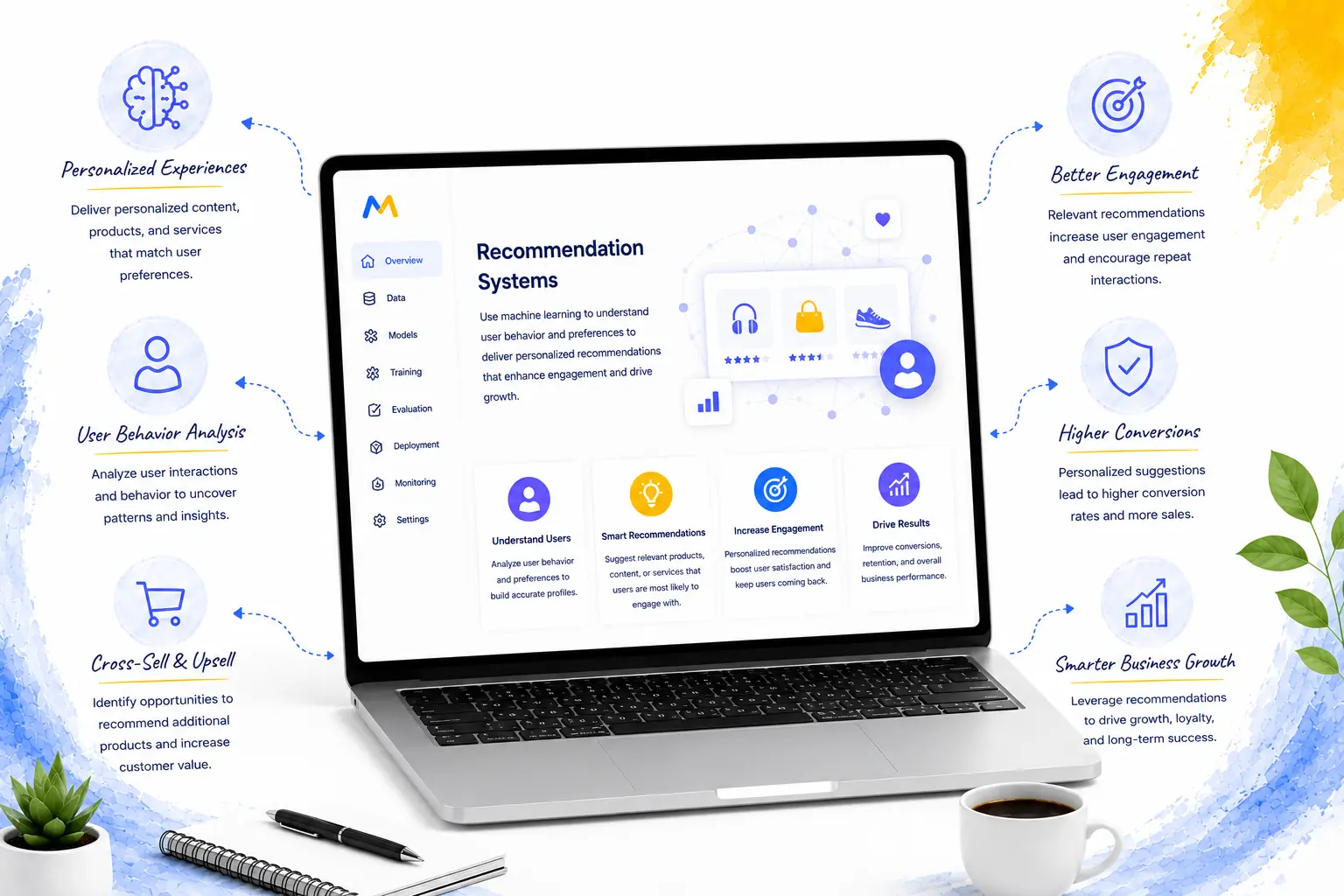
Recommendation Systems

Recommendation and ranking engines that surface the right item, product, or piece of content for each user from your behavioral and catalog data. We build retrieval and ranking that hold up under real catalog size and traffic, and evaluate them against business outcomes rather than offline metrics alone.

Recommendation Systems

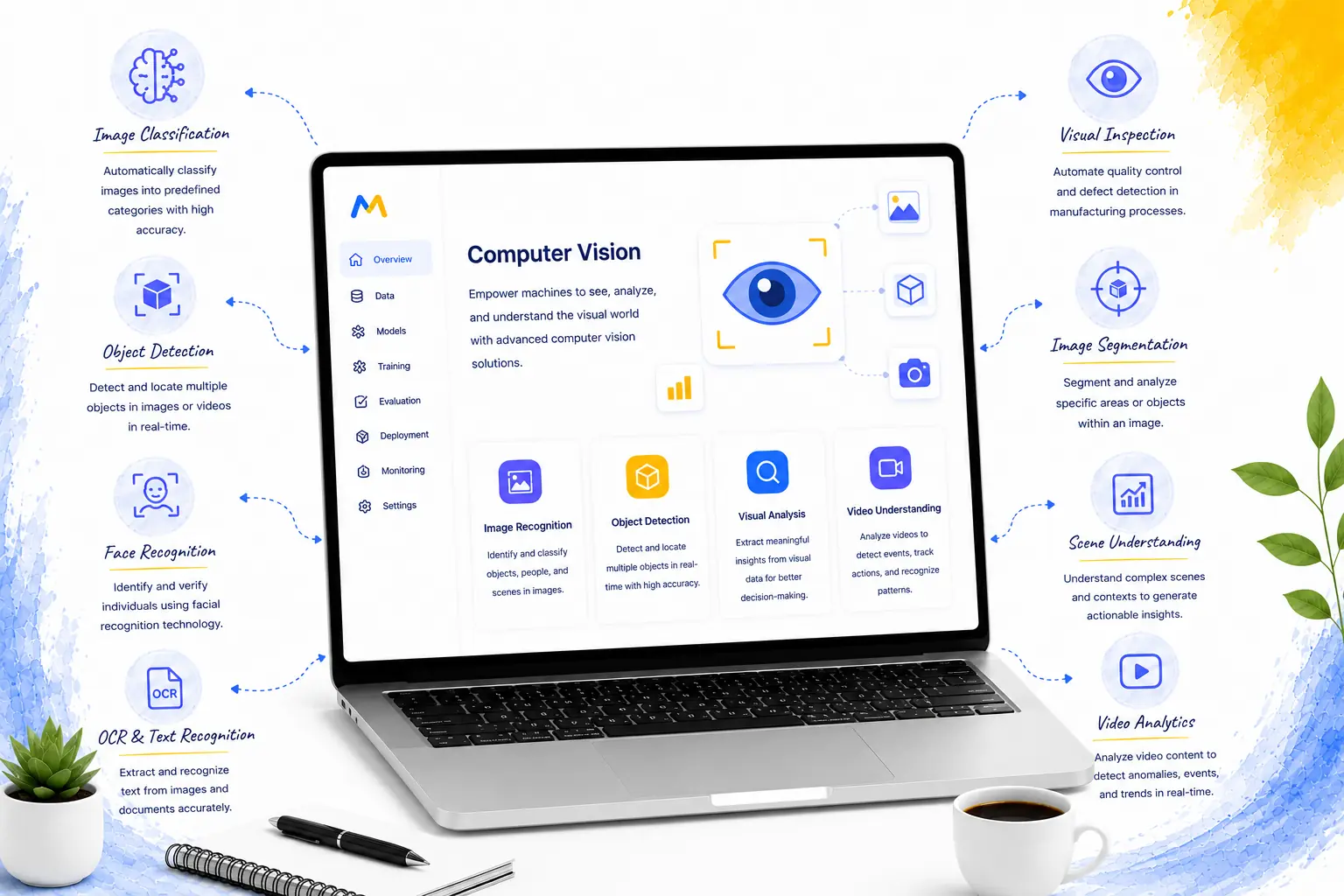
Computer Vision

Computer vision development for classification, detection, segmentation, and OCR over your images and video—quality inspection, document capture, inventory recognition, and visual search. We handle the unglamorous parts that decide accuracy in the field: data labeling, augmentation, edge-case handling, and honest evaluation on images that look like production, not the lab.

Computer Vision

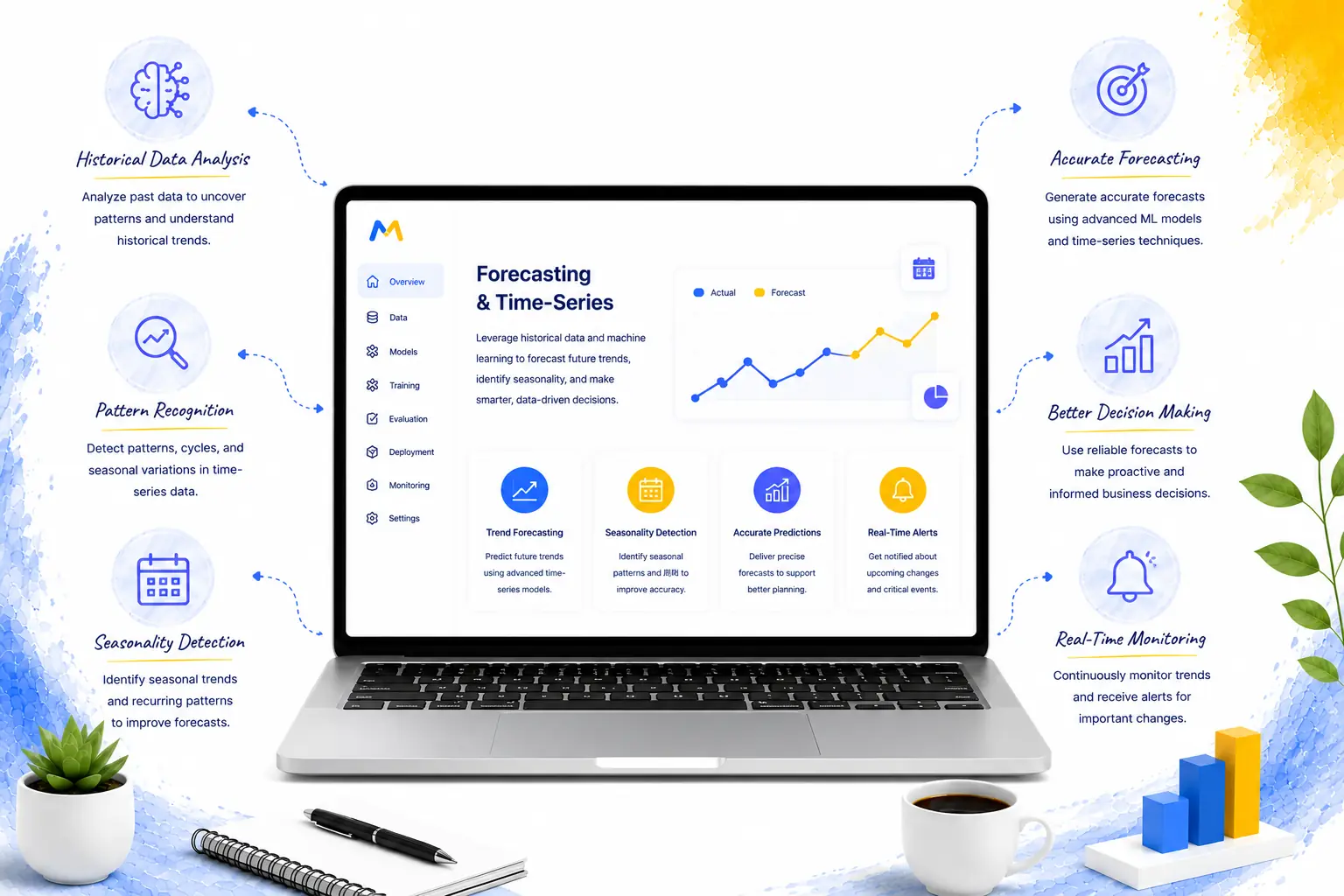
Forecasting & Time-Series

Forecasting models for demand, capacity, revenue, and operational planning that account for seasonality, trend, and the irregular reality of business data. We quantify uncertainty so you get ranges you can plan against, not a single false-precision number, and we backtest on held-out history before anything reaches a decision.

Forecasting & Time-Series

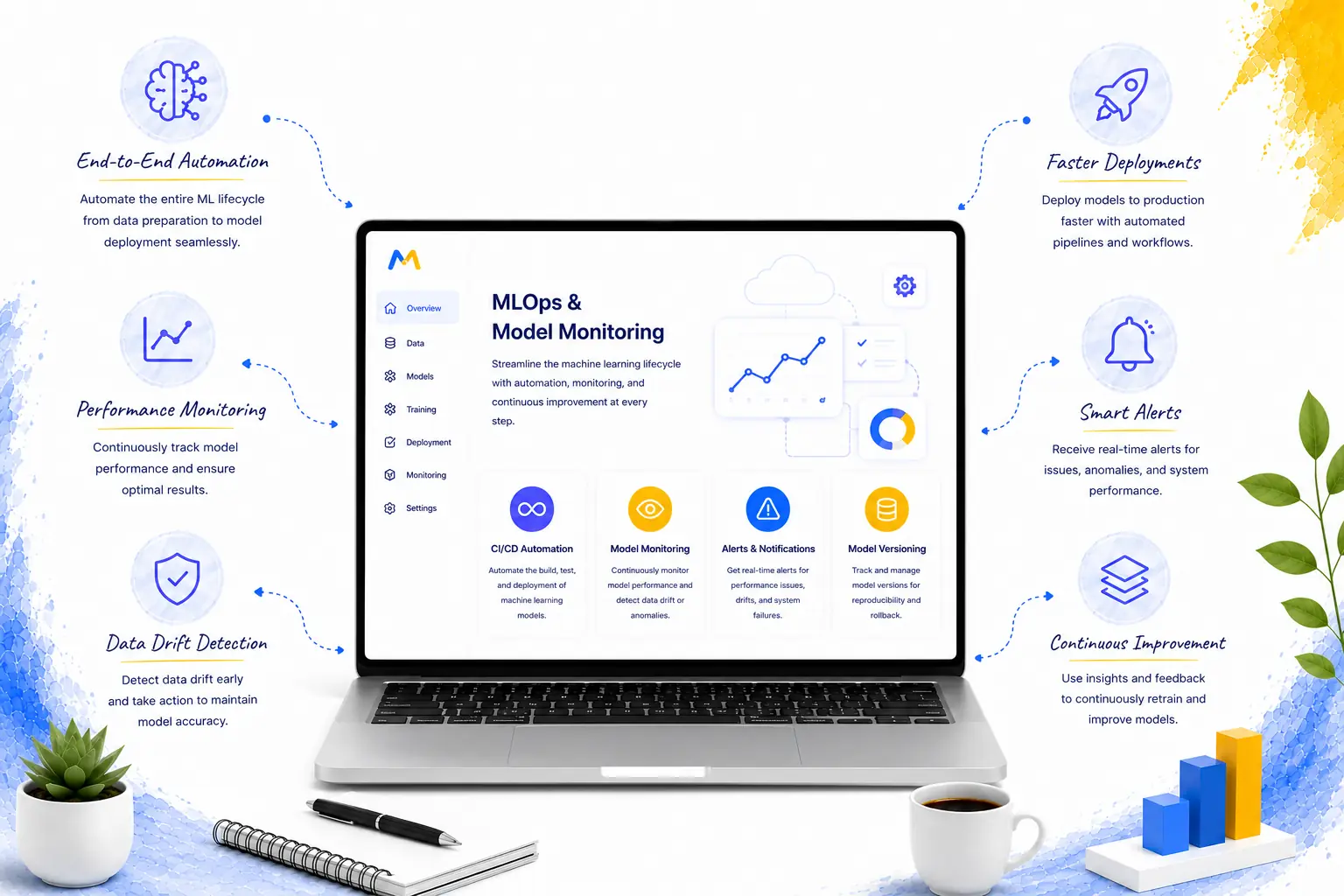
MLOps & Model Monitoring

The production plumbing that keeps models healthy: versioned training and deployment pipelines, automated evaluation, drift detection, alerting, and retraining workflows. MLOps is what separates a model that works on launch day from one that still works six months later, and we wire it in from the start rather than bolting it on after accuracy quietly decays.

MLOps & Model Monitoring
Predictive ModelsClassification & ScoringRecommendation SystemsComputer VisionForecasting & Time-SeriesMLOps & Model Monitoring
Part of our broader AI development services →

Have an ML project in mind?

A senior engineer will tell you whether machine learning fits your problem and your data—and what it takes to ship, evaluate, and monitor it in production.

Where ML Helps

Machine learning pays off where there is enough good data and a decision worth getting right more often—and we will tell you where it does not.

.01

Predict and Prevent Before It Happens

Where you have history of an outcome you care about—who churns, what fails, which orders spike—ML turns that history into early warning, so your product or operations can intervene in time. We calibrate the predictions and set the action thresholds with you, so the model drives decisions you can trust rather than alerts your team learns to ignore.

.02

Score and Route at Scale

When the volume of records, requests, or transactions is too high to triage by hand, classification and scoring let you rank, label, and route automatically while escalating the uncertain cases to a person. Throughput goes up without quality going down, because the model handles the clear cases and people handle the judgment calls.

.03

See and Read Your Visual Data

Where decisions depend on what is in an image or document—inspection, capture, recognition—computer vision development extracts that signal reliably enough to act on. We build for the conditions your images actually arrive in, so accuracy holds outside the demo.

.04

Where ML Is Not the Answer

If you do not have enough representative data, or a fixed business rule already makes the decision correctly, ML adds cost, latency, and a maintenance burden without earning its place. We will say so. A scoring rule your team can read and audit often beats a model nobody can explain, and we recommend the simpler path when it is the honest one—because building the wrong thing well still wastes your budget.

How We Build Production ML

Mobilions builds machine learning in four disciplined stages, so the model is accurate, stable, and reliable in production.

Step 1.

Frame & Prepare Data

We start by framing the decision the model will drive and the metric that defines success, then prepare the data behind it—cleaning, joining, and engineering the features that actually carry signal. Most of the accuracy in a real ML system is won here, in the data, before any model is chosen, which is why we treat data preparation as the core of the work rather than a preliminary.

Step 2.

Train & Evaluate

We train and compare candidate models—classical and deep learning alike—and evaluate them honestly on held-out data with the metric that matters to your business, not a vanity number. We check for leakage, calibrate the outputs, and measure against a baseline, so you know not just that a model works but how much better it is than the simple alternative.

Step 3.

Deploy

We deploy the chosen model behind a clean, versioned API with a sensible latency and cost profile, integrated into the systems and workflows your team already uses. Deployment is engineering, not a hand-off: we handle versioning, fallback behavior, and serving so the model holds up under real traffic and stays maintainable as it grows.

Step 4.

Monitor & Retrain

After launch we instrument the model—logging predictions, tracking accuracy, latency, and cost, and watching for the data and concept drift that erode every model over time. When performance moves, we retrain on fresh data through a repeatable pipeline, so the system stays accurate as your data and conditions change. Support terms are agreed explicitly in the engagement.

Technology Stack

Mobilions selects ML technology to fit the problem—the right models, solid data and feature engineering, honest evaluation, and the MLOps to run it in production.

Models & Frameworks
XGBoostLightGBMscikit-learnPyTorchTensorFlow
Data & Features
PandasAWSGoogle CloudAzure
Training & Evaluation
MLflowscikit-learnJupyterWeights & Biases
MLOps & Monitoring
DockerKubernetesMLflowGrafana

Why Mobilions for AI/ML

Clients choose Mobilions because the same senior engineering team that scopes the model also builds, deploys, and monitors it—with proof you can check.

01

The Right Tool for the Data

We reach for classical ML when it beats a large model on cost and accuracy, and deep learning only when the problem and the data justify it—so you ship the model that fits, not the one that sounds impressive.

02

Evaluated and Monitored by Default

Every model is measured against an honest baseline before launch and watched for drift after it, so accuracy is something we prove and maintain, not something we assume.

03

One Team: Build → Deploy → Monitor

The same engineers carry your ML across the whole journey, so there is no handoff and no loss of context at the moment reliability matters most.

04

You Own Everything

You keep the source code, the models, and the data pipelines. We build for your team to operate and extend, with no lock-in.

What Clients Say

Mobilions' clients describe fast delivery, clear communication, and senior, trustworthy engineering—in their own words.

5.0RATING

Great experience working with this team. They completed the development work quickly and efficiently without wasting time. Communication was clear and consistent, they understood the requirements well, gave smart suggestions, and delivered exactly as discussed. I'd highly recommend them to anyone looking for a reliable, fast, and skilled app development team.


5.0RATING

We worked with Ankit, Mayur, and Tushar to build the first version of Baba Hebrew for iOS and Android, and they delivered super fast. The team was responsive, reliable, and efficient, taking the idea from zero to a working app in record time. I'd recommend them to anyone who wants to get an MVP live quickly.

5.0RATING

Tushar and Ankit did an outstanding job developing our native iOS (Swift) and Android (Kotlin) apps. They were efficient, responsive, and technically strong throughout. Thanks to their work, we launched successfully and gained over 1,000 users in the first 30 days. Highly recommend this team for quality mobile app development.

5.0RATING

It was a wonderful experience working with Tushar, Ankit, and their team. They built a great mobile app for me and truly brought my vision to life. What stood out was not just their technical skill but their attitude: always positive, solution-oriented, and incredibly patient. They went above and beyond at every step, finding creative workarounds and staying committed even when things got challenging. Extremely professional and trustworthy. I would absolutely hire them again.

5.0RATING

Great experience working with this team. They completed the development work quickly and efficiently without wasting time. Communication was clear and consistent, they understood the requirements well, gave smart suggestions, and delivered exactly as discussed. I'd highly recommend them to anyone looking for a reliable, fast, and skilled app development team.

5.0RATING

We worked with Ankit, Mayur, and Tushar to build the first version of Baba Hebrew for iOS and Android, and they delivered super fast. The team was responsive, reliable, and efficient, taking the idea from zero to a working app in record time. I'd recommend them to anyone who wants to get an MVP live quickly.

5.0RATING

Tushar and Ankit did an outstanding job developing our native iOS (Swift) and Android (Kotlin) apps. They were efficient, responsive, and technically strong throughout. Thanks to their work, we launched successfully and gained over 1,000 users in the first 30 days. Highly recommend this team for quality mobile app development.

5.0RATING

It was a wonderful experience working with Tushar, Ankit, and their team. They built a great mobile app for me and truly brought my vision to life. What stood out was not just their technical skill but their attitude: always positive, solution-oriented, and incredibly patient. They went above and beyond at every step, finding creative workarounds and staying committed even when things got challenging. Extremely professional and trustworthy. I would absolutely hire them again.

Frequently Asked Questions

The most common questions buyers ask about machine learning development—answered directly.

Machine learning development is the engineering of software that learns patterns from your data to make decisions—predicting, classifying, recommending, or recognizing—as a dependable part of a production system. It covers framing the problem, preparing data and features, training and evaluating models, deploying the chosen one behind an API, and operating it with monitoring and retraining. The challenge is making the prediction accurate and stable once real, messy data and changing conditions arrive, which is exactly where Mobilions focuses.

Classical machine learning learns from your structured and historical data to predict, score, classify, or forecast a specific outcome—churn, fraud, demand. Generative AI and large language models produce new content such as text or images and excel at language tasks. They solve different problems: for prediction and scoring on tabular data, classical ML is usually cheaper and more accurate; for language understanding and generation, LLMs fit. We recommend the right one for your problem—and that is often classical ML.

We build predictive models, classification and scoring, recommendation systems, computer vision, and forecasting and time-series models, plus the MLOps and monitoring around them. On the model side we use gradient-boosted trees and other classical methods where they win on cost and accuracy, and deep learning with PyTorch or TensorFlow where the problem and data justify it.

It depends on the problem: a well-defined tabular prediction can work with thousands of labeled examples, while computer vision and deep learning need substantially more. What matters more than raw volume is that the data is representative of the real conditions the model will face and that the outcome you want to predict is reliably recorded. In discovery we assess your data honestly, and if there is not enough signal, we will tell you rather than ship a model you cannot trust.

We evaluate on held-out data the model never saw during training, using the metric that reflects your actual business cost—precision and recall, calibration, error ranges—rather than a single headline accuracy number. We check for data leakage, compare against a simple baseline so you know how much the model really adds, and calibrate outputs so the scores you act on are honest. Evaluation is evidence, not a formality.

MLOps is the engineering practice that operates machine learning in production: versioned training and deployment pipelines, automated evaluation, drift detection, alerting, and retraining workflows. It matters because a model's accuracy decays as the world changes, and without MLOps that decay goes unnoticed until it reaches your users. We wire monitoring and retraining in from the start, so the model that works on launch day still works months later.

We instrument every model in production to track its predictions and accuracy and to detect drift—when incoming data or the underlying relationship shifts away from what the model learned. When drift crosses a threshold, alerting flags it and a repeatable pipeline retrains the model on fresh data and re-evaluates it before redeployment. Drift is expected, not a failure, and the engineers who built your model are best placed to keep it accurate through it.

Cost depends on scope: the complexity of the problem, your data readiness, whether classical ML or deep learning fits, and how much ongoing monitoring and retraining you need. We size a solution to your actual needs and discuss the trade-offs openly. The fastest way to a real number is a short scoping call—Get a Project Estimate.

A focused predictive or scoring model on ready data can reach a working version in weeks; computer vision or a larger system with heavy data preparation and integration takes longer. We define milestones in discovery so you have a realistic schedule before we build, and we ship in short, visible iterations rather than disappearing into a long black box.

You do. You keep the source code, the trained models, and the data pipelines, and we build for your team to operate and extend with no lock-in. We handle your data with least-privilege access, offer private or on-premise deployment for sensitive workloads, and sign an NDA on request. For regulated work like fintech and healthcare, compliance is designed into the architecture.

Let's build your next big thing

Let's build your next big thing. Share your idea and get a free consultation—we respond within one business day.

0+
Products shipped
0+
Clients served
0+
Countries reached
Call Us (USA)
+1-856-524-5593

Get a Free Quote

A senior engineer replies within one business day · NDA on request · no obligation · you own the code and IP.