Baba: A Gender-Aware AI Hebrew Translation App
Baba produces grammatically correct, gender-aware Hebrew that standard translators get wrong, asking one question before it translates: who are you speaking as? Mobilions built it native on iOS and Android with six gender modes, OpenAI and Gemini with automatic fallback, Supabase sync, and cross-store subscriptions.
Project Overview
A summary of what Baba is and what Mobilions engineered.
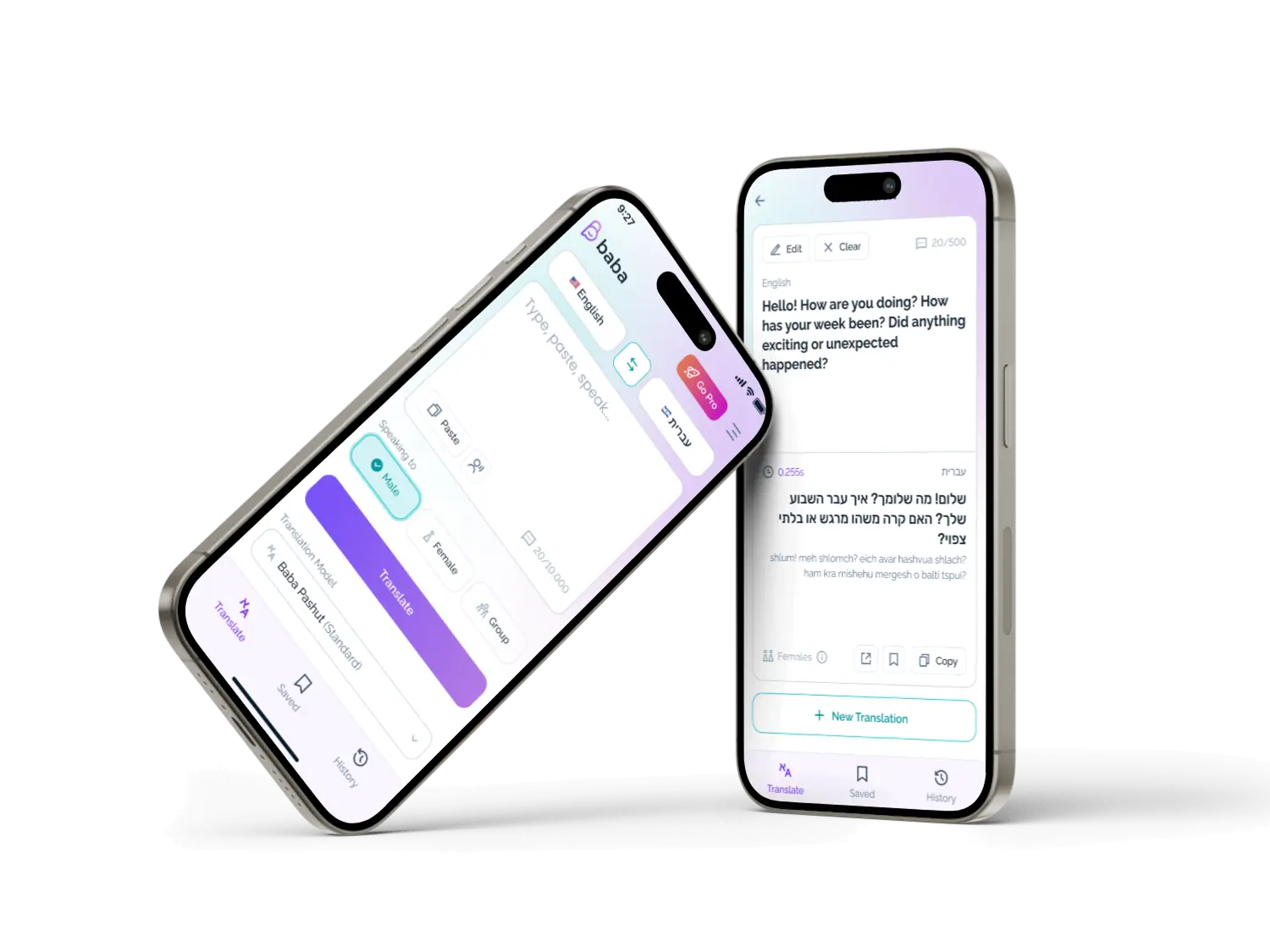
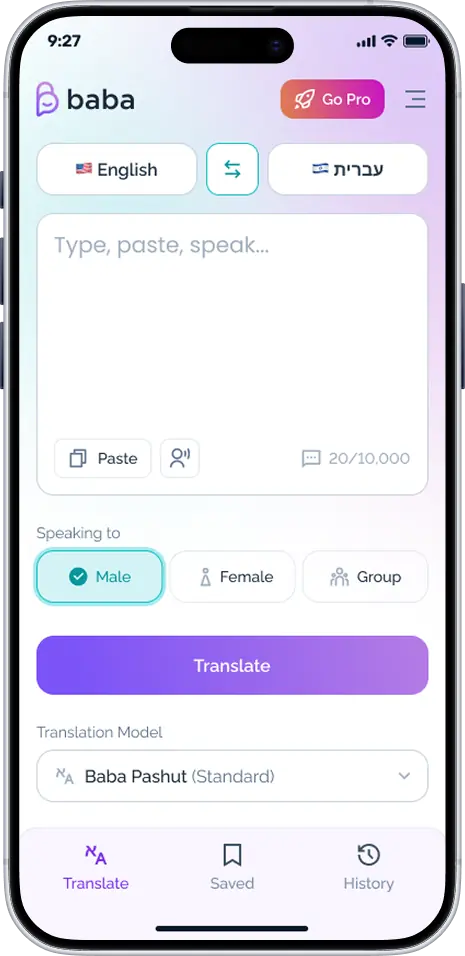
Baba is a native AI Hebrew translation app that produces gender-aware translations using OpenAI and Gemini models. Hebrew verbs, adjectives and pronouns change depending on who is speaking and who they are speaking to, and common tools like Google Translate ignore this entirely and produce confidently wrong Hebrew. Baba solves it by asking one simple question before it translates: who are you speaking as?
Mobilions built the app native on both platforms: Swift on iOS and Kotlin on Android. Six gender modes feed context straight into the AI prompt, OpenAI and Gemini power translation with automatic fallback, and Supabase handles the backend, authentication and real-time sync through Edge Functions. Payments run through StoreKit 2 and Google Play Billing.
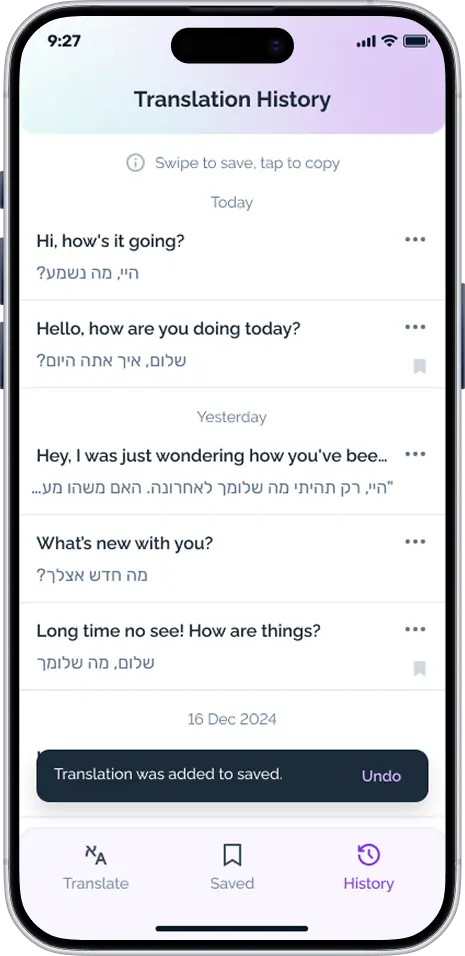
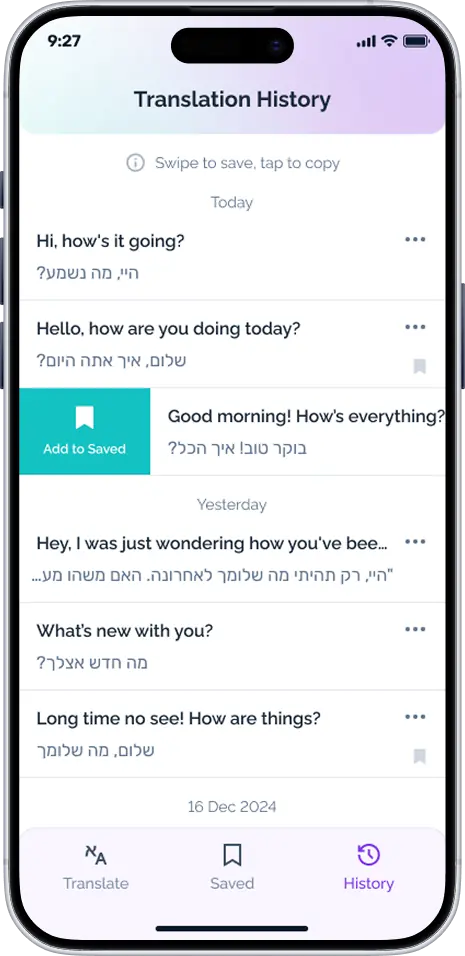
Translation history, saved favorites and cross-device sync keep everything in one place across iOS and Android. Real-time results arrive in under a second, and a free tier offers 7,500 characters a month with visual usage tracking before users upgrade to Pro.
Client Snapshot
Key facts about the product, platform and market at a glance.
Language and AI Technology
iOS (Swift), Android (Kotlin)
2026
Services Delivered
The scope of work Mobilions delivered on Baba.
- Native mobile app development (iOS and Android)
- AI model integration (OpenAI and Gemini)
- Backend, authentication and real-time sync (Supabase, Edge Functions)
- In-app subscription / payments integration (StoreKit 2, Google Play Billing)
Technology Stack
The languages, services and tools behind the build.
- Mobile: Swift (iOS), Kotlin (Android)
- AI models: OpenAI API, Gemini
- Backend & auth: Supabase, Edge Functions
- Payments: StoreKit 2, Google Play Billing
The Challenge
The core problems Baba had to solve.
Business Challenge
Standard translators get Hebrew wrong. Hebrew is a gendered language, and a sentence said by a woman is grammatically different from the same sentence said by a man, and different again when addressing one person versus a group. Tools like Google Translate ignore this and produce confidently wrong Hebrew, so the product needed to deliver grammatically correct, gender-aware translations while staying fast, synced and easy to extend.
Technical Challenge
The AI needed gender context without adding friction to the flow. History and favorites had to sync across iOS and Android in real time without conflicts and ideally without a custom backend. Subscriptions had to work across both app stores with different pricing rules, trials and billing cycles, and the app had to support two AI providers with automatic fallback and consistent response formatting.
Our Approach
How Mobilions moved from discovery to a working cross-platform app.
Discovery
Baba began with a grammar problem rather than a model problem. Hebrew inflects verbs, pronouns and adjectives with the speaker's gender and audience, so a Hebrew translation app that never asks who is speaking will produce confidently wrong output, as tools like Google Translate do. The team established that Baba had to capture the gender context in the flow and pass it to the model as a parameter, that no single AI provider should be a point of failure, and that history should sync across iOS and Android without a custom server.
Architecture
Baba is built native on both platforms: Swift on iOS and Kotlin on Android. OpenAI and Gemini power the translations behind a backend model router, Supabase handles the backend, authentication and real-time sync through Edge Functions, and payments run through StoreKit 2 and Google Play Billing. It is a deliberately modern stack chosen to keep the app fast, synced and easy to extend.
Execution
The team built a gender-selection step into the translation flow, a backend model router with automatic fallback and response normalization, Supabase real-time subscriptions for cross-device sync, and multi-store subscription billing verified through Supabase Edge Functions with visible usage tracking.
Engineering Decisions
The deliberate trade-offs that shaped the build.
A gender-selection step feeding the AI system prompt
Before translating, the user picks from six gender modes, and that choice feeds into the AI system prompt as a parameter, telling the model exactly how to conjugate verbs and agree adjectives. The result is grammatically correct Hebrew every time, no matter how complex the gender situation.
Supabase real-time sync instead of a custom server
Supabase real-time subscriptions push history and favorites to all connected devices within seconds. Each record carries a timestamp, the text pair, the gender mode and a favorite flag, and conflicts resolve by latest-write-wins using server timestamps, so no custom sync server was needed.
A backend model router across OpenAI and Gemini
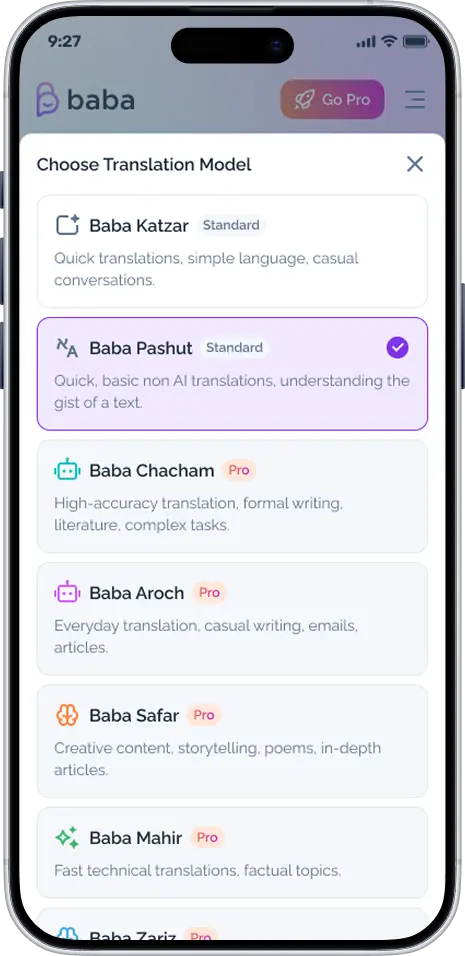
A model router in the backend takes the user's model preference and sends the request to the right API. If the chosen model fails or times out, the router falls back to the next available one automatically, and response formatting normalizes the output from both APIs into one consistent structure.
Technology Considerations
Why the stack was chosen and the trade-offs it carries.
Why These Technologies
Native Swift and Kotlin make each app feel right on its own device. OpenAI and Gemini cover different use cases, with one faster and another better for long-form text. Supabase handles backend, auth and real-time sync through Edge Functions without a custom server, and StoreKit 2 and Google Play Billing handle in-app payments per store.
Tradeoffs
OpenAI and Gemini have different strengths: some faster, some better for long-form text, so the app lets users choose while the router handles routing, error fallback and response formatting. Choosing Supabase real-time subscriptions avoided building a custom sync server from scratch.
Scalability Considerations
The stack was deliberately chosen to keep the app fast, synced and easy to extend, with the model router making it straightforward to route between providers and normalize their responses.
Implementation Highlights
The features that define the Baba experience.
Gender-aware AI with six modes
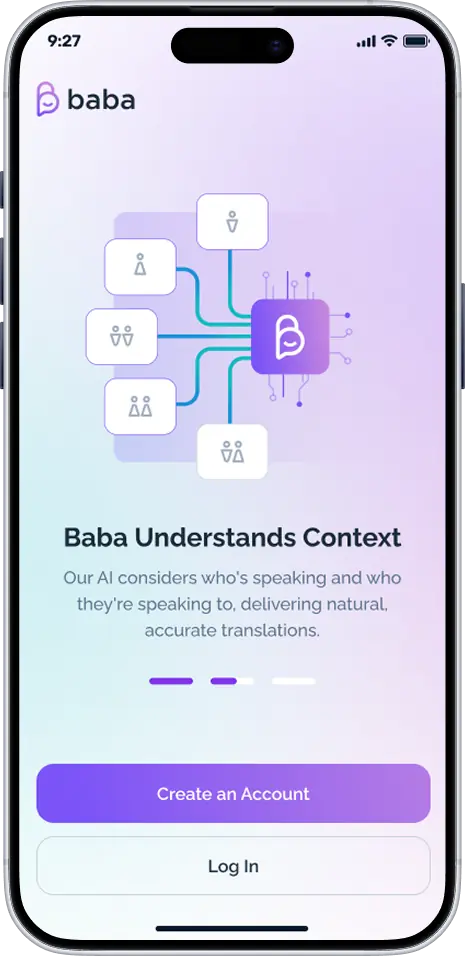
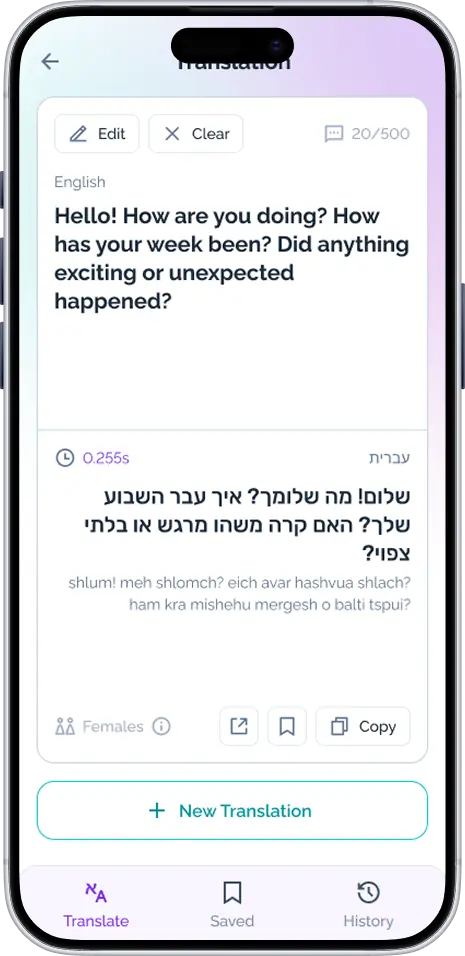
Six gender modes (male, female, group of males, group of females, mixed genders, general) feed context straight into the AI prompt, and the model adjusts verb conjugations, pronouns and adjective agreements based on the speaker's gender and audience. This is the heart of the app.
Multiple AI models with automatic fallback
OpenAI and Gemini handle different use cases, and the user can pick their preferred one. If a model fails, the system falls back to another automatically, so a translation never simply breaks because one provider had a bad moment.
Cross-device sync, history, favorites and Pro subscriptions
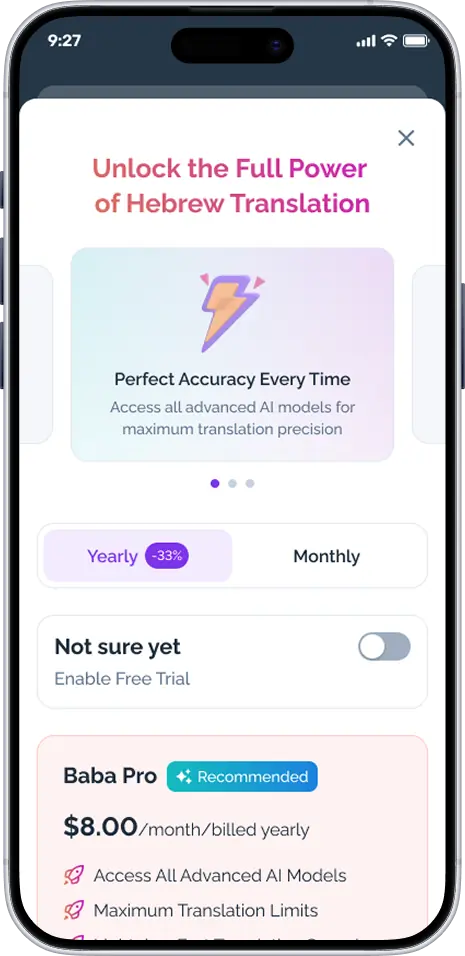
Supabase real-time subscriptions push history and favorites to iOS and Android within seconds. Every translation is saved with the original text, Hebrew result, transliteration, gender mode and timestamp, and can be searched and filtered. Monthly and yearly Pro plans unlock advanced models, higher limits and ad-free use via StoreKit 2 and Google Play Billing.
Key Engineering Highlights
A closer look at the system underneath the product.
Architecture
Native Swift/Kotlin clients, a backend model router across OpenAI and Gemini, and Supabase with Edge Functions for backend, auth and real-time sync.
Data Layer
Each record carries a timestamp, the text pair, the gender mode and a favorite flag; conflicts resolve by latest-write-wins using server timestamps. The backend also tracks subscription status, word usage and billing-period resets.
Performance
Accurate, gender-aware Hebrew arrives in under a second, fast enough to use in a real conversation. The router falls back automatically on model failure or timeout so translation stays reliable.
Security
Subscription verification runs through Supabase Edge Functions using receipts from both StoreKit 2 and Google Play Billing; authentication is handled by Supabase.
Gallery
A look at the product across screens.
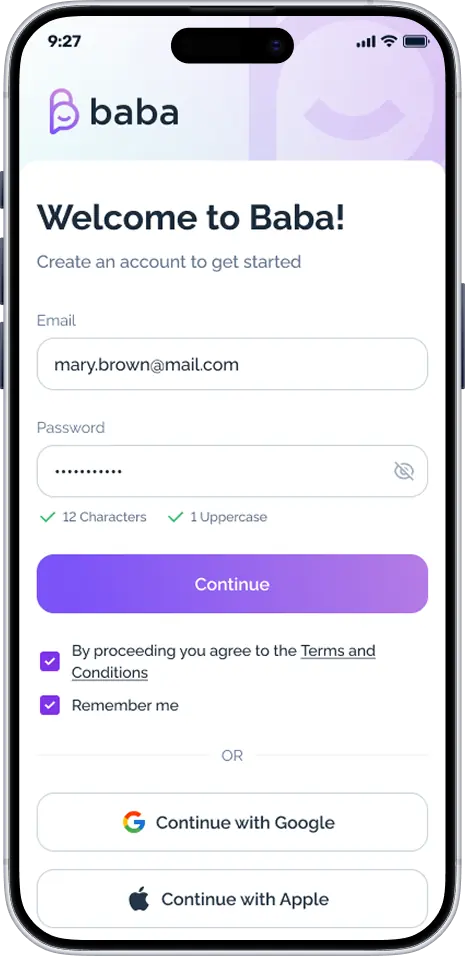
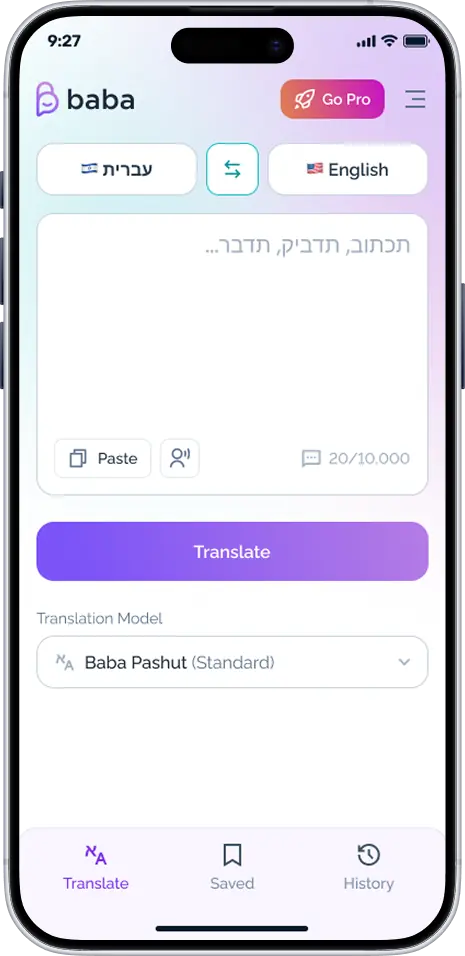
Ready to build something like Baba?
If you need an AI translation or language app that has to be accurate, synced and monetized across both stores, let us show you how we would build it.
Frequently Asked Questions
Answers to the questions teams ask before building an app like this.
It depends on scope. The cost of a build like this is driven by scope, features, integrations, compliance requirements, team composition, and infrastructure complexity. We provide a fixed estimate after a short discovery call once those are defined.
Because Hebrew changes its verbs, adjectives and pronouns based on the speaker's gender and audience, and standard tools translate without any gender context. With no idea who is speaking or to whom, they pick one form and are often wrong. Baba fixes this by asking for the gender context before it translates.
The user picks one of six gender modes before translating, and that choice is passed into the AI system prompt as a parameter. It tells the model exactly how to conjugate verbs and agree adjectives, so the Hebrew comes out grammatically correct for that specific speaker and audience rather than a generic guess.
Through a backend model router rather than calling the APIs directly from the app. The router takes the user's preferred model, sends the request to the right API, and normalizes the responses into one consistent format. If a model fails or times out, it falls back to another automatically, so translation stays reliable.
Baba uses Supabase real-time subscriptions to push history and favorites to every connected device within seconds. Each record carries a timestamp, the text pair, the gender mode and a favorite flag, and conflicts resolve by latest-write-wins, so iOS and Android stay in step without a custom sync server.
We use StoreKit 2 on iOS and Google Play Billing on Android, with both verifying receipts through Supabase Edge Functions. The backend tracks subscription status, word usage and billing-period resets, and users can see their remaining quota and next reset date in settings, so the same Pro features work cleanly on both stores.
Yes. Users can choose their preferred AI model, and the backend router sends the request to the right one. Some models are faster and others better for longer text, and if the chosen one fails, the router quietly falls back to another, so the choice is there without the user ever seeing a broken translation.
Baba took around four months from concept to a working app on both platforms. The timeline depends on the AI features, sync and subscription requirements, and we work in two-week sprints with working software throughout, so progress is visible rather than going quiet until launch.
Related Case Studies
Other products our team designed, built and shipped.
Careslate
A privacy-first medical translation app for real-time, two-way clinical conversations.
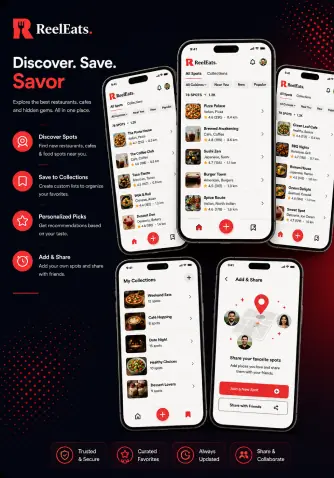
ReelEats
An app that turns TikTok and Instagram food videos into saved, mapped, bookable spots.
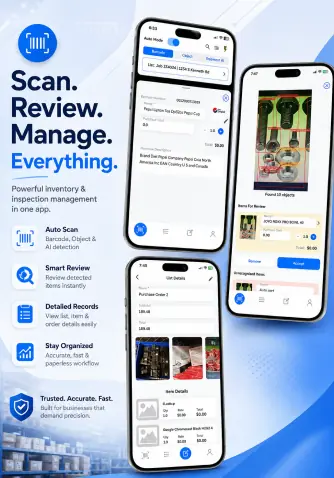
Scannur
A barcode-and-image inventory scanner that exports clean spreadsheets.

Mcookie
An app that turns household chores into a family reward game.
Let's build your next big thing
Let's build your next big thing. Share your idea and get a free consultation. We respond within one business day.