






























AI Agent Development Services That Reach Production

Mobilions provides AI agent development services that get autonomous AI agents past the demo and into production—agents that plan, use tools, and act inside governance you control. Senior engineers own the work end to end, so you own the source code, the prompts, the orchestration logic, and the data throughout.

Part of our generative AI development services →
famooshedidc-ujoinbeetkoralionstudio-ailokalapptosmartbababanounbasafrdocscannerludusiomaamarmcokieme-by-mindmudeermukaabmy-meeting-cardpaaetpixiprezenceraceboardrecuriciclarioschutzwinkelshishrspendulgetrainaerotrendzfanszatarafamooshedidc-ujoinbeetkoralionstudio-ailokalapptosmartbababanounbasafrdocscannerludusiomaamarmcokieme-by-mindmudeermukaabmy-meeting-cardpaaetpixiprezenceraceboardrecuriciclarioschutzwinkelshishrspendulgetrainaerotrendzfanszatara
Since 2016
0+Projects Delivered
0+Clients Served
0+Countries Reached

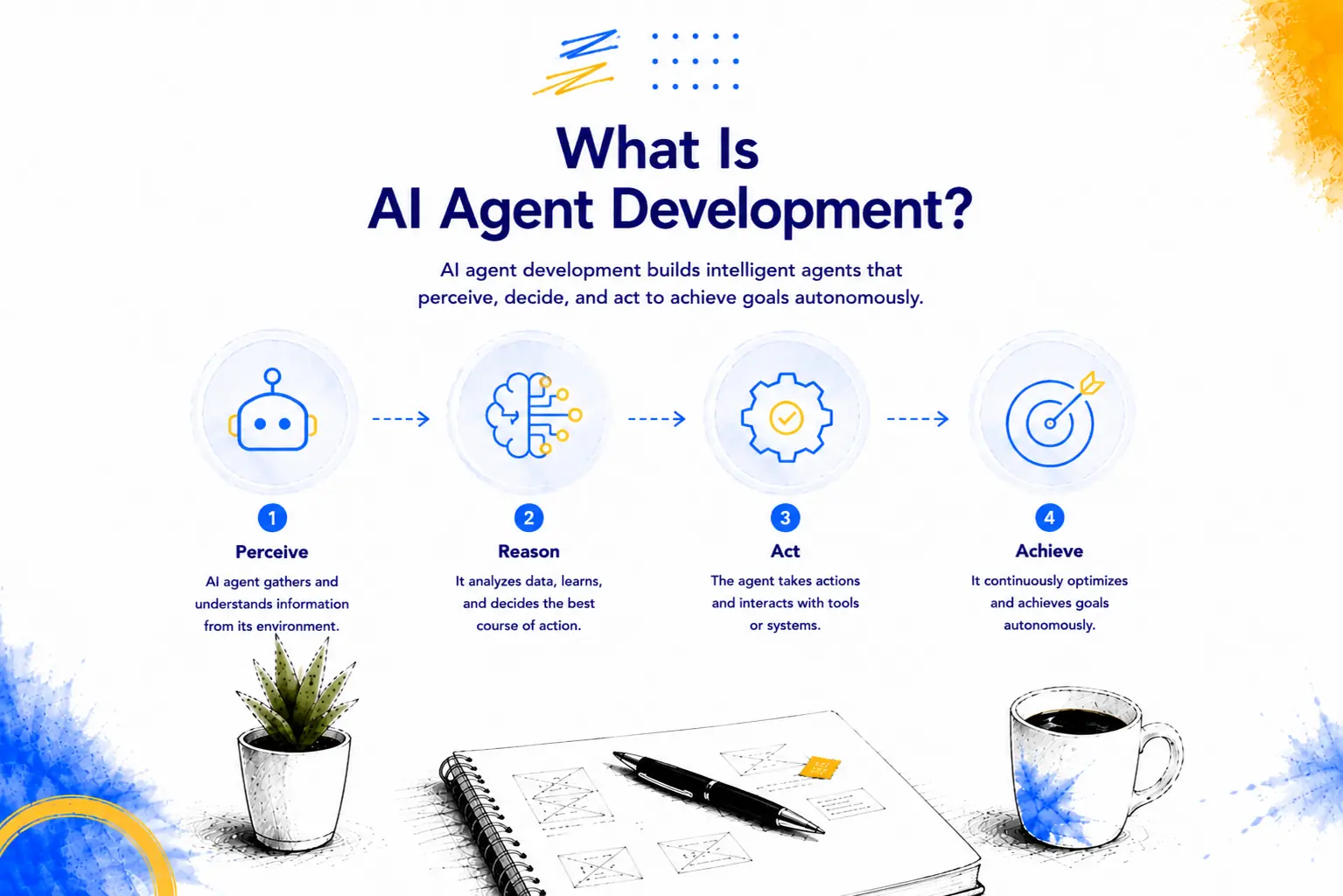
What Is AI Agent Development?

AI agent development is the practice of building software systems in which a language model does more than answer—it plans a course of action, decides which tools or APIs to call, executes multiple steps, observes the results, and adjusts until a goal is met. Unlike a single-shot prompt, an agent runs a loop: reason, act, check, repeat. That autonomy is what lets agents handle real work like researching, drafting, looking something up in your systems, and taking an action—but it is also what makes them risky without guardrails. The whole discipline of AI agent development is giving an agent enough autonomy to be useful while bounding it tightly enough to be safe.

AI agent development

At Mobilions, AI agent development is done by senior engineers who treat the guardrails as part of the product, not an afterthought. We define exactly what actions an agent may take, ground it in your data so its decisions are informed, give it tools and integrations with scoped permissions, and surround it with approvals, rate limits, logging, and human-in-the-loop checkpoints. The hard part is never getting an agent to do something impressive once; it is making it reliable, observable, and controllable across thousands of real runs. That gap between an agent demo and a production agent is where we focus, because it decides whether autonomous AI agents create durable value or quietly cause expensive mistakes.

What We Build

Mobilions delivers six AI agent development capabilities, each available on its own or as part of a larger build. Explore each below.

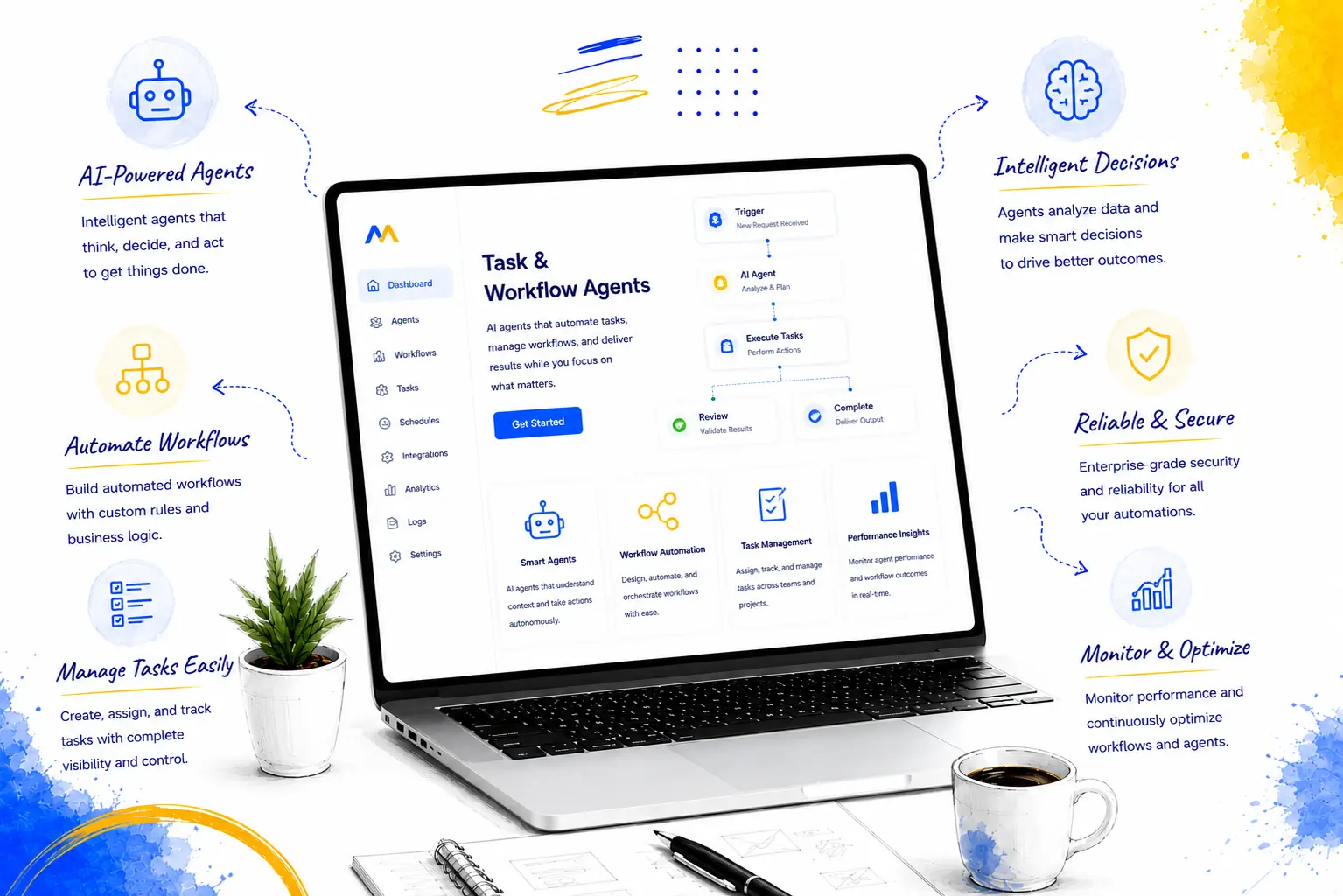
Task & Workflow Agents

We build agents that carry a multi-step task end to end—gathering inputs, making decisions, and completing the steps a person would otherwise do by hand. We map the workflow, define each allowed action, and add checkpoints so the agent handles the routine path while a human stays in control of the exceptions.

Task & Workflow Agents

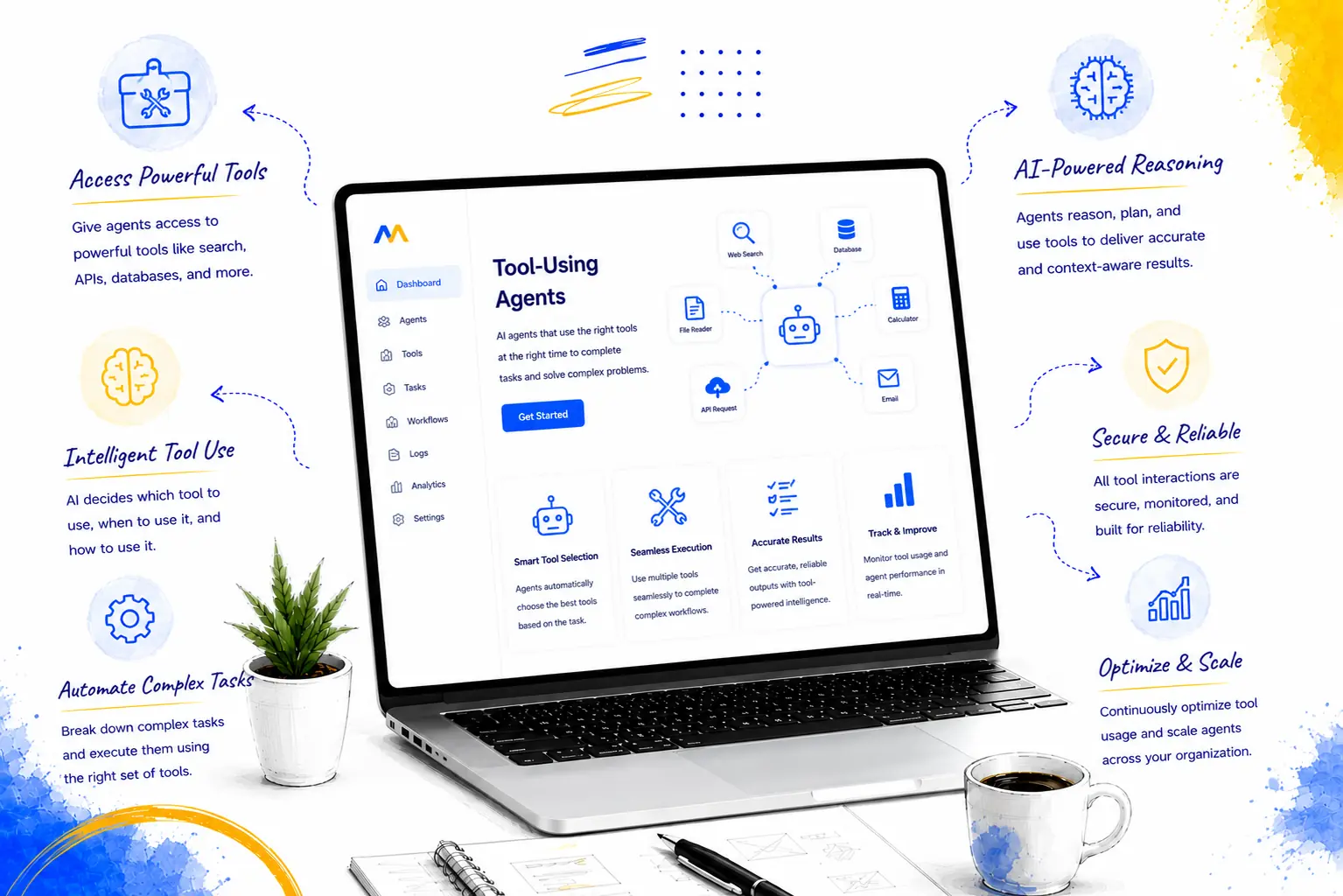
Tool-Using Agents

We build agents that call your tools, APIs, and functions to actually do things—look up a record, update a system, run a calculation, trigger a process. We give each tool a clear contract and scoped permissions, so the agent uses exactly the capabilities you grant it and nothing more.

Tool-Using Agents

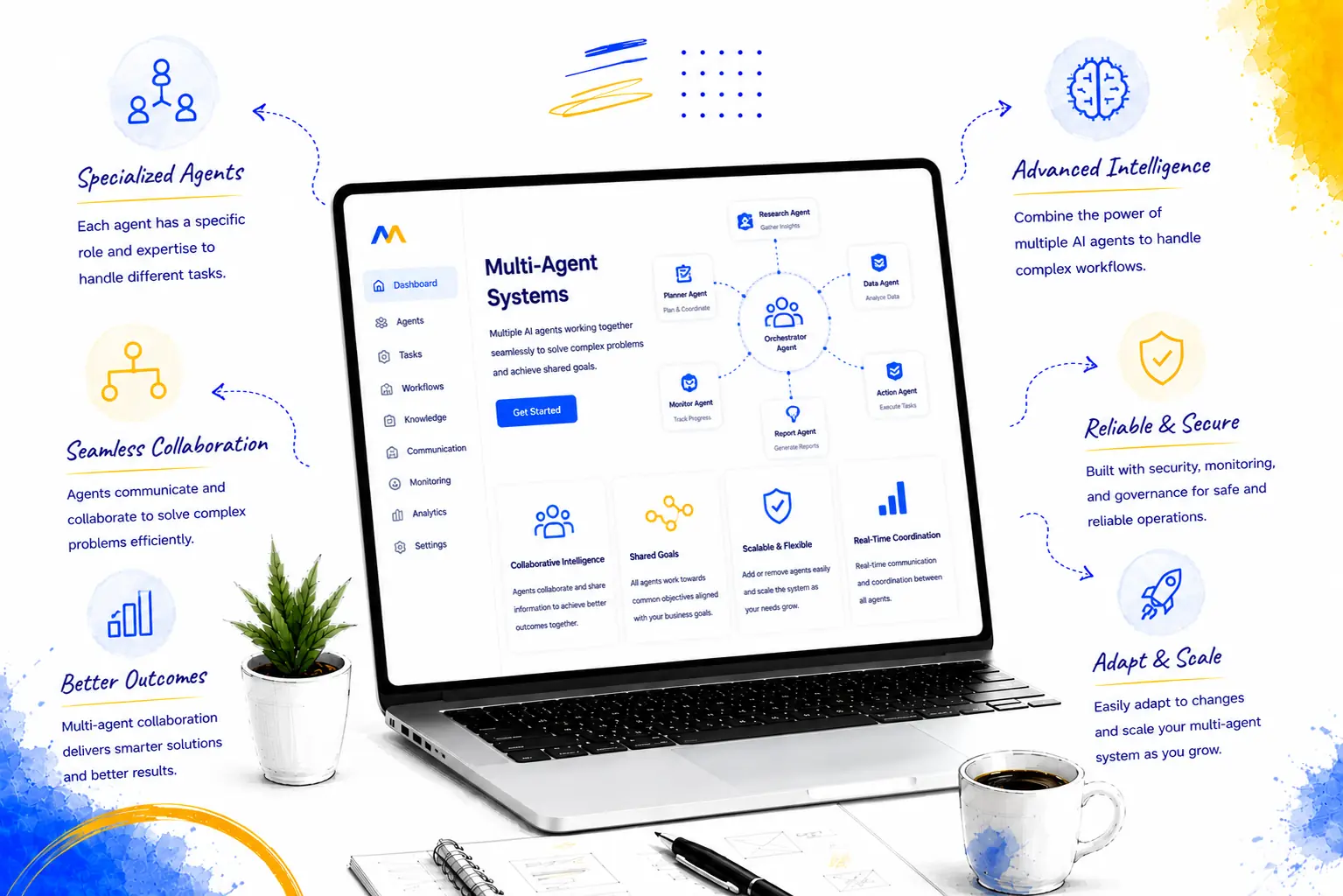
Multi-Agent Systems

We build multi-agent systems where specialized agents collaborate—one plans, others execute, and a coordinator keeps them aligned—so complex work is split into focused, verifiable roles. We add multi-agent systems only when the problem genuinely benefits, because more agents also means more coordination to get right.

Multi-Agent Systems

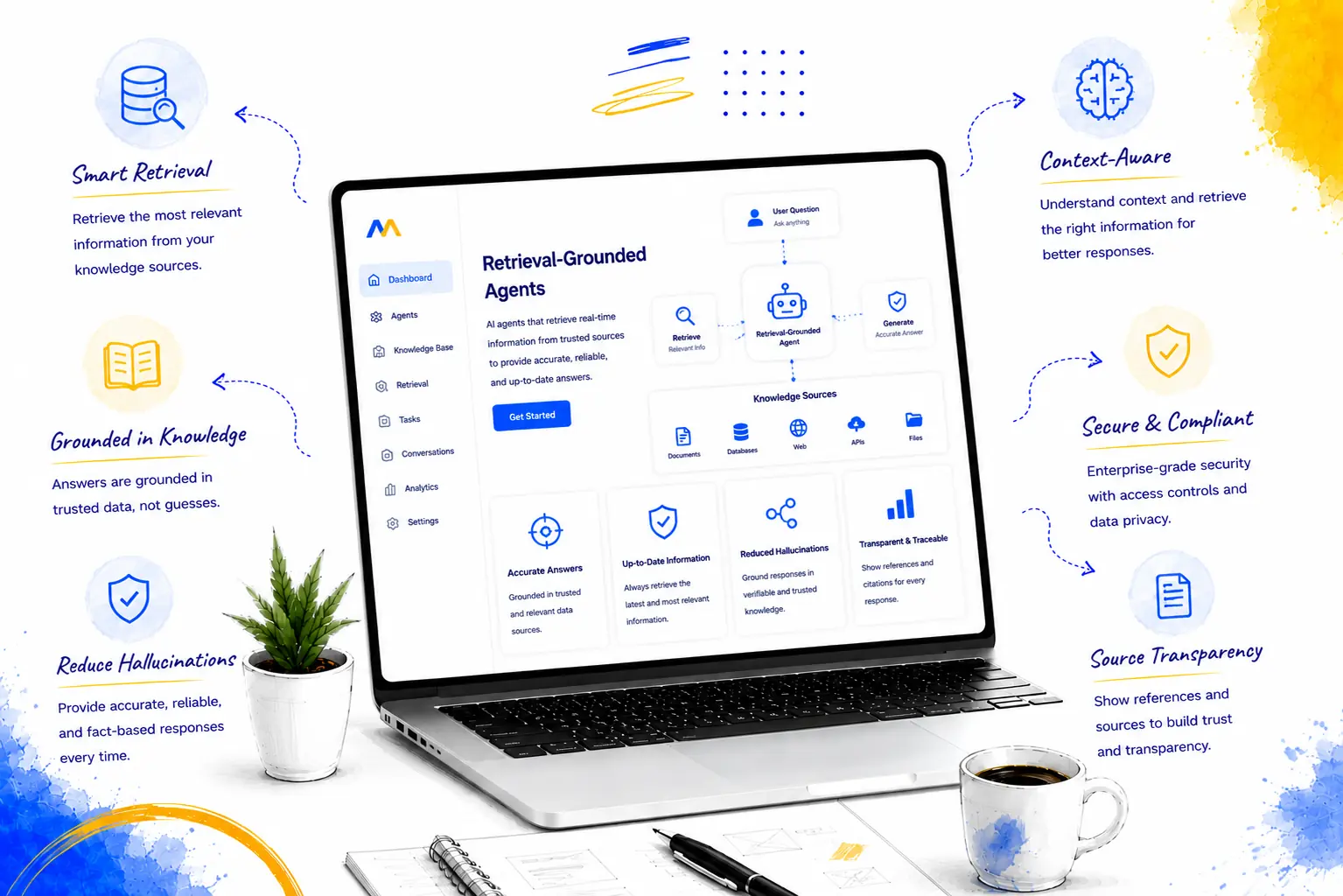
Retrieval-Grounded Agents

We build agents grounded in your documents and data, so their reasoning and answers are based on your real sources rather than the model's memory. Retrieval keeps the agent current and citable, and refusal behavior keeps it honest when the supporting evidence is not there.

Retrieval-Grounded Agents

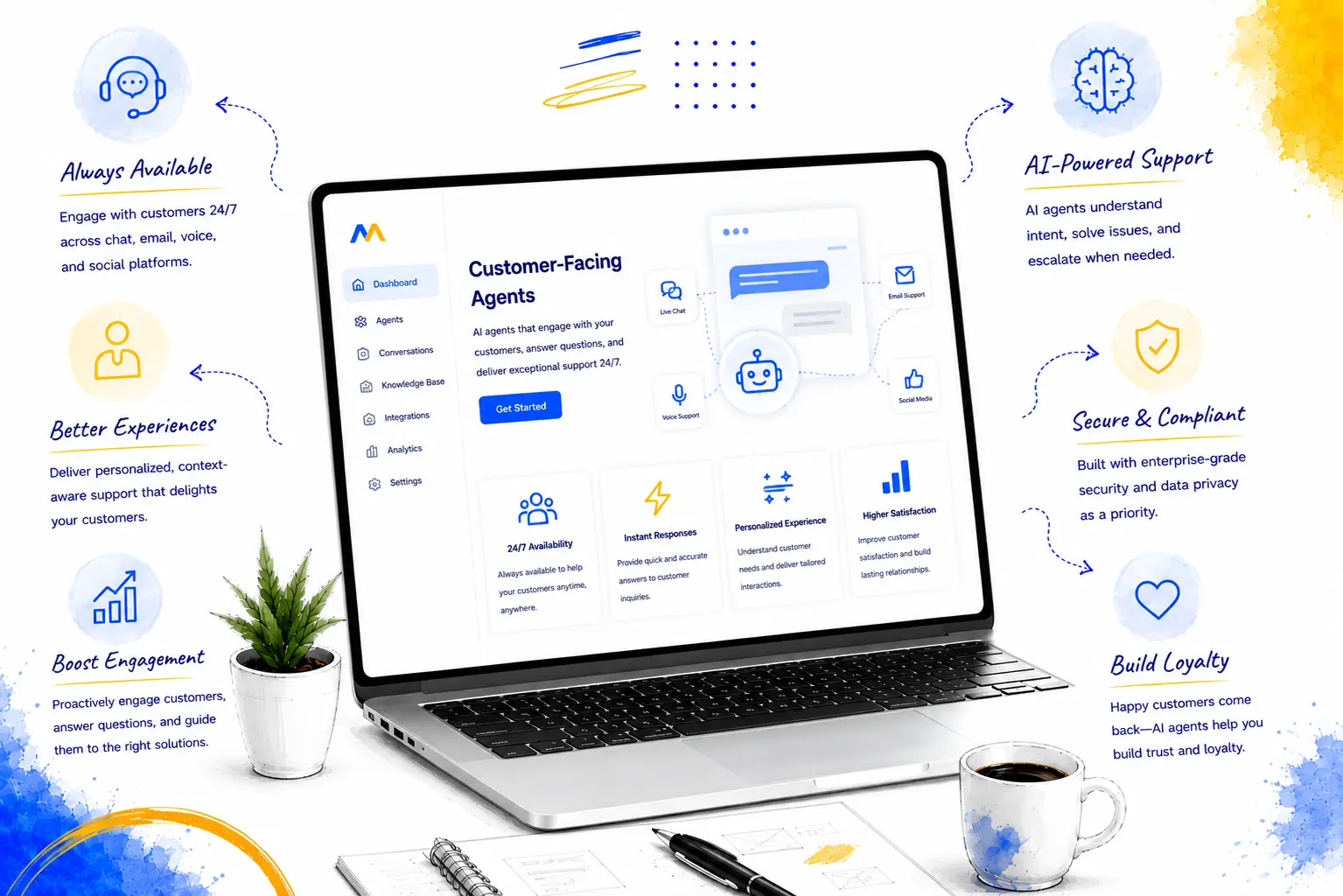
Customer-Facing Agents

We build agents that work directly with your users—resolving requests, completing tasks, and escalating cleanly to a human when they should. We tune tone and scope to your brand and set hard limits on what a customer-facing agent can do, so autonomy never becomes a liability.

Customer-Facing Agents

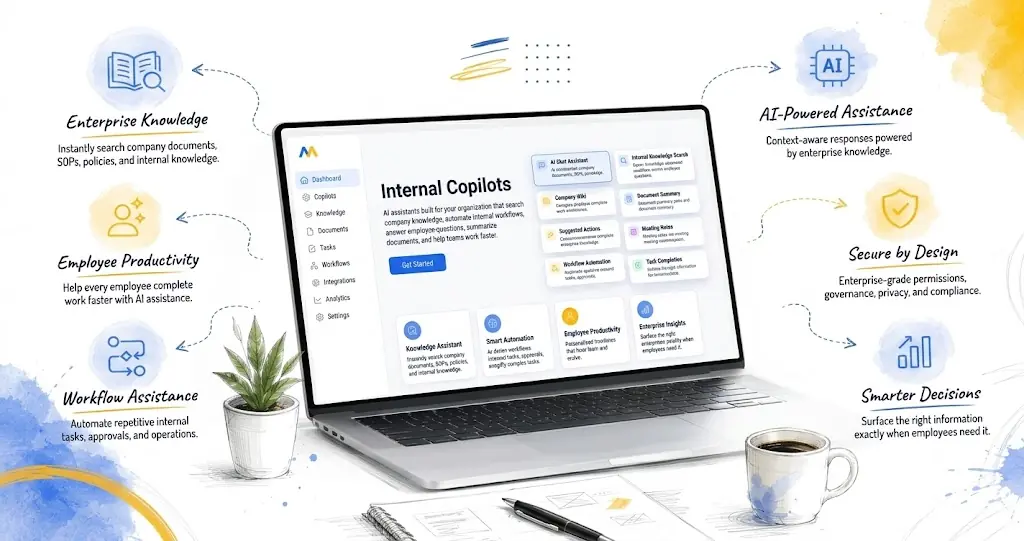
Internal Copilots

We build copilots that sit alongside your team inside the tools they already use—drafting, summarizing, retrieving, and taking bounded actions to remove busywork. Custom AI agents like these are scoped to your workflows and permissions, so they speed up real work without overreaching.

Internal Copilots
Task & Workflow AgentsTool-Using AgentsMulti-Agent SystemsRetrieval-Grounded AgentsCustomer-Facing AgentsInternal Copilots

Have an AI agent in mind?

A senior engineer will tell you whether an agent fits your problem—or whether a chatbot or automation is the safer, cheaper call—and what it takes to ship it governed.

Where AI Agents Help

AI agents pay off wherever work is multi-step, decision-heavy, and tied to real tools—and we will tell you where they are overkill.

.01

Multi-Step Work Across Systems

When a task means pulling data from one system, deciding what to do, and acting in another, a fixed script breaks on the exceptions. An agent reasons through the variation, calls the right tools in the right order, and finishes work that used to bounce between people and tabs.

.02

Research, Triage, and Drafting

When people spend hours gathering information, sorting requests, and producing first drafts, an agent can do the legwork—researching, triaging, and drafting inside your sources—then hand a reviewed result to a human. The person keeps judgment; the agent removes the grind.

.03

Operations With Human Checkpoints

When an action carries real consequences, an agent should propose, not unilaterally act. We build agents that prepare the work and pause for approval at the points that matter, so autonomy speeds the routine path while a human stays in control of anything risky.

.04

Where an Agent Is Overkill

If the task is a fixed, predictable sequence with no real decisions, a plain workflow or simple automation is cheaper, faster, and more reliable than an agent—autonomy you do not need is just added cost and risk. And if the job is really a single question-and-answer exchange, a chatbot fits better than an agentic loop. We will say so honestly, because building an agent where you do not need one still wastes your budget.

How We Build Production AI Agents

Mobilions builds AI agents in four disciplined stages, so autonomy stays useful, grounded, and under control in production.

Step 1.

Scope the Goal & Actions

We define exactly what the agent is for—the goal, the steps it may take, and the actions it is explicitly allowed and forbidden to perform. Pinning down the action space up front is what makes an agent safe to ship, so we treat it as the first real engineering decision, not a detail.

Step 2.

Ground & Equip

We ground the agent in your data through retrieval and give it the tools, APIs, and integrations it needs—each with a clear contract and scoped permissions. An agent is only as good as what it knows and what it can do, so we equip it deliberately and never grant more access than the task requires.

Step 3.

Govern

We wrap the agent in guardrails: approvals and human-in-the-loop checkpoints for consequential actions, rate and spend limits, validation of outputs, and fallback behavior when the agent is unsure. Governance is what separates a production agent from a risky one, so we engineer it in rather than bolt it on.

Step 4.

Operate

We instrument the live agent—logging every step, decision, and tool call, tracking success, latency, and cost, and watching for drift and failure patterns. As real usage reveals edge cases, we tune prompts, tools, and limits, feeding that learning back in. Support terms are agreed explicitly in the engagement.

Industries We Serve

We build voice AI across regulated and high-volume sectors. Explore industry-specific approaches:

Why Mobilions for AI Agent Development

Clients choose Mobilions because the same senior engineering team that scopes the agent also builds, launches, and supports it—with autonomy you can actually trust.

01

Governed by Default

Every agent ships with bounded actions, approvals for consequential steps, limits, and full logging—so autonomy is observable and controllable, not a leap of faith. We engineer the guardrails as part of the product.

02

Grounded and Equipped Right

We ground agents in your data and give them only the tools and permissions the task requires, so decisions are informed and access is scoped. An agent is only as good as what it knows and what it can safely do.

03

One Team: Build → Launch → Support

The same team carries your agent across the whole journey, so there is no handoff and no loss of context as real usage reveals edge cases and your needs change.

04

You Own Everything

You keep the source code, the prompts, the orchestration logic, and the data. We build for your team to operate and extend, with no lock-in.

What Clients Say

Mobilions' clients describe fast delivery, clear communication, and senior, trustworthy engineering—in their own words.

5.0RATING

Great experience working with this team. They completed the development work quickly and efficiently without wasting time. Communication was clear and consistent, they understood the requirements well, gave smart suggestions, and delivered exactly as discussed. I'd highly recommend them to anyone looking for a reliable, fast, and skilled app development team.


5.0RATING

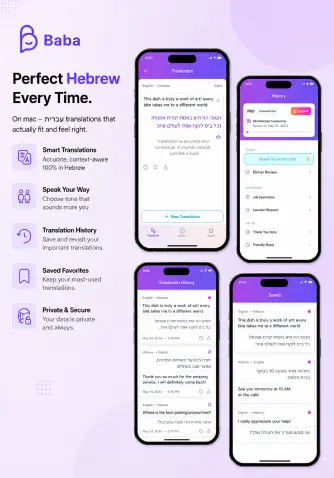
We worked with Ankit, Mayur, and Tushar to build the first version of Baba Hebrew for iOS and Android, and they delivered super fast. The team was responsive, reliable, and efficient, taking the idea from zero to a working app in record time. I'd recommend them to anyone who wants to get an MVP live quickly.

5.0RATING

Tushar and Ankit did an outstanding job developing our native iOS (Swift) and Android (Kotlin) apps. They were efficient, responsive, and technically strong throughout. Thanks to their work, we launched successfully and gained over 1,000 users in the first 30 days. Highly recommend this team for quality mobile app development.

5.0RATING

It was a wonderful experience working with Tushar, Ankit, and their team. They built a great mobile app for me and truly brought my vision to life. What stood out was not just their technical skill but their attitude: always positive, solution-oriented, and incredibly patient. They went above and beyond at every step, finding creative workarounds and staying committed even when things got challenging. Extremely professional and trustworthy. I would absolutely hire them again.

5.0RATING

Great experience working with this team. They completed the development work quickly and efficiently without wasting time. Communication was clear and consistent, they understood the requirements well, gave smart suggestions, and delivered exactly as discussed. I'd highly recommend them to anyone looking for a reliable, fast, and skilled app development team.

5.0RATING

We worked with Ankit, Mayur, and Tushar to build the first version of Baba Hebrew for iOS and Android, and they delivered super fast. The team was responsive, reliable, and efficient, taking the idea from zero to a working app in record time. I'd recommend them to anyone who wants to get an MVP live quickly.

5.0RATING

Tushar and Ankit did an outstanding job developing our native iOS (Swift) and Android (Kotlin) apps. They were efficient, responsive, and technically strong throughout. Thanks to their work, we launched successfully and gained over 1,000 users in the first 30 days. Highly recommend this team for quality mobile app development.

5.0RATING

It was a wonderful experience working with Tushar, Ankit, and their team. They built a great mobile app for me and truly brought my vision to life. What stood out was not just their technical skill but their attitude: always positive, solution-oriented, and incredibly patient. They went above and beyond at every step, finding creative workarounds and staying committed even when things got challenging. Extremely professional and trustworthy. I would absolutely hire them again.

Frequently Asked Questions

The most common questions buyers ask about AI agent development—answered directly.

AI agent development is building software in which a language model plans, chooses and calls tools, takes multi-step actions, observes the results, and adjusts until a goal is met—all inside guardrails you define. Unlike a single prompt that answers and stops, an agent runs a reasoning-and-action loop. The discipline is giving the agent enough autonomy to be useful while bounding it tightly enough to stay safe, observable, and controllable in production.

A chatbot holds a conversation and answers questions; automation runs a fixed, predefined sequence of steps; an AI agent decides what to do, calls tools, and takes multiple actions toward a goal, adapting to what it finds. Chatbots fit Q&A, automation fits predictable workflows, and agents fit multi-step work that needs real decisions across systems. Many real solutions combine them—and we recommend the simplest one that solves your problem.

Yes—that is the point of an agent, and also why governance matters. We give an agent tools and integrations with scoped permissions and clear contracts, so it can look up records, update systems, and trigger processes, but only the specific actions you grant. Consequential steps run behind approvals or human-in-the-loop checkpoints, every action is logged, and limits and fallbacks cap the blast radius—so real actions stay bounded and reversible.

We bound the action space explicitly, scope every tool and permission to the task, and put approvals or human-in-the-loop checkpoints on consequential steps. We add rate and spend limits, output validation, fallback behavior when the agent is unsure, and full logging of every decision and tool call. Governance is engineered into the agent as part of the product, not bolted on afterward, so autonomy stays observable and controllable.

A single agent is simpler, easier to reason about, and the right default for most tasks. Multi-agent systems—where specialized agents plan, execute, and coordinate—earn their place when a problem genuinely splits into distinct roles that benefit from separation, but they add coordination complexity. We start with the simplest design that works and only introduce multiple agents when the problem clearly calls for it.

We select reasoning models to fit the task—frontier LLMs from providers such as OpenAI and Anthropic for strong planning and tool use, and open-source models where private or on-premise deployment is required. For orchestration we use agent frameworks (such as LangGraph and similar tooling) to make planning loops, tool calls, and multi-agent coordination explicit and testable. We benchmark choices against your tasks rather than defaulting to one vendor.

Cost depends on scope: how many actions and integrations the agent needs, single versus multi-agent design, grounding and data complexity, and compliance needs. A focused tool-using or task agent is a smaller build than a multi-agent system with deep integrations. The fastest way to a real number is a short scoping call—Get a Project Estimate.

Timeline tracks scope. A focused agent with a clear goal and a few tools can reach a working version in weeks; a multi-agent system with many integrations, governance, and compliance requirements takes longer. We scope in stages so you see a usable agent early and expand from there, rather than waiting on one large delivery.

We handle data with least-privilege access, scope every tool and integration so the agent only reaches what it is permitted to, and offer private or on-premise deployment for sensitive workloads. We sign an NDA on request, and for regulated work like fintech and healthcare, security and compliance are designed into the architecture. You own the source code, prompts, orchestration logic, and data.

When the task is a fixed, predictable sequence with no real decisions, a plain workflow or simple automation is cheaper and more reliable than an agent. When the job is really a single question-and-answer exchange, a chatbot fits better than an agentic loop. Autonomy you do not need is added cost and risk, so we will tell you honestly when not to build an agent.

Let's build your next big thing

Let's build your next big thing. Share your idea and get a free consultation—we respond within one business day.

0+
Products shipped
0+
Clients served
0+
Countries reached
Call Us (USA)
+1-856-524-5593

Get a Free Quote

A senior engineer replies within one business day · NDA on request · no obligation · you own the code and IP.